

Do You Need Consent to Remove an Internal Wall in NZ? What an LBP Designer Checks First
Quick answer: Removing an internal wall in NZ needs a building consent only if the wall is load-bearing, a bracing element, a fire separation wall, made of masonry, or part of a specified system. Anything else falls under Schedule 1 exempt work — but a Licensed Building Practitioner (LBP) Design Class designer is the right person to confirm which side your wall sits on.
You’re standing in your kitchen, staring at the wall between you and the dining room. Take it out, and you’d have one big open-plan space with morning sun running the length of the house. Maybe an island where the wall used to be. The thought is hard to shake.
Then you ask the question every Auckland homeowner asks at some point: can I just take this wall out?
Sometimes yes. Sometimes no. And the difference matters more than most renovation blogs let on. The Building Act 2004 (the law that governs construction work in New Zealand) has a specific carve-out for internal wall work that doesn’t need a consent. It also has five tightly worded exclusions. If your wall ticks any one of them, you’ve moved from a no-paperwork job to a project that needs Auckland Council approval, qualified design, and often a structural engineer.
Most articles stop at “is it load-bearing?” as if that’s the whole question. It isn’t. Bracing elements, fire walls, specified systems, and masonry are the other four exclusions, and they catch out just as many homeowners. In older Auckland villas and bungalows (the kind we work on every week in Ponsonby, Grey Lynn, Mt Eden, and Herne Bay) the load-paths aren’t always where you’d expect them. A wall that looks like a partition can be doing real structural work. A wall that looks heavy might be doing nothing at all.
This article walks through the four things you need to know before a hammer goes anywhere near that wall: when consent is actually required, what an LBP Design Class designer checks first, what each pathway costs, and what happens if you skip the paper trail and try to sell the house years later.
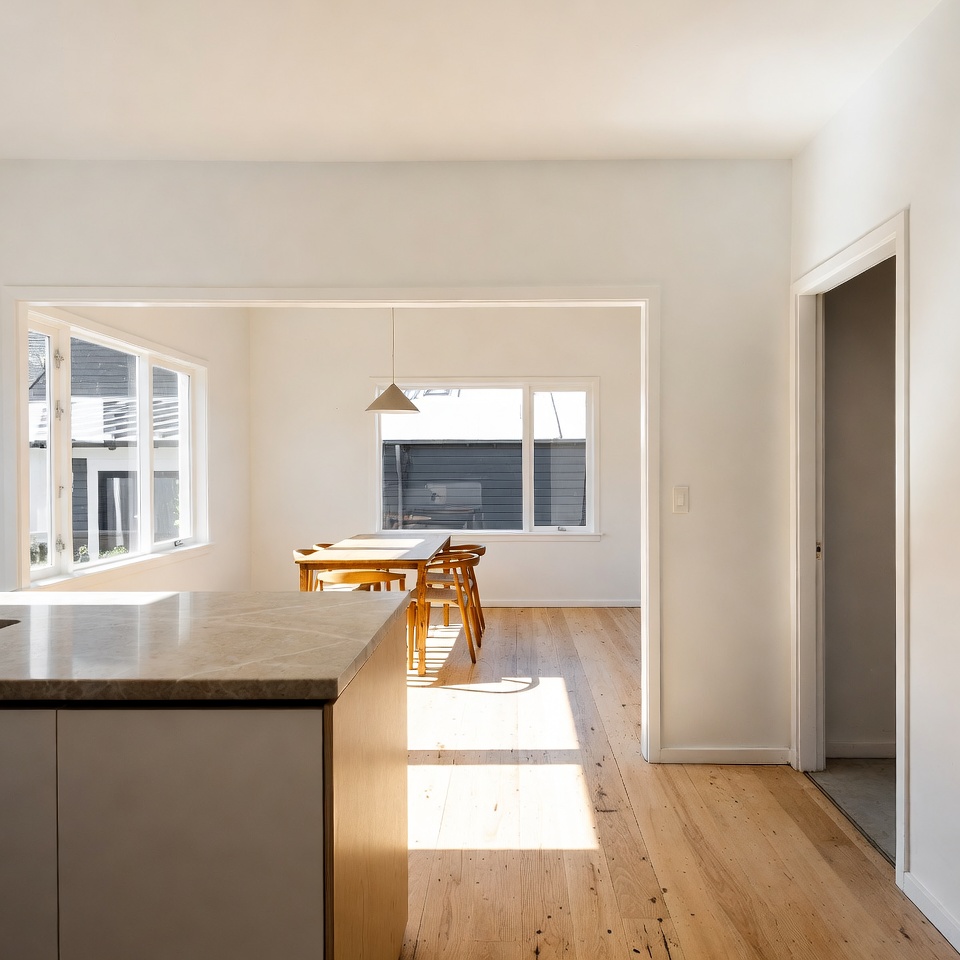
When does removing an internal wall actually need a building consent?
The legal answer lives in one specific paragraph of the Building Act 2004 — Schedule 1, Exemption 11. Schedule 1 is the part of the Act that lists work you can do without a building consent. Exemption 11 covers internal walls and doorways. The starting point is that you can construct, alter, or remove an internal wall in an existing building without applying for a consent. That’s the rule.
Then come the exceptions.
The five tests that pull a wall out of Exemption 11
An internal wall is not covered by the exemption (meaning a building consent is required) if any one of these five things is true:
1. The wall is load-bearing. It’s holding up part of your home’s structure — typically the roof, a floor above, or a beam that runs across the building. Remove it without proper support and the load has nowhere to go. Sagging ceilings, cracked plaster, and in the worst case structural failure.
2. The wall is a bracing element. Bracing is what stops your house from racking sideways in a wind or earthquake event. NZS 3604 (the New Zealand standard for timber-framed homes) sets out how much bracing each home needs based on its size, weight, and seismic zone. A wall can be non-load-bearing in the gravity sense and still be a critical bracing element. This is the exclusion that catches the most Auckland homeowners off guard.
3. The wall is a fire separation wall. Also called a firewall. These walls stop fire spreading between parts of a building — common between an attached garage and the main house, or between units in a duplex. Removing one without consent is a Building Code clause C compliance issue, and councils take it seriously.
4. The wall is part of a specified system. Specified systems are listed in the Building Act and include things like sprinkler systems, smoke detection, and mechanical ventilation. Most residential homes don’t have any. If yours does (usually because it’s a larger or commercial-converted property) removing a wall containing one of those systems triggers consent.
5. The wall is made of masonry. Brick, burnt clay, concrete, or stone laid in mortar. Masonry walls are heavy, brittle, and behave differently to timber framing. Even if a brick veneer wall isn’t structural, the demolition method matters and consent is required.
Tick any one of those five boxes and you’re in consent territory. Tick none of them and the work is exempt, though it still has to comply with the Building Code, which means competent execution and proper records.
Important: Even if your wall removal is exempt under Schedule 1, the completed work must still comply with the New Zealand Building Code (NZBC), the national rulebook every build must meet. The exemption removes the consent requirement, not the compliance requirement. For the official guidance, see building.govt.nz Exemption 11.
What “load-bearing” means in a 1930s villa vs. a 1990s home
The honest truth is that older Auckland homes and modern Auckland homes hide their load-paths in completely different ways. A 1930s kauri-framed villa in Grey Lynn was built before NZS 3604 existed, before engineered framing was standardised, and often without bracing calculations at all. The original carpenters worked from experience and common sense. Many internal walls do real structural work that isn’t obvious from looking at the framing.
A 1990s timber-frame home in Albany or Hobsonville is the opposite. Modern homes are usually engineered with deliberate load-paths and roof trusses that span wall-to-wall, which means most internal walls in these homes are non-load-bearing partitions. But there are exceptions — half-trusses, longer spans, and homes with multiple roof levels can still need internal load-bearing walls.
The 1950s–60s brick-and-tile bungalows that sit across the North Shore and East Auckland fall somewhere in the middle. The framing is timber, the cladding is brick veneer (which is non-structural), and the roof is usually pitched rather than trussed. Internal walls in these homes are load-bearing far more often than homeowners expect.
The lesson: a wall’s age, finish, and look tell you almost nothing about whether it’s structural. The only reliable way to know is to have the right person assess it.
💡 Homeowner tip: If your roof has visible roof trusses (those triangle-shaped timber frames you can see from the roof space), most internal walls below them are likely non-load-bearing. If you have a “cut-and-pitch” roof (individual rafters and ceiling joists framed on site) assume internal walls are doing structural work until proven otherwise.
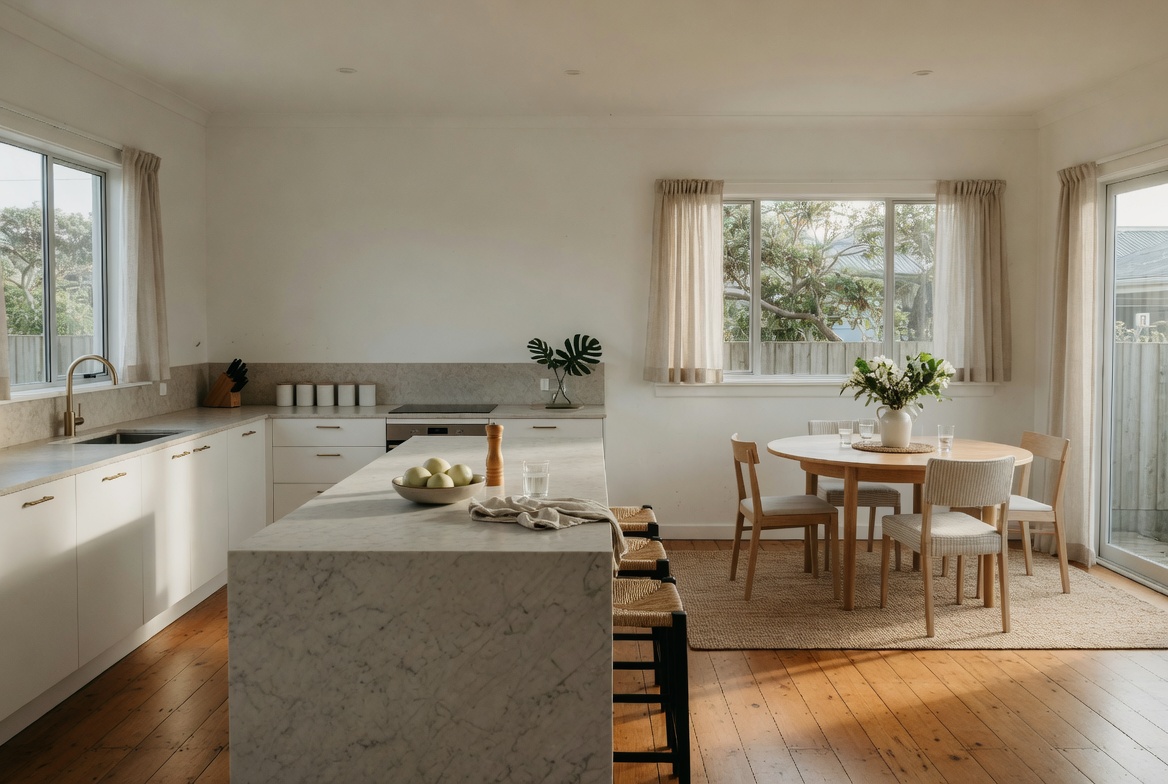
What an LBP Design Class designer checks first — the four load-path indicators
This is the part most articles skip. They tell you to “consult an LBP” or “engage a structural engineer” without explaining what that person is actually looking at when they walk through your house. The assessment isn’t a guess. It’s a structured read of four specific indicators that, taken together, tell us whether your wall is in or out of Exemption 11.
Here’s what we work through on a typical site visit.
Indicator 1: Roof structure type
The first thing we look at isn’t the wall — it’s the roof above it. Two roof systems are common in Auckland homes, and they distribute load in completely different ways.
Trussed roofs are pre-engineered triangular frames that span the full width of the house. They transfer roof load to the external walls only. Internal walls below a trussed roof are usually non-structural, with one important exception: half-trusses, used where a roof has a step or a separate volume, can land on internal walls and turn them into load-bearing.
Cut-and-pitch roofs are framed piece by piece on site — rafters running up to a ridge, ceiling joists running across, and timber struts transferring load down to ceiling runners (sometimes called strong-backs). The ceiling runners typically sit on internal walls. In a cut-and-pitch home, more internal walls are load-bearing than not. Almost every Auckland villa and most pre-1990s bungalows fall into this category.
Indicator 2: Wall direction relative to ceiling joists
The next check is geometric. We pop a small access panel in the ceiling or scope it from the roof space, and we look at which way the ceiling joists or roof trusses run.
If your wall runs perpendicular to the joists (meaning the joists cross over the top of the wall) it’s likely supporting them. That’s a structural indicator.
If your wall runs parallel to the joists (running alongside them rather than under them) it’s less likely to be load-bearing, though it can still be carrying point loads from above. This is where assumption fails and inspection wins.
Indicator 3: Bracing element identification
Bracing is the indicator most homeowners (and quite a few builders) get wrong. Bracing walls don’t carry roof or floor weight. They resist lateral forces — wind pushing on the side of the house, ground shaking in an earthquake. The Building Code clause B1 (structure) requires every home to have a minimum amount of bracing distributed appropriately around the floor plan.
An LBP designer reads bracing two ways: by inspecting the wall lining (plywood and certain GIB bracing systems leave specific signatures), and by referencing the original consent file if one exists. If your wall is a bracing element, removing it means redesigning the bracing layout — which always needs a consent and almost always needs a structural engineer’s input.
Older villas and bungalows are particularly tricky here. They were built before bracing standards were formalised, which means they often don’t meet modern bracing requirements at all. Removing any internal wall in those homes can push the house below code, even if the specific wall wasn’t critical.
Indicator 4: Wall construction and material
The last check is straightforward: what is the wall actually made of? Timber-framed walls with GIB or fibrous-plaster lining are the standard residential wall. They’re covered by Exemption 11 if the first three indicators clear them.
Masonry walls (brick, block, concrete) are out of the exemption full stop. Removing or even cutting an opening in a masonry wall always needs a building consent, regardless of whether it’s structural. Older Auckland homes sometimes have an unexpected masonry chimney breast or party wall hidden behind plaster, and that’s usually only obvious once we open up the lining.
How to tell if a wall is load-bearing yourself, and exactly where that check stops
You cannot sign off your own wall, but you can work out within about twenty minutes whether you are probably in exempt territory or probably not. That saves a wasted call-out, and it means you walk into the conversation knowing what you are asking about. Five checks, in the order worth doing them.
- Go into the roof space and look at what is above the wall. Prefabricated trusses (triangulated frames with diagonal webs, spanning right across the house) usually carry the roof to the outside walls, which leaves most internal walls below them as partitions. Individual rafters and ceiling joists framed on site, the cut-and-pitch roof, means the load is being shared internally, and at least one internal wall is holding it.
- Check the direction the ceiling joists run. A wall running at right angles to the joists above it is a candidate for load-bearing. A wall running parallel to the joists, sitting between two of them rather than under one, is far more likely to be a partition. Joist direction is visible from the roof space, or from the nail lines in the ceiling under raking light.
- Look directly below the wall. A load path has to reach the ground. If there is a beam, a row of piles, a thickened slab or a concrete footing under the wall line, something upstairs is being carried down. A load-bearing wall on the ground floor with nothing under it in the subfloor is a red flag for a different reason.
- Note the wall thickness and what it is made of. In a villa or bungalow, an internal wall framed at 100mm and full of solid timber is behaving differently from a 70mm partition. Sarking, diagonal boards and brick or block internal walls all point at structure.
- Look for the wall that lines up floor to floor. In a two-storey home, the internal wall that sits directly above another internal wall on the floor below is almost always carrying something.
Where this stops, and it stops hard: none of those five checks can tell you whether the wall is a bracing element. Bracing resists sideways wind and earthquake load rather than downward weight, and a wall can be completely non-load-bearing in the gravity sense and still be a critical bracing panel under NZS 3604. Bracing is calculated across the whole building, not judged wall by wall, and it is invisible from the roof space. That is why the exemption test is not “is it load-bearing” but the five-part test above, and it is why a DIY check tells you which conversation to have, not whether you can pick up a hammer.
Why the LBP designer comes before the structural engineer
There’s a sequence to this work that most homeowners get backwards. They call a structural engineer first, get a beam designed, and only then realise they need consent drawings, a Producer Statement, and someone to lodge it all with Auckland Council.
Here’s the right order: the LBP Design Class designer assesses the wall, scopes the work, and produces the consent drawings. The structural engineer is engaged for the specific structural design inside those drawings, usually a beam and post system with calculations and a PS1 (a Producer Statement for design). The LBP designer then signs the Restricted Building Work (RBW) record and the application is lodged.
This sequence matters because the LBP Design Class licence is the legal authority that lets a designer sign off on RBW for residential structural work. The Licensed Building Practitioners Board sits within MBIE and maintains the public register. You can verify any LBP’s licence status directly on that register before engaging them — including the Design Class LBP whose registration covers the restricted design work at Sonder Architecture.
Where the wall removal is one part of a wider job rather than the whole job, the consent scope is usually set by the rest of the work. We design and consent structural changes as part of a whole-house renovation rather than as a standalone item, and the building consent process itself works the same way whichever route you are on. For more on how the design and consent process fits together end-to-end, see our full architectural design process for NZ projects.
💡 Homeowner tip: Before you commit to a wall removal, ask whoever’s pricing the job a single question: “Are you LBP Design Class licensed, and will you provide a Record of Work for this if it’s RBW?” If the answer is no or vague, you’re being quoted by someone who can’t legally sign off the consent paperwork.
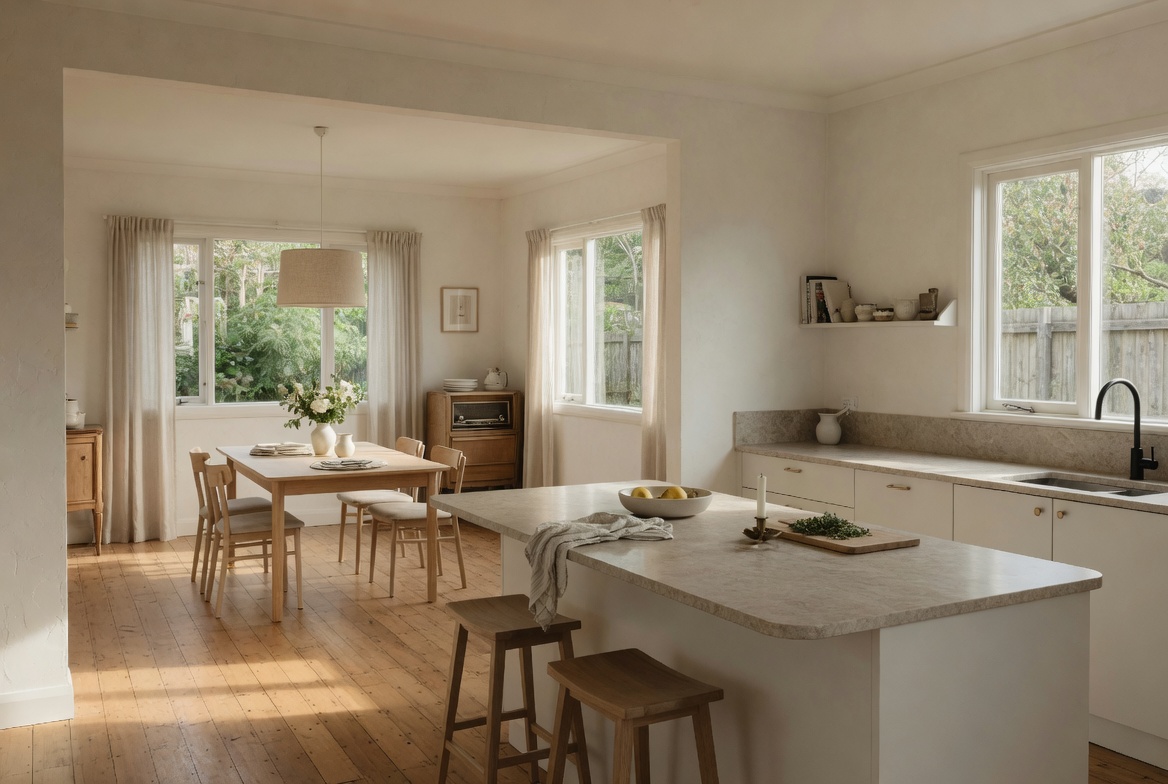
The four cost pathways for internal wall removal in Auckland
Cost ranges for “removing a wall” get tossed around online without much honesty about which pathway you’re actually on. The four pathways below are real — they’re how we cost projects at Sonder, and the numbers reflect Auckland 2025–2026 market rates for the design and consent side of the work, not the construction itself.
| Pathway | When it applies | Design + consent cost (Auckland) | Typical timeline |
|---|---|---|---|
| A — Genuinely exempt | Non-load-bearing, non-bracing, non-fire, timber-framed wall in a sound dwelling | $0 council fees. LBP assessment letter ~$500–$1,200 if you want it documented for resale | 1–2 weeks |
| B — Consent without engineer | Wall is excluded from Exemption 11 but no structural beam needed (rare) | ~$5,000–$8,000 total (council deposit ~$3,005 + LBP design fee ~$2,500–$5,000) | 8–12 weeks |
| C — Consent + engineer + LBP designer | Most Auckland load-bearing wall removals — beam and post system designed and PS1’d | ~$8,000–$14,000 total (council ~$3,005 + LBP design $4,000–$6,000 + engineer + PS1 $1,500–$4,000) | 10–16 weeks |
| D — Complex consent + full design | Multiple walls, masonry work, bracing redesign, or a heritage / character overlay involved | $14,000–$25,000+ total | 14–22 weeks |
Important caveats. These are design and consent costs only, and they don’t include the construction itself, which is a separate quote from your builder. Construction for a single load-bearing wall removal in Auckland typically lands between $15,000 and $35,000 depending on the span, services involved, and the make-good work afterwards.
What removing a non-load-bearing wall costs, when it is genuinely exempt
This is the question the cost calculators never separate out, and the gap between the two answers is the whole point of getting the wall assessed properly.
If the wall clears every limb of Exemption 11, there is no council fee, no consent, no engineer and no Producer Statement. What is left is trade work: demolition and disposal, patching the ceiling and the two wall junctions where the removed wall met the others, making good the flooring across the old wall line, plastering and painting the affected area, and relocating any switches, sockets or light fittings that were in the wall. In Auckland that package typically lands in the low-to-mid thousands rather than the tens of thousands, and the variables that move it are the ceiling and floor make-good rather than the demolition. A wall in a room with a plain ceiling and continuous flooring underneath is cheap. A wall under a coved or moulded villa ceiling, with different flooring on each side and a chase full of wiring, is not.
Two things reliably turn a “cheap” job expensive. The first is services: a wall with plumbing in it, or a subfloor waste run below it, is a plumber’s job before it is a builder’s. The second is discovering the wall was structural after the lining is off, which converts an exempt job into an unconsented one mid-build and is the single most expensive way to find out. That is the arithmetic behind paying a few hundred dollars for a documented assessment first.
The other cost line worth knowing: on any consented job, three levies ride on top of the council deposit. The building research levy is $1 plus GST per $1,000 of value on work over $20,000, the MBIE building levy is $1.75 per $1,000 on work over $64,999, and Auckland Council’s accreditation levy is 58 cents per $1,000. On a $40,000 wall-removal job that is a research levy of $46 and an accreditation levy of $23.20, with no MBIE levy, which is small. It is worth knowing they exist so the final invoice is not a surprise.
Where the council fees come from
Auckland Council charges a deposit at the time of consent application. For a project valued between $20,000 and $99,999 (which covers most internal wall removal jobs) that deposit is $3,005 under Auckland Council’s 2026/27 schedule, effective 1 July 2026. That figure isn’t the final cost. Final consent fees include processing time, inspection fees, the Building Research (BRANZ) levy ($1 plus GST per $1,000, for work over $20,000), the MBIE building levy ($1.75 per $1,000 for projects over $65,000), and a CCC application fee at the end.
Auckland Council’s published target for processing a standard residential building consent is 20 working days, though that clock pauses every time the council issues a Request For Information (RFI). RFIs are how council asks for clarification on something that wasn’t clear in the application. The single biggest predictor of how long your consent takes is whether your application is RFI-proof going in — which is the work an LBP Design Class designer does before lodgement.
A worked example: a Mt Eden bungalow kitchen-living conversion
To make the costs concrete, here’s a typical project we’d see at Sonder. A 1940s bungalow in Mt Eden. The owners want to remove a single load-bearing internal wall between the kitchen and the dining room to create one open-plan space. The wall sits under a cut-and-pitch roof and supports a ceiling runner. No services pass through it, but it does carry a small bracing share.
This is a classic Pathway C project. The design and consent side typically runs $9,000–$11,000 (council deposit ~$3,005, LBP design fee ~$4,500, structural engineer with PS1 ~$2,000, BRANZ and MBIE levies, CCC fee at the end). The construction itself (beam, posts, rebracing, GIB make-good, electrical relocations) lands between $20,000 and $30,000. Total project: typically $30,000–$40,000 for a clean, fully consented job that holds up at resale.
For a deeper look at full project budgets including the build side, see our guide to architectural renovation costs in Auckland.
💡 Homeowner tip: When you’re comparing quotes, look at total project cost including design, consent, engineer, and construction — not just the build figure. A “cheap” build quote that doesn’t include consent paperwork is a sign the work is being done unconsented or that you’ll be hit with an extra $8,000–$14,000 in design and consent costs later.

What happens if you remove a wall without consent — resale, CCC, and council enforcement
This is the section most homeowners think they don’t need to read, until they try to sell the house. The cost of skipping a building consent is rarely felt at the time of the renovation. It’s felt three to fifteen years later, when the property file catches up with you.
The LIM record and what buyers’ lawyers do with it
When you sell an Auckland property, the buyer’s lawyer will almost always order a Land Information Memorandum (LIM) from Auckland Council. A LIM is the council’s full record on a property — zoning, consents lodged, consents missing, enforcement notes, known issues. Think of it as the council’s fact file on your home.
If structural work was done at your property without a consent, one of three things tends to show up: a flag for “work undertaken without consent,” a missing CCC for work that should have one, or a discrepancy between the council-held floor plans and the actual house. Any of those will land on the buyer’s lawyer’s desk and stop a settlement until it’s resolved.
The Code Compliance Certificate problem
A Code Compliance Certificate (CCC) is the council’s sign-off at the end of a consented build, confirming the work was carried out to the approved plans and meets the Building Code. Mortgages, insurance, and resale all expect a CCC for any consented work.
Here’s the trap: if you remove a wall that should have had a consent and you didn’t get one, there’s no CCC to issue at the end. You can’t apply retrospectively for a CCC on unconsented work. What you can apply for is a Certificate of Acceptance (CoA) — a different document the council can issue when work has been done without a consent that should have had one. CoAs are expensive, slow, and not guaranteed. Council needs to be able to inspect the work, which often means opening up linings to expose the framing. Costs typically run $3,000–$10,000+ in council and design fees, and that’s before any remedial work needed to bring the structure up to code.
For more on the CCC side of this, our full Auckland building consent process for renovations explains what a CCC covers and what it doesn’t.
Insurance and earthquake events
House insurance policies in New Zealand include a clause that excludes claims arising from non-compliant building work. If a load-bearing wall was removed without consent, and an event happens (earthquake, severe wind, structural failure) your insurer can decline the claim on the basis that the dwelling was modified outside the Building Code. This isn’t a hypothetical. The Canterbury earthquake claims process surfaced thousands of cases of unconsented work, and EQC and private insurers both pushed back hard on those claims.
Auckland Council enforcement
If a neighbour, a contractor, or a council inspection flags unconsented structural work, Auckland Council can issue a Notice to Fix under section 164 of the Building Act. That notice requires you to either get a Certificate of Acceptance, restore the building to its pre-work state, or in extreme cases face a “dangerous building” determination. Notices to Fix can’t be ignored, and they remain on the property file permanently.
Why the LBP Records of Work matter for decades
One of the quieter strengths of working with an LBP Design Class designer is the Record of Work that gets filed. Under section 88 of the Building Act, an LBP must provide a Record of Work for any Restricted Building Work they carry out or supervise. That record is filed with Auckland Council and stays attached to the property’s consent file forever. When you sell the house in ten years and the buyer’s lawyer pulls the LIM, the Record of Work is the document that proves the structural change was done by a licensed professional and signed off properly.
“The renovation that costs the least up front is almost never the one that costs the least over the life of the house. The paper trail is where the long-term value lives — and it’s the part most homeowners don’t think about until the day they try to sell.”
— Sonder Architecture Team
If you’re at the very early stage (a wall in mind but no real plan yet) our free feasibility report is the lowest-friction way to get a qualified read on what your project actually needs. We’ll do a site visit, look at the wall, check the load-paths, and tell you which of the four pathways your job sits on before any design work is commissioned. More on what we offer end-to-end at our architectural services page. Once consent is granted and the build phase begins, we partner with Superior Renovations for the construction side — same group, same office, full design-and-build accountability.
Bringing it back to your wall
A last word on scope. If the wall is coming out as part of a bigger move (a new bathroom, a rear extension, a character home in an overlay) the wall is rarely the thing that decides the consent. Adding a bathroom or a second toilet pulls drainage into the application, an extension brings the district plan rules with it, and a home inside a heritage or special character overlay can need a resource consent for work that would be permitted two streets away. If the wall is genuinely the only thing changing, check it against the wider Schedule 1 exemption list first.
If you’ve read this far, you’ve probably already worked out which pathway your project sits on. Most Auckland internal wall removals fall under Pathway C — load-bearing or bracing-related, needing a consent, an LBP designer, and a structural engineer. A smaller number are genuinely exempt. A few are complex. And a small percentage of homeowners try to take the no-consent shortcut and pay for it years later at sale.
The wall in your kitchen isn’t a guess. It’s a structural assessment that takes about an hour on site to make properly. Make that call, and the rest of the project (design, consent, build, CCC) runs from a foundation you can sign your name to.
➡ Book a free consultation with Sonder Architecture
➡ Request your free feasibility report
➡ Read our full Auckland building consent process for renovations
No. Schedule 1 Exemption 11 of the Building Act 2004 lets you remove an internal wall in an existing building without a consent, as long as the wall isn't load-bearing, a bracing element, a fire separation wall, part of a specified system, or made of masonry. If any one of those five things applies, a building consent is required. The challenge is that homeowners can't reliably tell which category a wall falls into without a qualified assessment. An LBP Design Class designer is the right person to make the call. You can't tell reliably from looking. The most useful early signals are the roof type (cut-and-pitch roofs more often have load-bearing internal walls than trussed roofs) and the wall's direction (walls running across ceiling joists are more likely to be carrying load). The only definitive answer comes from an LBP designer or structural engineer inspecting the roof space, the framing, and where applicable the original consent drawings. Sonder Architecture offers this as part of our free feasibility report for Auckland homeowners. A Licensed Building Practitioner (LBP) Design Class designer is licensed under the Building Practitioners Board to design Restricted Building Work for residential homes, including consent drawings, framing layouts, and signing the Record of Work that gets lodged with Auckland Council. A Chartered Professional Engineer (CPEng) handles specific structural calculations, beam sizing, lintel spans, and PS1 Producer Statements. Most wall removal projects need both: the LBP designer leads, and the engineer is engaged for the structural beam design. Design and consent costs alone typically run $0 (genuinely exempt) up to $14,000+ (complex consents). The most common pathway (a load-bearing wall removal needing a consent, LBP designer, and structural engineer) sits at $8,000–$14,000 for design and consent. Construction is separate, usually $15,000–$35,000 depending on span, services, and make-good work. Auckland Council deposits start at around $3,005 for projects valued $20,000–$99,999. A builder can carry out the work, but they can't legally sign off the consent documentation if it's Restricted Building Work. RBW for residential structural work must be designed or supervised by an LBP Design Class designer and constructed or supervised by an LBP Carpentry licensee. If your builder doesn't hold those licences and tells you the wall can come out without paperwork, ask them how they're going to handle the Record of Work and the eventual CCC. The answer to that question tells you everything. The buyer's lawyer will order a LIM (Land Information Memorandum) from Auckland Council. If structural work was done without a consent, the LIM will flag it. The buyer can refuse to settle until the issue is resolved — typically by applying for a retrospective Certificate of Acceptance (CoA), which costs $3,000–$10,000+ in council and design fees and can require opening up linings to inspect the framing. Some buyers walk away entirely. The unconsented work usually drops the sale price more than the original consent would have cost. A Code Compliance Certificate (CCC) is what Auckland Council issues at the end of a consented build, confirming the work meets the Building Code. A Certificate of Acceptance (CoA) is what the council can issue for work that should have had a consent but didn't. CoAs are slow, expensive, and not guaranteed — council has to be able to inspect the structural work, which often means partial demolition of finished surfaces. CoAs are a fallback, not an equivalent. They cover the council's bases but not always the buyer's, the insurer's, or the bank's. Auckland Council's published target is 20 working days for a standard residential building consent. The 20-day clock pauses every time the council issues a Request for Information (RFI), so the calendar timeline is usually 6–10 weeks total for a wall-removal consent. Complex projects involving heritage overlays, multiple walls, or unusual structural design can run to 16 weeks or more. The biggest predictor of speed is the quality of the application going in — RFI-proof applications close out faster every time. No. Bracing elements are explicitly excluded from Exemption 11. A wall can be non-load-bearing in the gravity sense and still be a critical bracing wall — meaning it resists lateral wind and seismic forces under NZS 3604, the New Zealand standard for timber-framed buildings. Removing a bracing wall without consent is a Building Code clause B1 issue and one of the most common reasons internal wall removal triggers a consent in older Auckland villas and bungalows. Restricted Building Work (RBW) is work that must be designed or supervised by an LBP under the Building Act 2004. It includes structural work in residential dwellings — load-bearing wall removal, foundations, structural beams, and weathertightness elements. If your wall removal is RBW, the Record of Work filed by your LBP gets attached to your property's consent file at Auckland Council and stays there permanently. That record is what proves to future buyers, insurers, and councils that the work was done by a qualified person. Five checks get you most of the way. Look in the roof space: prefabricated trusses spanning wall to wall usually mean the internal walls below are partitions, while a cut-and-pitch roof of individual rafters and ceiling joists means an internal wall is carrying load. Check whether the wall runs at right angles to the ceiling joists (a candidate for load-bearing) or parallel to them (more likely a partition). Look for a beam, piles or a footing under the wall line. Note the wall thickness and material. And check whether an internal wall on the floor above lines up with it. None of those five tests can tell you whether the wall is a bracing element, which is calculated across the whole building, so they tell you which conversation to have rather than whether you can start. If the wall genuinely clears every limb of Exemption 11 there is no council fee, no consent, no engineer and no Producer Statement, so what is left is trade work: demolition and disposal, patching the ceiling and the two wall junctions, making good the flooring across the old wall line, plaster and paint, and relocating any switches or sockets. In Auckland that typically lands in the low-to-mid thousands. The ceiling and floor make-good moves the number far more than the demolition does. Plumbing in the wall, or discovering it was structural once the lining is off, are the two things that reliably turn a cheap job expensive.
Do I always need a building consent to remove an internal wall in NZ?
How do I know if a wall is load-bearing?
What's the difference between an LBP designer and a structural engineer?
How much does it cost to remove a wall in Auckland?
Can my builder just remove the wall for me?
What happens if I sell my house after removing a wall without consent?
What's a Certificate of Acceptance and how is it different to a CCC?
How long does a building consent for wall removal take in Auckland?
Does Schedule 1 Exemption 11 apply to bracing walls?
What is Restricted Building Work and why does it matter for wall removal?
How can I tell if a wall is load-bearing before I call anyone?
How much does it cost to remove a non-load-bearing wall in Auckland?
References
- Exemption 11: internal walls and doorways in an existing building, Ministry of Business, Innovation and Employment
- Building Act 2004, Schedule 1 and the Restricted Building Work provisions, New Zealand Legislation
- Licensed Building Practitioners public register, Licensed Building Practitioners Board
- Building consent fees and charges 2026/27, Auckland Council