

Heritage Overlay Auckland: What You Can Change, What You Can’t, and the Consent Path
Quick answer: A heritage overlay in Auckland adds planning rules from the Auckland Unitary Plan that protect either a scheduled historic building (D17) or the streetscape character of an area (D18). Most additions and external alterations need resource consent, but like-for-like repairs and many internal works don’t.
You’ve made an offer on a 1910 villa in Ponsonby. The bank’s said yes. Then your solicitor mentions, almost as an afterthought, that the property sits inside a heritage overlay. Suddenly the question shifts from “what colour are we painting the kitchen” to “are we even allowed to touch the kitchen?”
This happens every week somewhere in Auckland. Grey Lynn. Mt Eden. Devonport. Parnell. Remuera. The heritage overlay isn’t a renovation ban — but it does change the rules in ways most homeowners and even some builders don’t fully understand.
Here’s the part that catches people out. There isn’t one heritage overlay in Auckland. There are two distinct ones — and a property can sit under one, the other, or both. The rules they trigger are different. The consent paths are different. And the design responses that actually get approved are different again.
We’re Sonder Architecture, an Auckland architectural studio. Our team includes a Licensed Building Practitioner in the Design Class — which means we’re legally authorised to design and supervise Restricted Building Work (the structural and weathertightness-critical parts of any consent application). We’ve shepherded character home renovations through Auckland Council’s heritage consent process across most of Auckland’s character belt.
This guide pulls together what we wish every owner of a character or scheduled home knew before booking the first design meeting. It covers the difference between the two overlays, what you can do without consent, what triggers resource consent, the realistic timeline and cost premium, and a project-type decision matrix you can self-check against. Plus the bit nobody seems to be writing about — how the Medium Density Residential Standards interact (or, more accurately, don’t) with heritage areas.
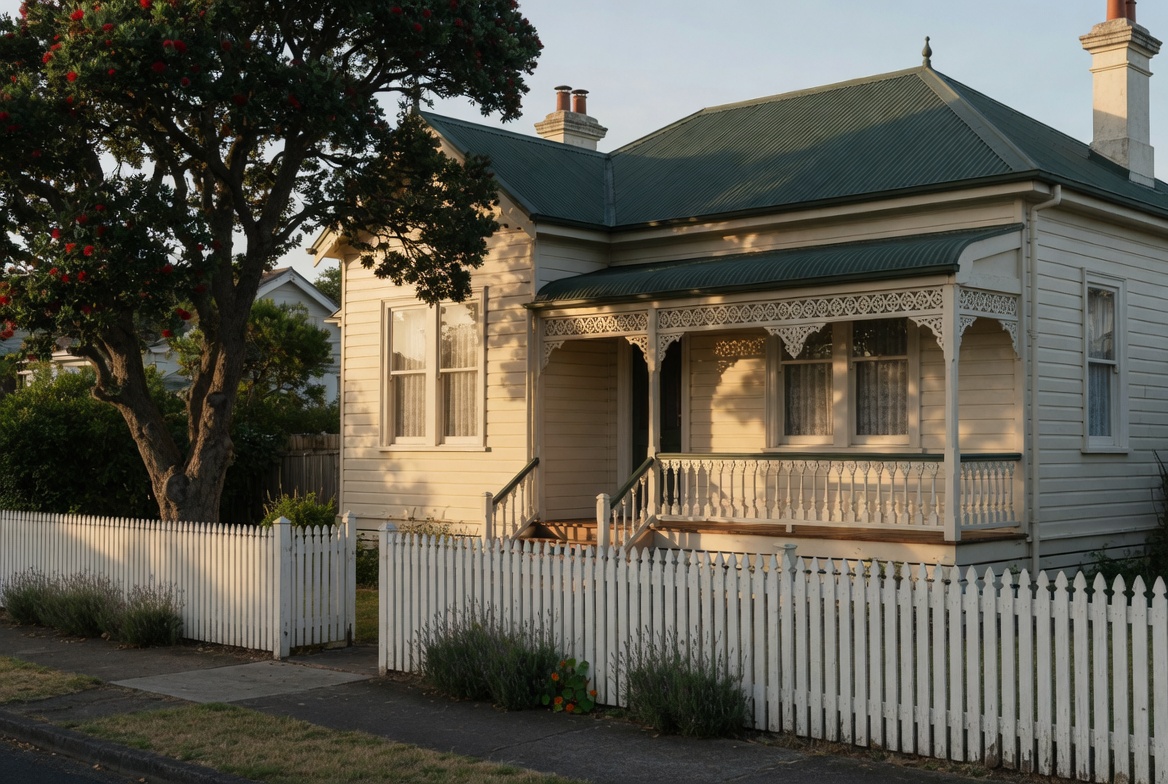
Two Overlays, Two Rule Sets: Why the Auckland Heritage Overlay Confuses Almost Everyone
The first thing to understand is the most commonly missed thing. Auckland’s “heritage overlay” is shorthand for two separate planning controls in the Auckland Unitary Plan — and they protect different things.
One protects specific buildings. The other protects whole neighbourhoods. They behave differently. Get the difference wrong and you can spend $15,000 on plans for a project that was never going to fly.
D17 Historic Heritage Overlay — Place-Based Protection
D17 is the rule set that applies to scheduled historic heritage places. Each one is individually listed in Schedule 14.1 of the Unitary Plan and mapped in Schedule 14.3. Buildings get scheduled because the Council has assessed them as having specific historic, architectural, or cultural significance — they’re identified individually, not by suburb.
Scheduled places are graded into three categories:
- Category A — places of national or international significance. The strictest rules apply.
- Category A* — outstanding regional significance.
- Category B — significant at a regional or local level. Still protected, with somewhat more flexibility on what’s allowed.
Here’s what most homeowners don’t realise: D17 rules can apply to the interior of a scheduled building, not just the façade. The rules apply to interiors unless the schedule entry specifically lists the interior as an “exclusion.” For Category B places where the primary features haven’t been individually identified yet, the Plan treats every feature within the scheduled extent as a primary feature for the purposes of the rules.
Plain English: if your villa is scheduled, that internal wall you want to remove for an open-plan kitchen might be inside the rules even though it’s not visible from the street. That is on top of the Building Act question of whether the wall is structural at all, which we cover separately in our guide to removing a load-bearing wall. A scheduled villa can need both a resource consent for the heritage effect and a building consent for the beam.
D17 also captures a property’s “extent of place”, which can include the land, garden setting, accessory structures, and sometimes the archaeology beneath. So earthworks for new piles or drainage can pull in heritage rules even if the building work itself is minor.
D18 Special Character Areas Overlay, Streetscape-Based Protection
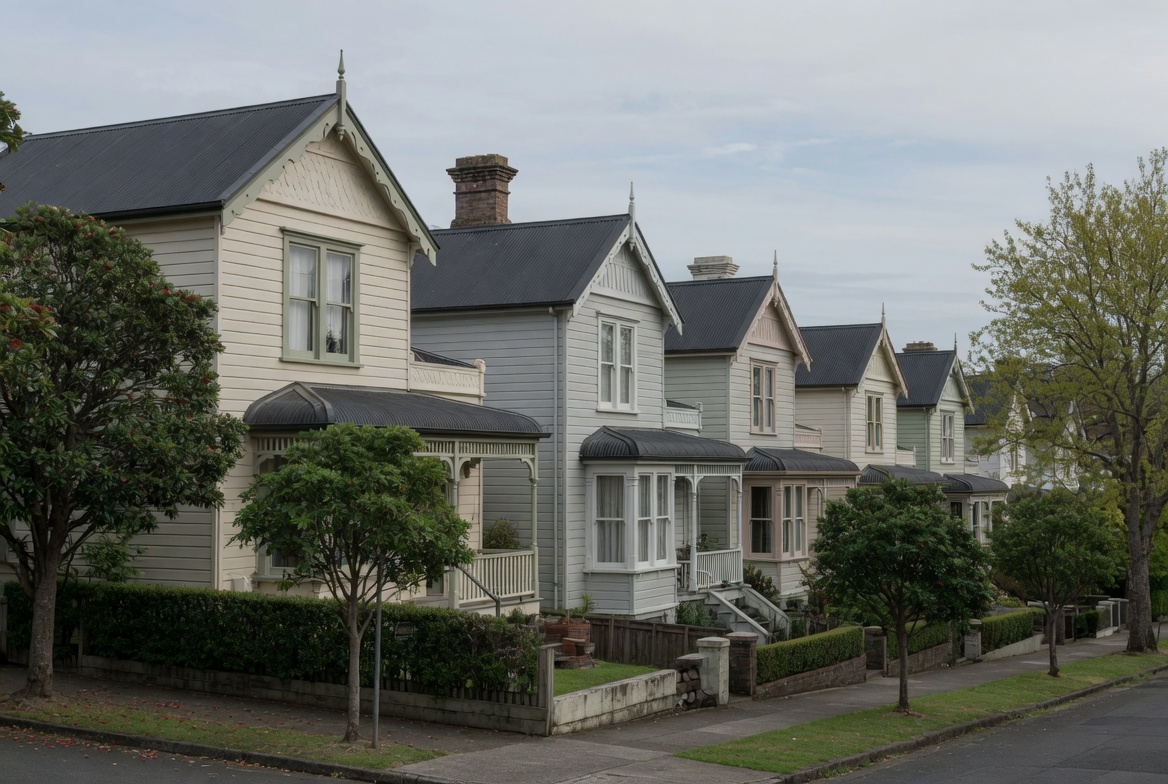
D18 is different. It doesn’t list individual buildings. It applies to defined precincts across Auckland, mapped street by street rather than suburb by suburb, where the collective rhythm of the streetscape (the houses, fences, setbacks, rooflines, and materials together) is what’s being protected. Ponsonby. Grey Lynn. Mt Eden. Freemans Bay. Westmere. Parts of Devonport, Epsom, and Kingsland.
Each special character area has a written character statement that summarises what the values of that area actually are. This is also where the single-storey versus two-storey decision stops being a budget question and becomes a consent question, because adding a second storey to a single-storey street is one of the clearest ways to change how a street reads. The rules in D18 then control what you can do based on whether your work would maintain or erode those values.
The key shift in mindset: under D18, the question isn’t “is my building special?” It’s “would what I’m proposing change how the street reads?” That’s why a perfectly ordinary 1910 weatherboard cottage with no individual scheduling can still need resource consent for a front-of-house alteration — the cottage might not be the protected thing, but the street it sits on is.
Yes, You Can Have Both. And You Probably Should Check.
A property can sit under D17, D18, both, or neither. The first thing any homeowner planning work on a character home should do is open the Auckland Council GeoMaps viewer and check what overlays apply to their property.
Important: Use the Auckland Council GeoMaps viewer to check overlays on your specific property. Toggle on “Historic Heritage” and “Special Character Areas” layers. Don’t rely on suburb assumptions — heritage overlays don’t follow suburb boundaries cleanly. Your neighbour’s place can be in the overlay and yours might not be.
You can also order a Property File from the Council, which surfaces consent history, LIM (Land Information Memorandum — the Council’s detailed property report covering zoning, consents, and known issues) data, and any heritage notes recorded against the property.
💡 Homeowner tip: If you’re still in the buying phase, do this overlay check before going unconditional. Discovering a heritage overlay after settlement is a much harder conversation than discovering one before.
What You Can Change Without Resource Consent in an Auckland Heritage Overlay
The fear that comes with discovering a heritage overlay is usually bigger than the reality. The overlay doesn’t freeze your property. A real list of work is permitted as of right — meaning no resource consent application required at all. The trick is knowing exactly what counts.
Two important caveats before we get into the list. First, “permitted under the Unitary Plan” is not the same as “doesn’t need building consent.” Building consent and resource consent are separate processes. We’ll come back to that. Second, the precise activity status of any specific work depends on the wording of D17 or D18 and the schedule entry for your property — what follows are the patterns we see most commonly. Always verify against your actual property.
Like-for-Like Maintenance and Repair
Maintenance and repair using the same materials and design as what’s already there is generally a permitted activity under both D17 and D18. That’s the foundation of how character homes get kept alive.
Specifically (and assuming materials match) the following typically don’t need resource consent:
- Repainting in heritage-appropriate colours
- Replacing rotten weatherboards with the same profile and timber species
- Replacing rusted corrugated steel roofing with the same profile
- Repairing or replicating decorative timber features (fretwork, finials, brackets)
- Replacing single-pane sash windows with single-pane sash windows of identical proportions and detailing
- Re-piling under the existing footprint (subject to building consent and earthworks rules)
The phrase that earns its keep here is “like-for-like.” Substitute aluminium joinery for the original timber sashes and you’ve left the permitted-activity track. Same with swapping a corrugated profile for long-run trapezoidal — the materials might look superficially similar, but the visual rhythm of the roof changes, and that’s exactly what D18 is set up to protect.
Internal Works: The Big Asterisk
For most character homes in special character areas (D18 only, not scheduled under D17), internal alterations that don’t change the external appearance of the building are generally outside the scope of the overlay. New bathroom layouts. Kitchen redesigns. Removing internal non-load-bearing walls. Lining replacement. Insulation upgrades.
The catch is the one we flagged earlier. If your building is scheduled under D17, the interior may also be protected unless explicitly excluded. Original ceiling roses, kauri staircases, picture rails, leadlight panels, and decorative plasterwork can all be inside the scope of D17 rules. We’ve seen Mt Eden owners proceed with internal works on a scheduled villa thinking they were “interior only,” only to discover the original layout itself was a protected feature.
The fix is the same as before — read the schedule entry for your property, then check whether the work touches anything identified as a primary feature.
The Schedule 1 Building Consent Exemptions Still Exist
Separate from the heritage overlay rules, the Building Act 2004 has its own list of work that doesn’t need a building consent. Schedule 1 of the Building Act covers things like:
- A single-storey detached building up to 10m² (a sleepout or shed) (with no boundary setback required for this size class since 23 October 2025) provided it isn’t habitable in a permanent way, and has no plumbing
- Replacement of a kitchen sink, bathroom basin, or laundry tub like-for-like
- Internal painting and wallpapering
- Most non-structural internal alterations
- Repair and replacement of certain components using comparable materials
Schedule 1 is about whether you need a building consent — not whether you need a resource consent. It’s a parallel test. In a heritage overlay, you can have work that’s exempt from building consent under Schedule 1 but still needs resource consent under D17 or D18. A 9m² garden shed might not need building consent, but if it’s visible from the street in a special character area, the council can still require resource consent for the visual effect.
This is one of the most common traps we see — owners checking one rulebook and assuming it’s the only one that applies.
Exclusions That Often Go Unnoticed
Schedule 14.1 sometimes lists specific exclusions for a scheduled property. The classic Auckland version: the villa is scheduled, but a 1980s rear lean-to addition is listed as an exclusion. If that exclusion is recorded, the lean-to is subject to ordinary zone rules (not the heritage rules) which can mean removing or replacing it has a much lighter consent path than working on the heritage parts of the building.
Don’t assume something is excluded because it looks newer. Check the schedule entry. We’ve also seen the reverse — additions that look modern but aren’t excluded, and which the Council considers part of the protected place because the schedule was written that way.
💡 Homeowner tip: Before paying for any concept design, get a copy of your property’s schedule entry (for D17) or the relevant special character area statement (for D18). The wording in those documents controls what’s actually achievable.
The Consent Path: When Resource Consent Is Needed in an Auckland Heritage Overlay
Once you cross the line from like-for-like into change (additions, external alterations, structural modifications, demolition of any meaningful portion) you’re almost certainly into resource consent. The realistic mental model is that any visible alteration in a heritage overlay needs resource consent unless you can prove otherwise.
Here’s how that actually plays out.
Resource Consent and Building Consent Are Parallel Tracks
Most heritage projects need both. They’re separate applications, run in sequence (resource consent first, then building consent), and they assess different things.
Resource consent is about land-use and planning effects — does what you’re proposing fit within the rules of the Unitary Plan? In a heritage overlay, the Council is looking at things like: does your addition damage the heritage values of the place? Does the new roofline read appropriately from the street? Are the materials, proportions, and detailing compatible with the special character area statement? It’s lodged under the Resource Management Act 1991.
The building consent side of the project runs on a separate track. Building consent is about construction — does what you’re going to build meet the New Zealand Building Code (NZBC, the national performance standards every build must comply with)? Structural strength, weathertightness, fire safety, drainage, accessibility. It’s lodged under the Building Act 2004 and assessed by Auckland Council as your Building Consent Authority.
You can’t lodge a building consent on a project that hasn’t yet got resource consent (where one’s needed). Skipping the resource consent step is one of the fastest ways to derail a heritage project — and it’s surprisingly common when an owner instructs a builder directly without an architectural designer in the loop.
The Heritage Impact Assessment
Resource consent applications affecting scheduled historic heritage places (under D17) must include a Heritage Impact Assessment. The HIA is a technical document (usually written by a qualified heritage consultant) that explains what the heritage values of the place are, how the proposed work affects them, and what mitigation has been applied.
The depth of the HIA scales with the significance of the place and the magnitude of the work. A minor alteration to a Category B place might warrant a few-page assessment. A second-storey addition to a Category A scheduled villa will need a much more thorough document, often including historical research, photo records, and design rationale.
For D18 special character area projects, a formal HIA isn’t always required — but the application still needs to address the special character area statement and demonstrate how the proposed design responds to it.
Practically, that means your architectural design team needs to be working hand-in-glove with a heritage planner and, often, a heritage architect or consultant. The team you assemble matters as much as the design itself. Auckland Council reviewers know which firms have a track record on character work and which don’t.
The Heritage NZ Pouhere Taonga Layer
Here’s a third potential layer that surprises people. Heritage New Zealand Pouhere Taonga administers the Heritage New Zealand Pouhere Taonga Act 2014, which protects archaeological sites — places where there’s evidence of human activity before 1900.
If your property potentially contains an archaeological site (and a surprising number of older Auckland properties do), modifying or destroying that site without an archaeological authority is unlawful — separate from anything the Council might say. Earthworks for foundations, drainage, retaining walls, or driveways can trigger archaeological considerations even when the building work itself looks minor.
The Act has a specific carve-out: an archaeological authority is generally not needed for work on a building that’s an archaeological site unless the work involves demolition. So an internal renovation of a pre-1900 villa is usually outside the Act, but pulling that villa down or doing significant earthworks underneath it might not be.
The practical takeaway: if your home is pre-1900, raise the archaeological question early. Heritage NZ can confirm whether an authority is required before you commit money to designs that may not survive the conversation.
Notification, Timeline, and Cost
Activity status under D17 controls how applications are notified. Most controlled and restricted discretionary heritage applications are processed without public notification, meaning the application is decided by Council planners and heritage advisers without going to neighbours or the public. That’s a meaningful relief, public notification can add three to six months and substantial cost.
Auckland Council’s standard processing target for resource consent is 20 working days from formally accepting the application. Heritage applications regularly run longer. The 20-day clock pauses every time the Council issues a Request For Further Information (RFI). A heritage application with a thin Heritage Impact Assessment, missing details, or a design that the heritage adviser is uncomfortable with can easily collect multiple RFIs and stretch out to two or three months of elapsed time.
On cost, be sceptical of any single percentage premium quoted for heritage work. The honest position is that the premium is real but not a fixed number, because it is made up of separate line items that scale differently on every project. These are the items:
- Architectural design fees — more drawing, more iteration, more heritage-aware detailing
- Heritage consultant fees for the Heritage Impact Assessment
- Resource consent fees and processing time
- Specialist trades (sash window repair, plaster restoration, original kauri matching) at heritage rates
- Materials sourced to match originals, often slower to procure and more expensive
Design fees on a heritage or special character project sit at the upper end of whatever range would apply to the same house without the overlay, because the same drawing set has to carry more evidence: existing-condition documentation, a materials and detailing rationale, and drawings that answer a heritage adviser rather than only a building inspector. Where we can give a firm number is the council side, and that is set out below.
What Auckland Council Actually Charges for a Heritage or Special Character Consent
Resource consent fees are deposits, not fixed prices. You pay the deposit at lodgement, and the Council then bills the balance against the hours it actually spends. These are the figures in Auckland Council’s 2026/27 consenting fees schedule, effective 1 July 2026, and all of them include GST.
| Application | Deposit at lodgement |
|---|---|
| Pre-application resource consent advice | $1,000 |
| Specified consent: small residential extensions not within Special Character Areas, or a single dwelling with no more than two infringements | $3,000 |
| Residential land use consent (the band most heritage and special character work falls into) | $6,500 |
| Solar panels in a Special Character Overlay | $527 |
| Tree works (excluding pruning and work within the protected root zone of a scheduled tree) | $707 |
| Limited notified application | $10,000 |
| Fully notified application | $20,000 |
Read the second and third rows together, because that pairing is the single most expensive line in the schedule for a character-home owner and almost nobody points it out. The Council’s cheaper $3,000 “specified consent” deposit is written to exclude small residential extensions inside Special Character Areas. A modest rear extension in Westmere that would lodge at $3,000 two streets outside the overlay lodges at $6,500 inside it, before a single hour of assessment is billed. That is a $3,500 swing created purely by the overlay boundary, which is another reason to check GeoMaps before you brief a designer rather than after.
Beyond the deposit, the balance is charged at Auckland Council’s planning hourly rates: $246 for a manager or project lead, $237 for senior and intermediate planning, engineering and subdivision staff, $204 for standard planning and urban design work, and $129 for administration. A heritage application that collects three Requests For Further Information is not just slower, it is billed for every hour of the re-reading.
The one genuinely good-news line is solar. A roof-mounted array in a Special Character Overlay has its own $527 deposit rather than being swept into the $6,500 residential land use band, which makes the consent side of a solar retrofit on a character home far less punishing than owners usually assume.
“The single biggest source of cost blow-out we see on heritage projects isn’t the build — it’s owners trying to retro-fit a heritage-appropriate design after concept stage. The right design call at week two saves three months and tens of thousands at week twenty.”
— Sonder Architecture Team
The Project-Type Decision Matrix: What Actually Happens with Common Heritage Renovations
This is the section most homeowners go looking for and cannot find. Below is a practical matrix of the most common project types, what consent path you should expect under each overlay, and the design implications. It’s not a substitute for a feasibility check on your specific property — but it is a realistic starting point.
| Project type | D17 (scheduled) | D18 (special character) | Realistic path |
|---|---|---|---|
| Internal kitchen redesign — no walls moved | Likely permitted (check interior exclusion) | Permitted | Building consent only, if structural |
| Removing internal non-load-bearing walls | Often consent if interior is scheduled | Generally permitted | Resource consent if D17 applies; otherwise building consent only |
| Like-for-like sash window replacement | Permitted | Permitted | Building consent only if structural opening changes |
| Replacing windows with different style or aluminium | Resource consent | Resource consent | Both consents; expect heritage pushback |
| Single-storey rear extension, hidden from street | Resource consent (restricted discretionary) | Resource consent (often achievable) | Both consents; the most common heritage success story |
| Second-storey addition | Resource consent (high-risk) | Resource consent (high-risk to streetscape) | Both; expect difficult heritage assessment |
| Garage conversion to habitable space | Resource consent if external changes visible | Resource consent likely | Both consents; design carefully around streetscape view |
| Partial demolition of existing house | Restricted; threshold for “substantial” matters | Discouraged; resource consent | Specialist advice essential before you draw a line |
| Total demolition | Generally non-complying | Discouraged, often non-complying | Almost never approved on Cat A; difficult on Cat B; possible only with strong justification on D18 |
| New build replacing existing house | Highly restricted | Restricted; design must respect character | Specialist team only; long timeline |
| Subdivision or MDRS-style densification | Heritage overlay supersedes density rights | Special character overlay supersedes density rights | Largely blocked — see next section |
Why MDRS Doesn’t Mean What You Think It Means in a Heritage Overlay
Here’s the bit that’s missing almost everywhere else online. The Medium Density Residential Standards (MDRS) (the planning rules that allowed three dwellings up to three storeys “as of right” in most residential zones) were brought in by central government in 2022 and applied to Auckland through the Unitary Plan.
If you’ve read coverage of MDRS, you’ll have seen the headlines. Up to three homes on a single residential section. Up to three storeys. Less restrictive height-to-boundary rules. The implication for owners of large character-belt sites was obvious: was the path now open to redevelop a Ponsonby quarter-acre into three townhouses?
For most heritage and special character properties in Auckland, the answer is no. The Council’s implementation specifically excluded properties within the Historic Heritage Overlay and most Special Character Areas from the MDRS up-zoning. Where the heritage overlay applies, the heritage rules supersede the underlying zone density rights. A property in Grey Lynn under D18 doesn’t suddenly get three-storey, three-dwelling rights just because the underlying zone might otherwise allow them.
This is genuinely important. We’ve had clients arrive convinced that MDRS unlocked a development opportunity, only to discover the overlay closes that door. There are some narrow exceptions and edge cases where the underlying zone still has effect — but anyone planning a density play on a heritage-overlay property needs that conversation with a planner before designs are commissioned.
Important: Don’t rely on second-hand summaries of MDRS or “three-storey rights” if your property is in a heritage or special character overlay. Check the property in Auckland Council GeoMaps and confirm with a planner before doing anything based on density assumptions.
What Actually Gets Approved: The LBP Design Class Lens
The matrix above tells you what consent path applies. The harder question (and the one most websites won’t answer) is what design responses actually get approved by Auckland Council’s heritage planners.
From our experience designing across Ponsonby, Grey Lynn, Mt Eden, and the inner east, a few patterns hold up:
- Rear extensions, set back from the street and lower than the original ridge, are the most consistent approval path. A clean break in form between the heritage building and the new addition reads better than pretending the addition is original.
- “Subservient” additions read well — second mass smaller than first, materials referencing rather than copying the original, glass connector elements between old and new.
- Mock heritage usually fails. Building a “new villa” extension in faux-villa style undermines the legibility of what’s actually old, and Council heritage advisers consistently push back on it.
- Visible changes from the street are the hardest sell. Anything affecting the streetscape (front fences, street-facing windows, front roof form, dormers, verandahs) is where heritage applications most often hit trouble.
- Pre-application meetings with Council are worth their weight. A 30-minute pre-app conversation with the Council’s heritage adviser, before formal lodgement, is the cheapest insurance available against a project hitting a wall.
This is where having a Licensed Building Practitioner Design Class designer matters in practice. The LBP licence isn’t just a credential, it carries a Record of Work obligation under the Building Act, and it signals to Council reviewers that documentation has been prepared by someone who understands Restricted Building Work (RBW, the structural and weathertightness-critical parts of any consent application that legally must be carried out or supervised by a qualified practitioner).
Working with Sonder Architecture, you also get the option of running design and build through one team. We’re the architectural arm of Superior Renovations, which means heritage projects can move from design through to construction without the handover gaps that often cost time and money on character work.
Where to From Here
The heritage overlay is a layer of complexity, not a wall. Most heritage projects that arrive looking impossible turn out to be achievable, sometimes with adjustments, occasionally with a full design rethink, but rarely blocked outright. The single biggest predictor of a smooth heritage consent isn’t the design talent or the budget, it’s how early you get the right advice.
If you’re in the buying stage, do the overlay check before unconditional. If you’ve already got the keys, get a feasibility view before commissioning concept design. And if you’re already in concept and only just realised the overlay applies — pause, get a heritage-experienced architectural designer in front of your plans, and find out what’s actually going to fly before you spend more.
We offer a free feasibility report for exactly this kind of situation. It’s the first sensible step before paying for design work that might not match what the overlay allows, and it is how most of our work on renovating a character home without losing what makes it one starts.
➡ Book a free consultation with Sonder Architecture
➡ Request your free feasibility report
➡ See how an architectural renovation in Auckland gets costed and scoped
The heritage overlay in Auckland is shorthand for two separate planning controls in the Auckland Unitary Plan: the D17 Historic Heritage Overlay (which protects scheduled historic buildings, listed individually in Schedule 14.1) and the D18 Special Character Areas Overlay (which protects the streetscape character of around 50 defined precincts including Ponsonby, Grey Lynn, Mt Eden, and Devonport). A property can sit under one, the other, or both. They protect different things and trigger different rules. Use the Auckland Council GeoMaps viewer at aucklandcouncil.govt.nz/geomaps. Search your address, then toggle on the Historic Heritage and Special Character Areas overlay layers. You can also order a Property File from the Council, which surfaces consent history and any heritage notes recorded against the property. Don't rely on suburb assumptions, heritage overlays don't follow suburb boundaries cleanly. Yes, in most cases. The overlay doesn't freeze your property. Like-for-like maintenance and repair using the same materials and design is generally permitted. Internal works in special character areas are usually outside the overlay rules unless your building is also scheduled under D17. Most additions, external alterations, and changes to street-facing elements need resource consent, and many heritage renovations succeed, but the design path matters. Almost always, yes. Additions and alterations in both the D17 Historic Heritage Overlay and the D18 Special Character Areas Overlay typically require resource consent under the Auckland Unitary Plan. Like-for-like maintenance is the main exception. The most consistent approval path for extensions is a rear addition that's set back from the street and lower than the original roof ridge, with a clear visual break between old and new. D17 Historic Heritage Overlay protects scheduled historic places, individual buildings (and sometimes their interiors) listed in Schedule 14.1 of the Unitary Plan with a Category A, A* or B grade. D18 Special Character Areas Overlay protects the collective streetscape character of defined precincts, it's about how a neighbourhood reads as a whole, not about individual scheduled buildings. The rules, consent triggers, and assessment criteria are different. Many character-belt properties sit under D18 only, but some sit under both. Partial demolition of a scheduled heritage building under D17 is restricted and requires resource consent. The activity status depends on whether the demolition is treated as substantial, and that threshold varies based on the category of the place and the proportion of fabric being removed. Total demolition of a Category A or A* place is generally non-complying and rarely approved. For Category B places, demolition is still discouraged but can sometimes proceed with strong justification. Specialist advice before drawing any plans is essential. No, in most cases the Medium Density Residential Standards (MDRS) (which allow up to three dwellings and three storeys as of right) do not apply to properties in the Historic Heritage Overlay or most Special Character Areas in Auckland. The Council's implementation excluded these overlays from MDRS up-zoning. Where the heritage overlay applies, the heritage rules supersede the underlying zone density rights. Anyone planning a density play on a heritage-overlay property should confirm with a planner before commissioning any design work. Industry consensus puts the heritage premium at roughly 20–30% above equivalent non-heritage work. That premium covers additional architectural design and documentation, heritage consultant fees for the Heritage Impact Assessment, longer resource consent processing, specialist trades for things like sash window repair and original kauri matching, and slower-to-procure materials. For Auckland architectural design fees specifically, heritage projects tend to land at the upper end of the 8–15% of build cost range. Auckland Council's standard processing target for resource consent is 20 working days from formal acceptance of the application. Heritage applications regularly run longer because the 20-day clock pauses every time the Council issues a Request For Further Information (RFI). Allow 2–3 months of elapsed processing time for a well-prepared heritage application, and longer for complex projects. Pre-application meetings with the Council's heritage adviser, before formal lodgement, materially reduce the chance of multiple RFIs. Carrying out work that needed resource consent without obtaining one is an offence under the Resource Management Act 1991 and can result in enforcement action by Auckland Council, including abatement notices, fines, and orders to reverse the work. It also creates serious problems at resale, buyers and their solicitors will identify the unconsented work, and obtaining retrospective consent can be difficult, expensive, and sometimes impossible if the work doesn't meet current rules. Insurance and mortgage problems can follow. The fastest fix is engaging a planner and architectural designer early to apply for retrospective consent, but prevention is always cheaper. For any project that needs resource consent in a heritage overlay, a Licensed Building Practitioner (LBP) Design Class designer or registered architect with character home experience is strongly recommended. The LBP licence is required by law for the design and supervision of Restricted Building Work, the structural and weathertightness-critical elements involved in most heritage projects. Beyond the legal requirement, Council heritage advisers know which firms produce documentation they can sign off on. Engaging the wrong team is one of the most common reasons heritage applications stall. Possibly, if your property is pre-1900 or has known archaeological associations. The Heritage New Zealand Pouhere Taonga Act 2014 protects archaeological sites (places with evidence of human activity before 1900) and it's unlawful to modify or destroy such a site without an archaeological authority. The Act has a carve-out: an authority is generally not required for work on a building that's an archaeological site unless the work involves demolition. But earthworks for foundations, retaining, drainage, or driveways can still trigger archaeological considerations. Raise the question with Heritage NZ early if your home is pre-1900. Auckland Council charges a deposit at lodgement and then bills the balance against the hours it spends. Under the 2026/27 schedule, effective 1 July 2026, a residential land use consent lodges at $6,500, pre-application advice at $1,000, tree works at $707, and solar panels in a Special Character Overlay at $527. Limited notified applications lodge at $10,000 and fully notified at $20,000. The trap is the cheaper $3,000 specified consent deposit: it is written to exclude small residential extensions inside Special Character Areas, so the same modest rear extension lodges at $6,500 inside the overlay and $3,000 outside it. The balance is charged at $204 to $246 an hour depending on who does the work. No, and be cautious of any source that quotes one. The extra cost on a heritage or special character project is made up of separate items that scale differently on every job: additional design and documentation, a heritage consultant for the Heritage Impact Assessment, higher resource consent fees and processing hours, specialist trades such as sash window repair and plaster restoration, and materials matched to the originals. On a small facade-neutral job those items are minor. On a street-facing alteration in a Special Character Area they are not. Price the items, not a percentage.
What is the heritage overlay in Auckland?
How do I find out if my home is in a heritage overlay?
Can I renovate a home in a heritage overlay?
Do I need resource consent to extend a character home in Auckland?
What's the difference between D17 and D18 in the Auckland Unitary Plan?
Can I demolish part of a scheduled heritage building?
Do MDRS rules apply in heritage overlay areas in Auckland?
How much extra does a heritage renovation cost in Auckland?
How long does a heritage resource consent take in Auckland?
What happens if I do work without resource consent in a heritage area?
Do I need an architect or a designer for a heritage renovation in Auckland?
Does the Heritage NZ Pouhere Taonga Act apply to my Auckland renovation?
How much does a resource consent cost in an Auckland heritage or special character area?
Is there a fixed percentage premium for renovating a heritage home?
References
- Auckland Unitary Plan (Operative in Part), chapters D17 Historic Heritage Overlay and D18 Special Character Areas Overlay, Auckland Council
- GeoMaps property and overlay viewer, Auckland Council
- Resource consent fees and deposits 2026/27, Auckland Council
- Resource Management Act 1991, New Zealand Legislation
- Heritage New Zealand Pouhere Taonga Act 2014, New Zealand Legislation
- New Zealand Heritage List / Rarangi Korero, Heritage New Zealand Pouhere Taonga