
Garage Conversion NZ: Consent Rules, Design and Costs for Auckland Homes
Quick answer: A garage conversion in NZ almost always needs building consent — even with no structural work — because a garage isn’t classed as habitable space. Budget $40,000–$150,000+ in Auckland depending on what the space becomes.
Here’s the trap that catches more Auckland homeowners than any other: the garage conversion that “didn’t touch the structure” and therefore, surely, didn’t need council involvement. The walls stayed where they were. The roof stayed on. Someone lined it, carpeted it, moved a bed in — and years later, at sale time, a buyer’s lawyer asks why the four-bedroom listing has a three-bedroom consent history.
A garage is classed as a non-habitable space under the New Zealand Building Code (the national performance standards every building must meet). A bedroom, office, or living room is habitable — and crossing that line is what triggers council involvement, not whether you knocked down a wall.
That single distinction is missing from most of the garage conversion advice published in NZ, and it changes everything about how you plan the project. It decides whether you need a building consent (the council’s formal approval for construction work), what insulation and moisture protection the space must have, and whether your conversion adds value to your home or quietly subtracts it.
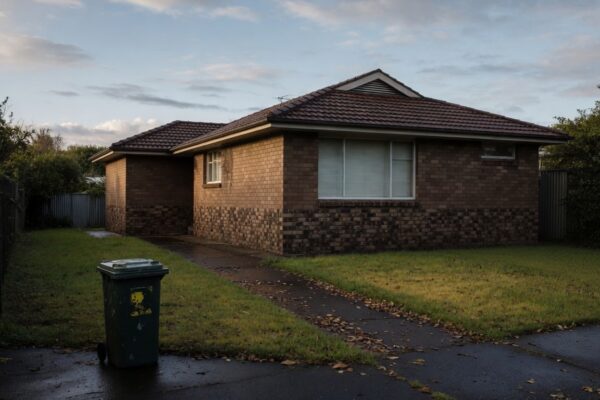
The opportunity is real, though. A single internal garage in a 1970s brick-and-tile on the North Shore is 18–36m² of floor area you already own, already roofed, already connected to power. Done properly, it becomes a fourth bedroom, a home office, or — via a different consent path — a self-contained unit earning rent. Done improperly, it becomes a cold, damp room and a problem on your LIM (Land Information Memorandum — the council’s detailed report on your property, including its consent history).
At Sonder Architecture, garage conversions and minor dwellings are one of our core services. Our design team includes a Licensed Building Practitioner in the Design Class — an LBP is a building professional licensed by the government to carry out or supervise certain restricted work — which means we produce the consent drawings, manage the council process, and provide the documentation Auckland Council requires. What follows is the conversation we’d have with you in a first meeting — starting with what you’re actually working with.

What a Garage Conversion Involves — and What Your Garage Can Become
Before the rules and the costs, get clear on the raw material. The type of garage you have — internal or standalone — shapes the consent path, the design constraints, and the budget more than any other factor.
Internal garage vs standalone garage: why it matters
An internal garage shares walls, roof, and usually a slab with the house. Think of the classic Auckland layouts: the under-house garage in a Titirangi hillside home, the street-facing double garage in a Flat Bush or Hobsonville new build, the tucked-in single in a 1960s brick-and-tile in Howick. Converting an internal garage means the new room becomes part of the house — same roofline, same services, shorter pipe and cable runs — which keeps costs down and usually keeps the planning side simple.
A standalone garage sits apart from the house — common on older, larger sections in suburbs like Te Atatū, Papakura, and parts of the North Shore. Converting a standalone garage into a sleepout (a detached room used for sleeping, without its own kitchen) is straightforward in planning terms — converting it into a fully self-contained unit with a kitchen and bathroom is a different project entirely, with its own consent category. We’ll get to that in the next section.
The most common conversions we design
The brief usually lands in one of four buckets. A home office or studio is the simplest and cheapest conversion — no plumbing, no kitchen, just a warm, dry, well-lit room. A bedroom sits one step up: same construction scope, but the stakes around insulation, ventilation, and moisture are higher because someone sleeps in it every night. A sleepout conversion of a standalone garage suits teenagers, guests, or a home gym. And at the top of the scale sits the self-contained unit — kitchen, bathroom, its own entrance — for extended family or rental income.
💡 Homeowner tip: Decide what the room needs to be in ten years, not just this year. A “home office” designed with a bedroom-grade thermal envelope and a plumbing rough-in costs a little more now and saves a full second project later.
Why a garage makes a difficult room — until it’s designed properly
Garages are built to a lower standard than the rest of your house, deliberately. There’s no requirement to insulate them, the concrete slab often sits a step below the house floor level, and older slabs may have been poured without a damp-proof membrane (the plastic layer under the concrete that stops ground moisture rising through the floor) — and the giant hole in one wall is filled with an uninsulated tilt door.
None of this makes a conversion unworkable — it just means the project is a construction job, not a furnishing exercise. The garages we assess across Auckland nearly always need the same core scope: insulation to the walls and ceiling, a moisture solution for the slab, replacement of the garage door with a properly built and weathertight wall or glazing, ventilation, and natural light. We cover each of these in the design section below.
We’ll be blunt about something we see constantly during feasibility visits: a garage that’s been “converted” without addressing the slab, the insulation, and the door opening isn’t a converted garage — it’s a cold storage room with carpet. Auckland’s humidity finds these rooms fast. If you’ve walked into one in winter, you know the smell.
Our renovation and extension design service treats a garage conversion the same way we treat any habitable addition: feasibility first, then design, then consent documentation. If you’re weighing up whether your particular garage is a good candidate, that’s exactly what our free feasibility report exists for.
Garage Conversion Consent Rules: What Most Guides Get Wrong
This is where the internet lets homeowners down. Most garage conversion articles tell you to “check if you need consent” and mention the 10m² rule — advice that misses how the Building Act actually treats conversions. In 2026, it also misses the new granny flat exemption that homeowners keep assuming applies to garages. It doesn’t.
Why “I’m not touching the structure” doesn’t get you out of consent
Schedule 1 of the Building Act 2004 is the list of building work exempt from needing a building consent — small sheds, certain repairs, some low-risk alterations. Homeowners read about Schedule 1 and assume a conversion with no structural change qualifies. It almost never does, because the consent trigger isn’t the structural work — it’s making a non-habitable space habitable.
A habitable room must meet Building Code requirements a garage was never built to: insulation, weathertightness, ventilation, natural light, and moisture control. The work needed to get there — new wall construction in the door opening, insulation and lining changes, new windows, any plumbing — is consented work. According to Building Performance (the building regulation arm of MBIE), alterations to existing buildings must comply with the Building Code, and councils assess the converted space against the requirements of its new use.
There’s a precise legal distinction here that even some builders get wrong, in both directions. Converting an attached garage into a bedroom is not technically a “change of use” under the Building Act regulations — the garage is already part of the house, and the house’s use category doesn’t change. Some take that to mean no consent is needed. Wrong conclusion: the building work to make the space habitable still requires consent. The formal change of use under sections 114 and 115 of the Building Act kicks in when you create a self-contained household unit where one didn’t exist before — and that’s a higher bar again.
Important: Converting a garage into a self-contained unit (with kitchen and bathroom) is a formal change of use under sections 114–115 of the Building Act 2004. You must notify Auckland Council before work starts, and the building must comply with the Building Code “as nearly as is reasonably practicable” for its new use. See Building Performance’s change of use guidance for the detail.
No, the new 70m² granny flat exemption does not cover garage conversions
Since 15 January 2026, the Building and Construction (Small Stand-alone Dwellings) Amendment Act 2025 has allowed new standalone dwellings up to 70m² — the “granny flat exemption” — to be built without a building consent, provided strict conditions are met. We’ve covered the exemption in full in our granny flat design guide, and it’s genuinely useful. But here’s the part that matters for this article:
The exemption applies only to new, standalone, single-storey buildings. A conversion of an existing garage — attached or detached — does not qualify. Full stop.
Per MBIE’s granny flats exemption guidance, the qualifying dwelling must be a new build, at least 2 metres from the main dwelling and all boundaries, designed and constructed under licensed building professionals, and fully Building Code compliant. An existing garage fails the “new” test before you even reach the setback rules — most attached garages would fail those too.
So if you’ve been told “just call it a granny flat, you don’t need consent any more” — that advice will earn you a Certificate of Acceptance application (the council’s retrospective process for unconsented work, which is slower, costlier, and less certain than consent) or a notice to fix. Which path you actually want depends on your goal: if you want a self-contained rental unit and your section allows it, building a new 70m² standalone dwelling under the exemption is sometimes cheaper and cleaner than converting the garage at all. That’s a genuine fork in the road, and it’s exactly the comparison a feasibility report works through.
What the consent process looks like for a garage conversion in Auckland
The mechanics are the same as any consented renovation. Your designer produces consent drawings — floor plan, elevations, construction details, insulation specification, and drainage plans if there’s plumbing. The application goes to Auckland Council through its online consenting system, and the council’s statutory target is 20 working days to process a building consent, with the clock pausing whenever they issue a request for further information. Incomplete or vague documentation is the single biggest cause of those pauses — it’s the reason consent-ready drawings matter more than cheap drawings. Once work is complete and inspections are passed, the council issues a Code Compliance Certificate, or CCC (the document confirming the finished work meets the Building Code).
Some conversions also raise resource consent questions — that’s the council’s separate approval for how land is used, governed in Auckland by the Unitary Plan (the single planning rulebook covering the whole region). Adding a second self-contained unit can trigger Unitary Plan rules depending on your zone, and a rented unit must also meet the Healthy Homes Standards (the legal minimum heating, insulation, and ventilation requirements for rentals). For the full picture of what does and doesn’t need consent across all project types, our guide to what you can build without building consent in NZ covers the Schedule 1 exemptions in detail, and our breakdown of building consent costs in Auckland covers the fees.
💡 Homeowner tip: Book a pre-application meeting with Auckland Council before committing to a design — it’s free, and it surfaces zone rules, flood overlays, or heritage constraints while changing course still costs nothing.
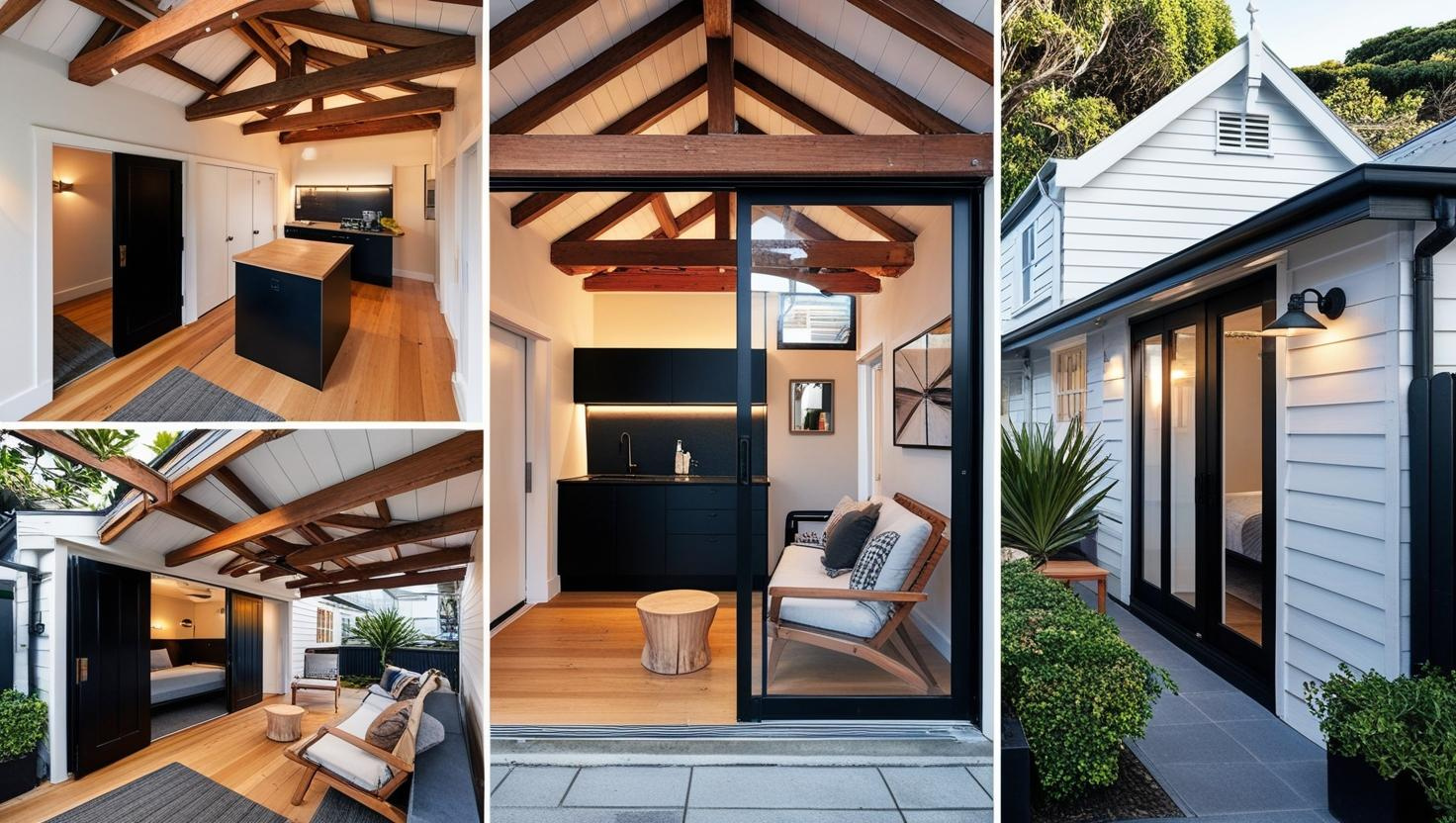
Designing a Converted Garage That’s Actually Worth Living In
Consent gets you legal. Design gets you a room people choose to spend time in. The difference between a converted garage that feels like a real room and one that feels like a garage with furniture comes down to a handful of design problems — and every one of them has a known solution.
The thermal envelope: insulation and the H1 rules
The thermal envelope is the insulated shell that keeps heat in — walls, ceiling, floor, windows. A garage has none of it. Building Code clause H1 (the energy efficiency section of the Code) sets the insulation levels your converted space needs, and those requirements were significantly upgraded when H1/AS1’s latest edition took effect in late 2025 — we’ve broken down the changes in our guide to the new NZ insulation rules. In practice, a conversion means insulating the ceiling, the external walls, and dealing with the hardest surface of all: the slab.
That concrete slab is the design problem most DIY conversions ignore. It’s cold, it may sit below the house floor level, and on older Auckland homes — say a 1970s brick-and-tile in Glenfield — it may have no damp-proof membrane underneath. The fix is usually a built-up insulated floor over the existing slab with a moisture barrier, which also lets us bring the floor level up to match the house. You lose 50–100mm of ceiling height doing it, which is why we measure stud height in the first feasibility visit — a low garage ceiling can constrain the whole design.
The door opening: the wall that makes or breaks the room
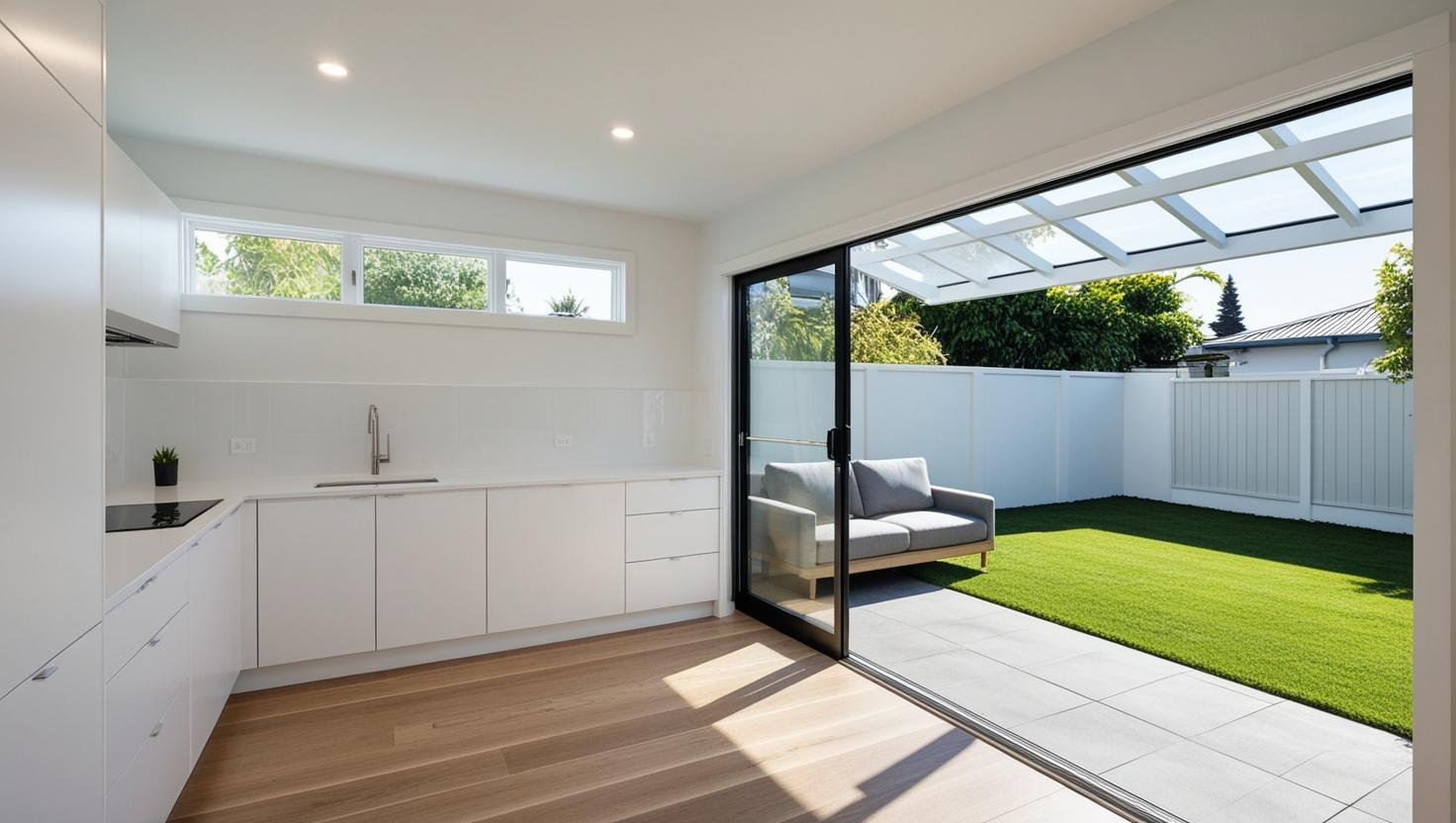
Removing the garage door leaves a structural opening the width of the room. What goes in its place defines the conversion. An infill wall with a standard window is the budget option; full-height glazing or stacking sliders turn a street-facing garage into the brightest room in the house — and on a north-facing opening, they do most of your heating for free in winter. Whatever fills the opening becomes part of the building’s weather skin, and the junctions where new construction meets old cladding are exactly where Building Code clause E2 (the external moisture section) earns its keep. Auckland learned that lesson the expensive way during the leaky building era; our guide to E2 external moisture requirements explains what the council looks for at those junctions.
“The garage door opening is the one place we tell clients not to economise. It’s the biggest junction of new-to-old construction in the whole project, it faces the weather, and it’s the first thing anyone sees from the street. Get the detailing right there and the rest of the conversion tends to follow.”
— Sonder Architecture Team
Air, light, and the things you only notice when they’re missing
Habitable rooms need ventilation (Building Code clause G4) and natural light (clause G7) — usually solved with opening windows sized to the floor area, sometimes with mechanical extraction. Sleeping spaces need smoke alarms, and a self-contained unit brings fire separation requirements between the unit and the main dwelling. None of this is exotic. All of it needs to be on the drawings, because these are the clauses Auckland Council’s processing officers check line by line.
💡 Homeowner tip: If the conversion will ever be a bedroom, position at least one window for morning sun and cross-ventilation now. Retrofitting a second window into a finished, lined wall costs three times what it costs on the drawings.
The parking question — and the covenant trap
“Won’t I lose my required car park?” is one of the most common questions we field, and the answer surprises people. Auckland Council removed minimum parking requirements from the Unitary Plan following the Government’s National Policy Statement on Urban Development, so in most residential zones, converting your garage no longer breaches a parking rule. Your car lives on the driveway and the council doesn’t mind.
Two genuine catches, though. Private covenants — common in newer subdivisions like Millwater and Hobsonville Point — can require garaging regardless of what the Unitary Plan says, and a covenant is a private legal obligation the council can’t waive. The other catch is cross-lease titles (where you co-own the land with your neighbour and “lease” your home’s footprint) — these often define the garage on the flats plan, and converting it can require your cross-lease neighbour’s consent or a title update. Check your Record of Title before you fall in love with a design. It’s a ten-minute job that has saved our clients real money.
Important: Unitary Plan zone rules still apply to self-contained units — and site-specific overlays (flood plains, heritage protection, or Special Character Areas — designated suburbs like Ponsonby and Grey Lynn where extra design rules apply) can change what’s possible on your section. Check your property on the Auckland Unitary Plan map viewer before designing.
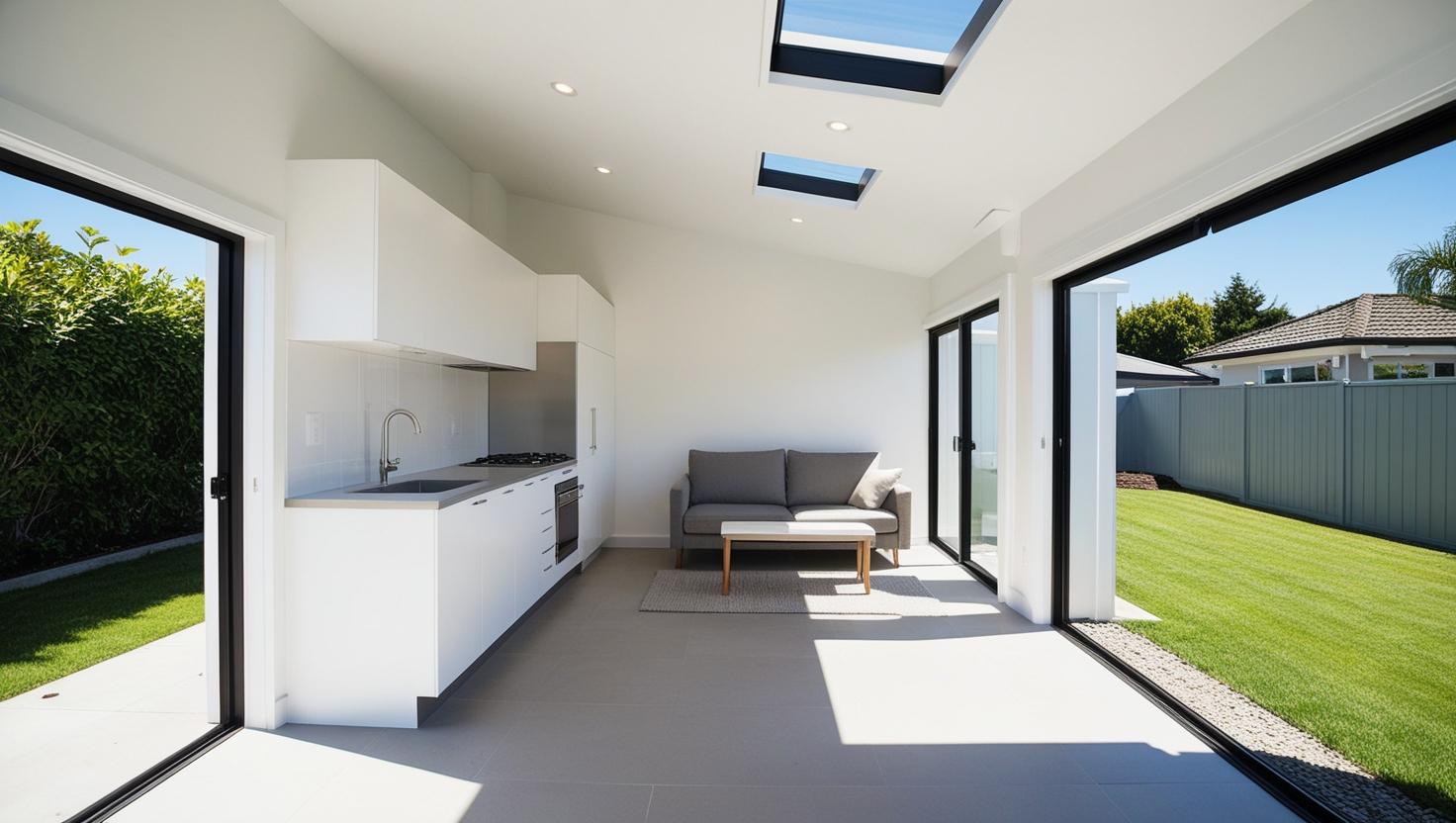
Garage Conversion Costs in Auckland — and What the Spend Gets Back
Now the question you opened this article for. In Auckland, a basic garage conversion to a dry habitable room — office, bedroom, media room — typically starts around $40,000. A fully self-contained unit with kitchen and bathroom runs $100,000–$150,000+. The spread is wide because the projects barely resemble each other: one is insulation, lining, a wall, and a window; the other is a small house build inside an existing shell.
Where the money goes
These are the cost components we see across Auckland garage conversion projects. Every site is different — treat these as planning ranges, not quotes.
| Component | Typical Auckland range | Notes |
|---|---|---|
| Design + consent drawings | $3,000–$10,000 | Scales with complexity; self-contained units sit at the top |
| Council consent fees | $2,000–$5,000 | Auckland Council charges by project value and inspection count |
| Insulation + floor build-up | $3,000–$7,000 | Higher if the slab needs a full insulated overlay |
| Garage door infill (wall/glazing) | $5,000–$20,000 | Standard infill wall at the low end; full-height glazing at the top |
| Plumbing + drainage | $5,000–$15,000 | Distance to existing lines is the main driver |
| Bathroom (if added) | $15,000–$50,000 | Spec-dependent — compact wet rooms keep this down |
| Kitchen/kitchenette (if added) | $10,000–$30,000 | Kitchenette for a studio sits at the low end |
| Total project range | $40,000–$150,000+ | Dry room at the low end; self-contained unit at the top |
Add a 10–15% contingency on top of whatever number you land on. Garage conversions are renovation work on existing structures, and existing structures hide things — undersized framing behind linings, a cracked slab, wiring from another era. We’d rather you budget for the surprise and not need it.
For the build-cost side in finer detail, our group’s renovation arm Superior Renovations has a garage conversion cost calculator that lets you price your specific scope — they handle the construction on many of the conversions we design, so the two halves of the project sit under one roof. And if your plan is a self-contained rental, compare the conversion numbers against our minor dwelling cost guide first — at the upper end of the conversion range, a new standalone build under the granny flat exemption can be the better-value path.
What it does to your home’s value — the honest version
You’ll find percentage claims all over the internet about what a conversion “adds”. We won’t give you one, because it depends on your suburb, your buyer pool, and how good the conversion is. What we can tell you from sitting on the design side of Auckland projects:
A consented extra bedroom in a three-bedroom-dominated suburb does real work at sale time — bedrooms are the unit of currency in family suburbs like Howick, Te Atatū, and Glenfield. A consented self-contained unit changes the buyer pool entirely, opening your home to purchasers who need rental income to service the mortgage. And an unconsented conversion does the opposite of all of it: buyers’ lawyers flag it, banks can decline lending against it, and insurers can question it. We’ve written separately about selling a house without a CCC — the short version is that unconsented work is a discount lever for every buyer who notices it, and at sale time, someone always notices.
Sound familiar? If you’ve already got a lined garage of uncertain consent status, you’re not alone — it’s one of the most common situations we assess. A Certificate of Acceptance or a remediation-and-consent path can usually tidy it up, and it’s far cheaper to fix before the sale campaign than during one.
💡 Homeowner tip: Get a registered valuer’s view on your specific conversion before committing the budget. One phone call tells you whether your suburb pays back a $120,000 self-contained unit or whether a $50,000 fourth bedroom is the smarter spend.
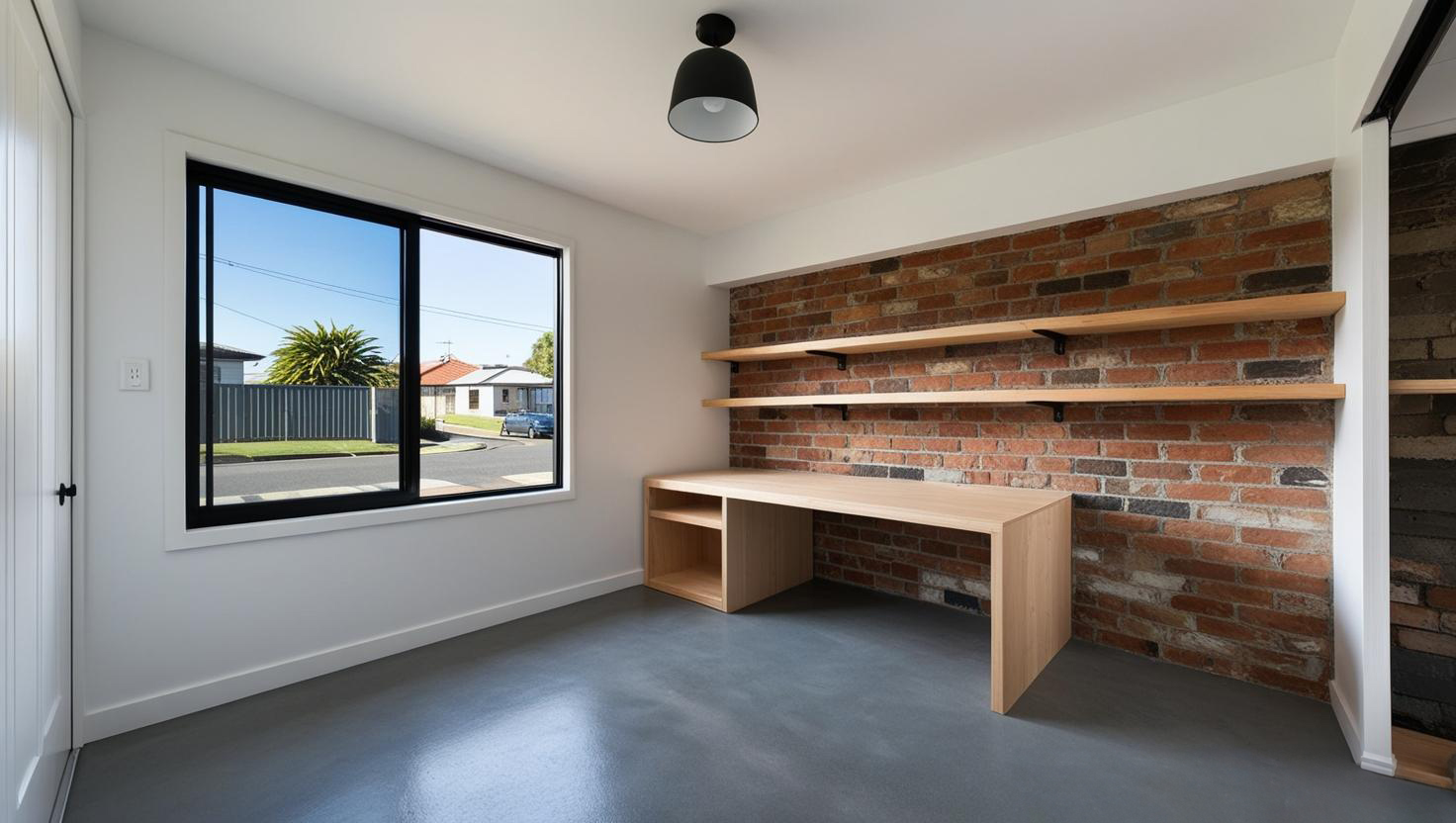
Where to Start With Your Garage Conversion
Start with feasibility, not with a builder’s quote. The questions that decide your project — habitable-space compliance, the self-contained-unit fork, your title and zone constraints, whether the slab and stud height cooperate — are design and consent questions, and they’re cheap to answer on paper and expensive to answer mid-build.
That’s the work our free feasibility report does: we look at your garage, your title, your zone, and your goal, and tell you what the realistic path and budget look like before you’ve spent anything. From there, Sonder Architecture handles the design, the consent documentation, and the Auckland Council process end to end — from our studio at 16 Link Drive, Wairau Valley, we’ve taken Auckland conversions from first sketch through to CCC, with Superior Renovations available as the build partner if you want design and construction under one group.
Your garage is the cheapest floor area you’ll ever add to your house. It deserves better than carpet over cold concrete.
➡ Book a free consultation with Sonder Architecture
➡ Request your free feasibility report
➡ Explore our granny flat and minor dwelling design service
Do I need building consent for a garage conversion in NZ?
Almost always, yes. A garage is a non-habitable space under the Building Code, and the work needed to make it habitable — insulation, lining, replacing the garage door with a wall or glazing, new windows, any plumbing — requires building consent. The exemptions in Schedule 1 of the Building Act cover minor low-risk work, not converting a space for living in. Check Building Performance (building.govt.nz) guidance or talk to an LBP designer before assuming anything is exempt.
Can I convert my garage without consent if I don't change the structure?
No — this is the most common misunderstanding. The consent trigger isn't structural change; it's converting non-habitable space to habitable space. Even with every wall left untouched, the insulation, moisture control, ventilation, and weathertightness work needed to meet the Building Code for a habitable room is consented building work. A lined and carpeted garage without consent will show up as unconsented work on your property records at sale time.
Does the new 70m² granny flat exemption apply to garage conversions?
No. The granny flat exemption (in force from 15 January 2026) covers new, standalone, single-storey dwellings up to 70m², built at least 2 metres from the main dwelling and boundaries, under licensed building professionals. A conversion of an existing garage fails the 'new standalone building' requirement, so it cannot use the exemption. MBIE's guidance at building.govt.nz confirms conversions still need building consent.
How much does a garage conversion cost in NZ?
In Auckland, a basic conversion to a dry habitable room — office, bedroom, media room — typically starts around $40,000. Adding a bathroom pushes the project toward $60,000–$90,000, and a fully self-contained unit with kitchen and bathroom generally runs $100,000–$150,000+. Design and consent drawings ($3,000–$10,000) and Auckland Council fees ($2,000–$5,000) sit on top of construction. Add a 10–15% contingency for surprises in the existing structure.
Can I convert my garage into a granny flat or rental unit?
Often, yes — but it's the most regulated version of the project. Creating a self-contained unit is a formal change of use under sections 114–115 of the Building Act, requiring council notification and compliance with the Building Code for the new use. Unitary Plan zone rules apply, and a rented unit must meet the Healthy Homes Standards. In some cases, building a new standalone unit under the 70m² granny flat exemption is better value than converting — compare both paths before committing.
Will I lose required car parking if I convert my garage in Auckland?
Usually not. Auckland Council removed minimum parking requirements from the Unitary Plan after the Government's National Policy Statement on Urban Development, so converting your garage doesn't breach a parking rule in most residential zones. The real catches are private covenants — common in newer subdivisions — which can require garaging regardless of council rules, and cross-lease titles where the garage is defined on the flats plan. Check your Record of Title first.
What insulation does a converted garage need?
The converted space must meet Building Code clause H1 (energy efficiency), which means insulating the ceiling, external walls, and addressing the concrete slab — usually with an insulated floor build-up over a moisture barrier. H1 requirements were upgraded in the latest edition of H1/AS1, so older rules of thumb no longer apply. Your consent drawings must specify the insulation values, and Auckland Council checks them during processing.
How long does consent take for a garage conversion in Auckland?
Auckland Council's statutory target is 20 working days to process a building consent, but the clock stops every time the council requests further information. Straightforward, well-documented conversions often track close to the target; applications with vague drawings or missing details take much longer. Allow 4–8 weeks in your project timeline, plus the design and documentation period beforehand.
What happens if I sell a house with an unconsented garage conversion?
It surfaces — through the LIM report, the building file, or the buyer's lawyer comparing the listing to the consent history. Unconsented work gives buyers a negotiating lever, banks can decline lending against the affected area, and insurers can raise questions. The fixes are a Certificate of Acceptance (the council's retrospective approval process) or remediation work under a new consent — both are cheaper and calmer to arrange before a sale campaign than during one.
Is a garage conversion cheaper than building a new granny flat?
For a dry room — bedroom, office, sleepout — the conversion wins comfortably, because you already own the structure, roof, and slab. For a fully self-contained unit, the answer flips more often than people expect: at $100,000–$150,000+ for a conversion, a new standalone build under the 70m² granny flat exemption can deliver a better unit for comparable money, without compromises forced by the existing garage. A feasibility assessment comparing both paths is the right first step.