
Is It Worth Getting an Architect for a Renovation? The Honest Auckland Homeowner’s Guide (2026)
Short answer: For any Auckland renovation that requires a building consent — extensions, structural changes, new wet areas, recladding, garage conversions — yes, you need an architectural designer and it’s absolutely worth it. For purely cosmetic work with no consent implications, professional design input is still valuable but not legally required. This guide breaks down exactly where the line is, what it costs, and what’s at stake if you skip it.
Every week at Sonder Architecture, we sit down with homeowners across Auckland who are asking the same question — usually in slightly different ways. “Do I actually need an architect for this?” Or: “Can’t I just go straight to a builder?” Or, most honestly: “I know I probably need one, but is it going to be worth the money?”
These are fair questions. Not every renovation needs a full architectural service. But a surprising number do — and the stakes for getting it wrong are higher than most people realise. We’ve seen what happens when homeowners skip this step on a project that needed it, and the cost of fixing it is almost always more than the design would have been in the first place.
This series is our honest take on the question. We’ll cover what an architectural designer actually does in a renovation, when New Zealand law requires one, what it costs, what goes wrong when people skip it, and how to get the most from the design process when you do engage one. No jargon, no waffle — just the information you need to make a confident decision about your renovation.
Here’s what this series covers across five sections:
- Section 1: What does an architect actually do in a renovation — and how is it different from hiring a builder?
- Section 2: When does NZ law require an architect or architectural designer — and when can you genuinely skip it?
- Section 3: How much does a renovation architect cost in Auckland — and does the investment pay off?
- Section 4: The real risks of renovating without an architect — what actually goes wrong in Auckland?
- Section 5: How to work with an architectural designer effectively — getting the best outcome from the process.
What Does a Renovation Architect Actually Do? (And Why It’s Very Different From Just Hiring a Builder)
Here’s the thing that surprises a lot of Auckland homeowners when they first talk to us: an architect — or architectural designer — isn’t just the person who draws the pictures. And your builder, skilled as they are, isn’t a designer. These are genuinely different roles. Understanding what each person actually does is the most useful starting point for any renovation conversation.
So let’s break it down — plainly, practically, in the way that’s actually useful to you as a homeowner trying to figure out what your renovation project needs.
The Three Parties in Most Renovations: You, the Designer, and the Builder
A well-run renovation typically involves at least three key parties. You — the homeowner — bring the vision, the budget, and the decisions. The builder executes the physical work: framing, linings, tiling, plumbing rough-ins, the lot. And the architect or architectural designer sits between those two, translating your vision into something that’s technically buildable, legally compliant, structurally sound, and spatially well thought-out.
In practice, the architectural designer on a residential renovation typically handles:
- Feasibility studies — checking whether your idea is achievable on your specific site, within your budget, and within the rules that apply to your property under the Auckland Unitary Plan
- Concept design — turning your rough wishlist into spatial drawings you can see, react to, and refine before a single piece of timber is ordered or a dollar is spent on construction
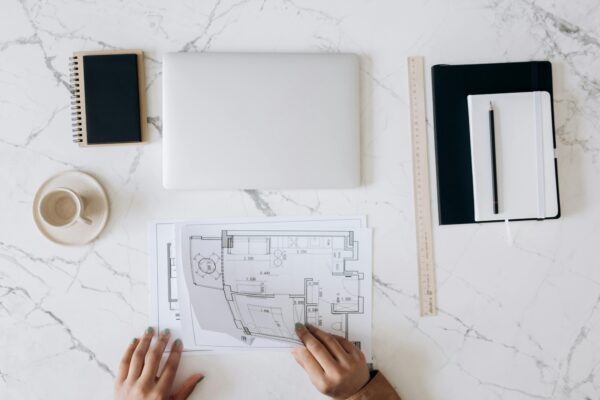
- Detailed architectural drawings — the full technical documentation (floor plans, elevations, cross-sections, 3D renders, specifications) that Auckland Council requires to grant a building consent for any consented work
- Consent management — lodging the building consent application, coordinating with Auckland Council, responding to requests for further information, and managing the process through to approval
- Subconsultant coordination — structural engineers, geotechnical engineers, and other specialists whose sign-off is required as part of the consent documentation
- Construction phase support — in some agreements, checking that what’s being built on site matches the approved plans and catching any problems before they become expensive
Your builder is expert at executing the plans — not producing them. They know how to frame a wall, lay a concrete slab, and coordinate a trade schedule with precision. But they’re not the person who rethinks your floorplan so the kitchen gets natural light, and they can’t produce the architectural drawings Auckland Council requires for consented renovation work.
“We meet a lot of clients each week who are unsure whether they need an architect or not. Many are also intimidated by the architectural process even before starting their renovation — and that sometimes stops them from making the most of what their home could become. That doesn’t have to be the case. The process, done well, is collaborative and actually quite enjoyable.”
— John Mao, Director, Sonder Architecture
Architect vs. Architectural Designer vs. LBP: Clearing Up the NZ Terminology
In New Zealand, the title “architect” is legally protected — only those registered with the New Zealand Registered Architects Board (NZRAB) can use it. However, for the vast majority of residential renovation projects, an experienced architectural designer holding an LBP (Licensed Building Practitioner) Design Class licence can provide everything you need — full design service, consent-ready drawings, and legal authority to carry out Restricted Building Work design.
| Professional Title | Qualification / Licensing | Can Produce Building Consent Drawings? | Can Design Restricted Building Work? |
|---|---|---|---|
| Registered Architect | NZRAB registered | Yes | Yes |
| Architectural Designer (LBP Design Class) | Licensed by MBIE | Yes | Yes |
| Builder (LBP — Carpentry or Site Class) | Licensed by MBIE | No (in most cases) | Yes (for construction, not design) |
| Interior Designer | Varies | No | No |
| Draftsperson / Draftsman | Varies — may or may not hold LBP | Only if LBP Design Class licensed | Only if LBP Design Class licensed |
At Sonder Architecture, our team holds LBP Design Class licensing — which means we can legally design and manage Restricted Building Work for your home, sign off on the documentation Auckland Council requires, and provide the Record of Work that proves your renovation was designed to code. This is what matters for your project, your consent, and your property’s future sale value.
You can see the full range of what our team covers on our services page, and learn about the people behind the work on our people page.
What Does an Architectural Designer Do Day-to-Day on an Auckland Renovation? A Real Example
Let’s make it concrete. Say you want to extend the back of your 1960s brick-and-tile home in Glenfield to create an open-plan kitchen and dining area that opens to the garden. Here’s what the architectural design process looks like:
Step 1 — Site visit and feasibility. We visit your property. We look at the existing building, the section boundaries, and pull up the Auckland Unitary Plan rules that apply to your specific address — zoning, site coverage limits, height-to-boundary rules. We tell you honestly what’s achievable, flag any planning constraints, and give you a ballpark cost range before you commit to anything further. This is also where we’d flag if you need a resource consent on top of a building consent.
Step 2 — Concept drawings. You get initial sketch plans showing the proposed layout — where the extension sits, how it connects to the existing house, what it looks like from outside, how light moves through the space through the seasons. You react. We refine. This back-and-forth is how good design gets made, and it’s the stage where the spatial quality of your renovation is determined. You can read more about how we approach this in our guide to the architectural design process in NZ.
Step 3 — Developed design and engineering coordination. Once the concept is locked in, we produce detailed drawings and pull in a structural engineer to confirm the design is structurally sound. For Auckland’s variable soil conditions — particularly in suburbs like Titirangi, West Harbour, or on the North Shore’s clay soils — geotechnical input may also be needed. Subconsultants provide producer statements that form part of the consent documentation.
Step 4 — Consent documentation. We assemble the full set of documents Auckland Council requires: site plan, floor plans, elevations, cross-sections, specifications, energy efficiency details, plumbing schematics, and more. As Building Performance NZ confirms, all consented work must comply with the New Zealand Building Code, and the drawings must be produced by a qualified professional.
Step 5 — Consent lodgement and management. We lodge the application with Auckland Council, who have 20 working days to process it (the clock pauses if they request further information). We manage those responses, keep the application moving, and get you to construction-start as efficiently as possible.
The Thing Most People Don’t Think About: Design That Actually Makes Your Renovation Better
There’s a dimension to this that gets missed in the “do I need an architect?” conversation: good architectural design doesn’t just make your renovation legal — it makes it genuinely better to live in.
A skilled designer will orient your kitchen to capture morning sun. They’ll position your extension so it doesn’t kill the afternoon light in the existing living room. They’ll spot that your “simple” bathroom refresh would trigger a consent because of where the new shower tray sits — and can redesign around that to save you both time and money. They think spatially and seasonally, considering how spaces feel to move through and live in across years, not just how they look on a plan.
This is the gap between a renovation that technically works and one that transforms how you experience your home. It’s also why, when we look back at the Auckland architectural renovation projects our clients are most proud of, almost all of them involved real design input from the start — not just drawings produced to satisfy a consent requirement.

📌 Key takeaway for skimmers: An architectural designer handles design, documentation, and the consent process. A builder handles construction. For any work requiring Auckland Council consent — structural changes, extensions, new wet areas, recladding — you need a qualified designer first, and a builder second. Trying to shortcut this order is where things go wrong.
When Do You Legally Need an Architect (or Architectural Designer) for Your Auckland Renovation — And When Can You Honestly Skip It?
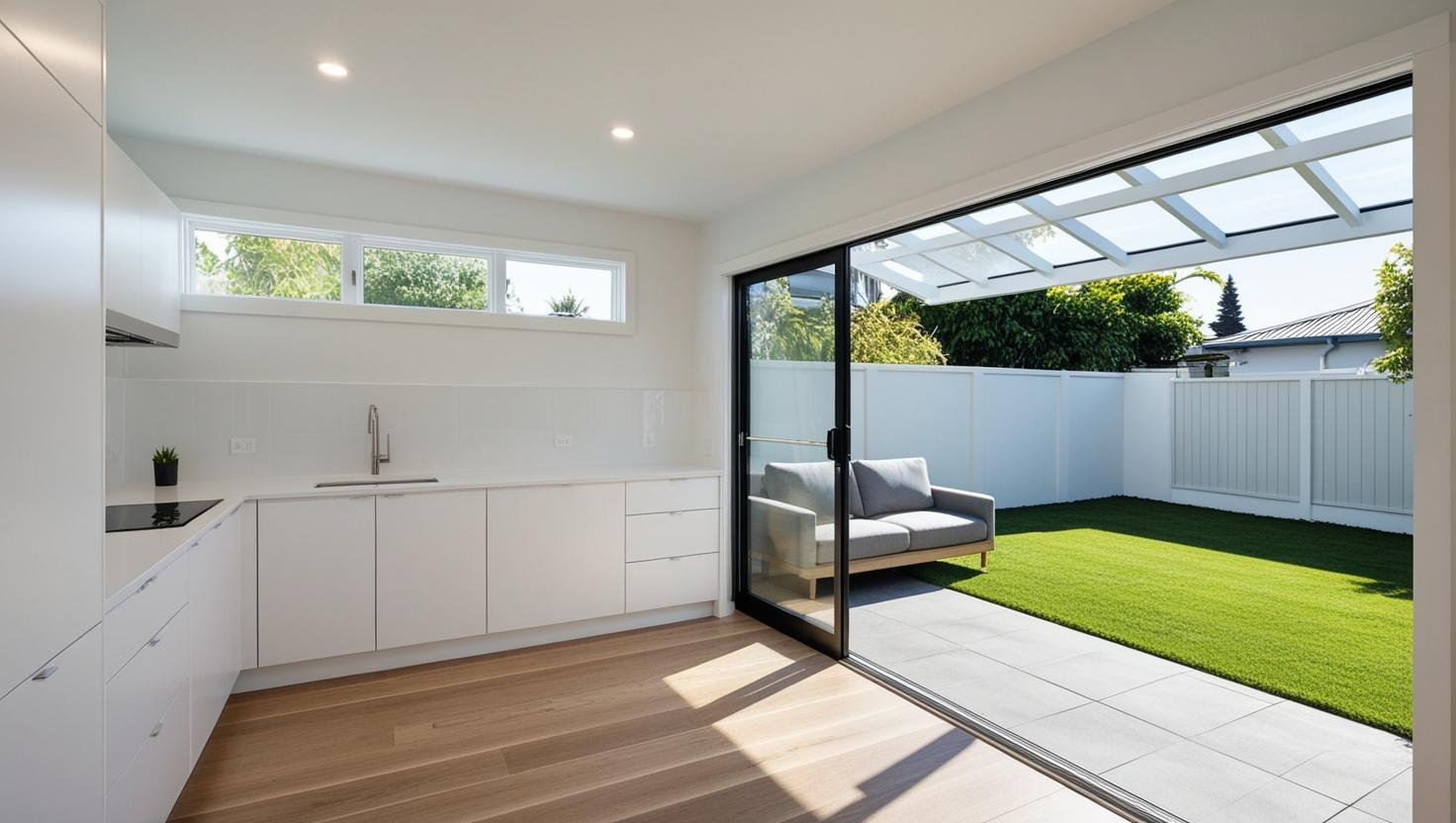
Let’s get straight to the point: not every renovation needs an architectural designer. If you’re repainting your lounge, swapping a tired kitchen tap, or putting in new carpet — none of that requires a consent, architectural drawings, or a second thought beyond finding good tradespeople.
But the moment your project starts touching structure, moving or adding plumbing, installing new wet areas, or changing the building’s exterior envelope — the rules change. And in Auckland, the consequences of getting it wrong are serious. Doing consented building work without a consent is illegal under the Building Act 2004. Fines, stop-work notices, complications at property sale — these are real outcomes that affect Auckland homeowners every year.
The Two Regulatory Layers Auckland Homeowners Need to Know
Auckland sits under two layers of regulation that interact on renovation projects:
1. The New Zealand Building Code (administered under the Building Act 2004) sets the national standards all building work must meet — safety, structural integrity, weathertightness, energy efficiency, plumbing, and more. Building Performance NZ is the definitive resource on what requires a consent and what’s exempt. If your project involves structure, drainage, or weathertightness, you almost certainly need a building consent — and with it, consent-ready drawings from a qualified designer.
2. The Auckland Unitary Plan adds a planning layer specific to Auckland — zone-by-zone rules on height, site coverage, boundary setbacks, and heritage controls. Even if your work is technically fine under the Building Code, the Unitary Plan might require a resource consent if your project would breach its rules. This is particularly relevant in character-home suburbs like Ponsonby, Grey Lynn, Devonport, and Parnell — where heritage overlay provisions can significantly affect what you can build.
You can read a deeper breakdown of the consent landscape in our Building Consents Explained: NZ 2025 Guide and our Auckland Homeowner’s Guide to Building Consent for Renovations.
The Consent Checklist: Does Your Renovation Need One?
| Renovation Type | Building Consent Needed? | Architectural Designer Required? | Notes |
|---|---|---|---|
| Interior repainting | No | No | Purely cosmetic — no consent implications |
| New flooring (no structural changes to subfloor) | No | No | Like-for-like surface replacement |
| Replacing vanity or toilet in the same location | No (usually exempt) | No | Must be like-for-like; plumber required |
| New kitchen (same layout, plumbing stays put) | No (usually) | Not required — interior designer still adds real value | Confirm no structural work is involved |
| New kitchen (plumbing relocated, structural changes) | Yes | Yes | Even moving an island can have drainage implications |
| Installing a new tiled shower (wet area) | Yes | Yes | Waterproofing requirements under Clause E3 of Building Code |
| Moving or adding a toilet | Yes | Yes | Changes to drainage always require consent |
| Removing a load-bearing wall | Yes | Yes (+ structural engineer) | Restricted Building Work; beam design required |
| House extension | Yes | Yes | May also need resource consent under Unitary Plan |
| Garage conversion to habitable space | Yes | Yes | Change of use; insulation, plumbing, weathertightness all affected — see our garage conversion guide |
| Recladding exterior walls | Yes | Yes | Weathertightness is Restricted Building Work; LBP Record of Work required |
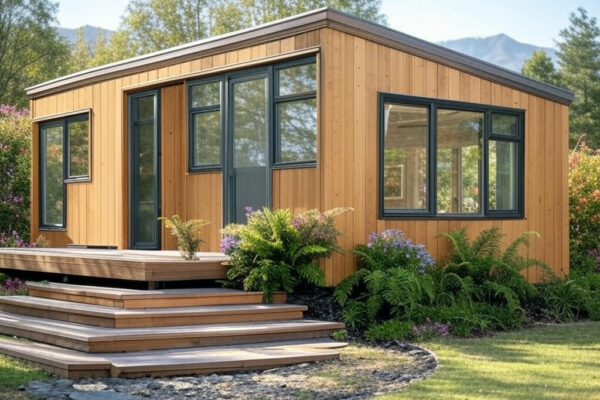
| Minor dwelling / granny flat (under 70m²) | Possibly exempt under new rules | Strongly recommended | Must still meet Building Code even if exempt — see our minor dwelling cost guide |
| High-level deck or deck attached to dwelling | Yes | Yes | Low-level decks may be exempt — check Auckland Council |
| Subdivision | Yes (resource + building consent) | Yes | Complex process — see our Auckland subdivision guide |
Not sure which category your project falls into? Building Performance NZ has a free online consent checker. You can also call Auckland Council’s building helpdesk on 09 301 0101. Or — easiest of all — get a free feasibility report from Sonder Architecture and we’ll give you a clear read on exactly what your project requires.
Restricted Building Work: The Legal Concept That Changes Things
There’s a specific term in NZ building law that most homeowners haven’t heard of — but absolutely should: Restricted Building Work (RBW).
Under the Building Act, certain types of work must be carried out or supervised by a Licensed Building Practitioner. This includes structural framing, foundations, roof framing, external wall cladding (weathertightness), and — critically — the design work for any of the above. This means the drawings for your consented structural renovation must be produced by an LBP Design Class practitioner, who must also provide a Record of Work.
Building Performance NZ is clear on this: using licensed people for restricted building work isn’t optional. It’s a legal requirement that protects your home’s structural integrity, weathertightness, and long-term value.
“A building consent is Auckland Council’s formal approval that your proposed work will meet the New Zealand Building Code — it’s your safety net. Skipping a required consent can lead to fines, or worse, issues when selling your home.”
— Sonder Architecture — Building Consent for Renovations Guide
What’s Changed in 2025–2026: The Consent Exemption Updates
Good news for some Auckland homeowners: recent changes to Schedule 1 of the Building Act have expanded certain exemptions. As we covered in detail in our guide to the NZ building consent system, these now include:
- Minor dwellings (granny flats) up to 70m² can now be built without a building consent, provided the structure is wholly new (not an addition), meets all other Building Code requirements, and satisfies additional conditions set by MBIE
- Small sleepouts and detached structures up to 30m² under certain height and boundary conditions
- Low-level decks below specified height thresholds
But here’s the nuance that matters: exempt from consent doesn’t mean exempt from the Building Code. As Auckland Council states explicitly, you remain responsible for ensuring all exempt building work complies with the Building Code. Getting an architectural designer involved — even for technically exempt projects — is still strongly advisable to prevent weathertightness or structural problems down the track. A problem discovered five years later, behind the linings, is always far more expensive than getting the design right at the start.
📌 Key takeaway for skimmers: If your renovation touches structure, moves plumbing, adds a new wet area, or changes the building’s footprint or envelope — you almost certainly need a building consent and qualified architectural drawings. The fine for proceeding without a required consent is up to $200,000 under the Building Act 2004. If you’re unsure: ask before you start.
How Much Does a Renovation Architect Cost in Auckland — And Does the Investment Actually Pay Off?

Alright — let’s talk money. Because this is usually the point where the “is an architect worth it?” question stops being theoretical and starts being real. Fees aren’t trivial. And for homeowners already stretching a renovation budget, adding a professional design fee to the bill can feel like the obvious first thing to cut.
So here’s the honest breakdown: what does it actually cost, what do you get for that money, and does the return on that investment justify the spend? We’ve also covered this from a different angle in our detailed guide to how much a set of architectural plans costs in NZ — which is worth reading alongside this section.
What Architectural Services Cost for an Auckland Renovation in 2026
| Service Stage | Typical Cost Range (NZD, excl. GST) | What You Get |
|---|---|---|
| Feasibility study / report | $1,500 – $3,500 | Site assessment, Unitary Plan check, cost ballpark, consent implications |
| Concept drawings (sketch design) | $2,000 – $5,000 | Spatial layout options, exterior sketches, initial 3D views for client feedback |
| Detailed architectural drawings (consent-ready) | $5,000 – $15,000 | Full consent documentation: plans, elevations, sections, specifications |
| Full architectural service (feasibility through to consent) | $10,000 – $30,000 | Complete service from first site visit to building consent approval |
| Auckland Council building consent fees (paid to Council) | $2,000 – $12,000+ | Based on assessed value of work; paid separately to Auckland Council |
| Resource consent (if required under Unitary Plan) | $5,000 – $20,000+ | Separate process from building consent; more complex and variable |
Cost ranges informed by NZIA industry data, Sonder Architecture project experience, and NZ industry benchmarks. Actual fees depend on project scope, complexity, and site-specific requirements.
As a percentage of total renovation cost, architectural fees for renovations in New Zealand typically run 8%–15% of the total project value, depending on the complexity and scope of work — rising toward the top of that range for projects involving major structural changes, recladding, or extensions, and sitting lower for simpler consent-required work like adding a tiled shower or a toilet addition.
On top of design fees, Auckland’s construction costs themselves run 10–20% above the national average — driven by higher labour rates ($90–$150/hour for skilled tradespeople in the region), stronger demand for quality contractors, and Auckland Council’s more detailed consent requirements. If you’re renovating a pre-1940s character home — an Auckland villa, a bungalow in Ponsonby or Epsom — budget an additional 25% contingency for the surprises that tend to live inside older walls.
Is the Architect’s Fee Worth It? Three Arguments That Hold Up
1. The Property Value Return
Auckland’s property market rewards well-executed, well-designed renovation. A kitchen renovation done right is known to return around 80% of its cost in added property value. Extensions that add liveable square metreage are even more directly correlated with value in Auckland — where every functional square metre commands a premium.
But here’s the part most people don’t factor in: a badly designed renovation can reduce your property’s value at sale. Poor spatial flow, awkward proportions, inadequate natural light, and unconsented work all show up in valuations — and buyers’ lawyers find them. A well-designed 20m² extension with good natural light and proper consent documentation will consistently outperform a poorly designed 30m² extension in the same suburb. The design fee is the investment that ensures your renovation budget is well spent — not just spent.
2. The Cost of Mistakes
Renovation mistakes are expensive — specifically because they’re often discovered after construction has started, which is when they’re hardest and most costly to fix. A design error caught at the drawing stage costs nothing to correct: it’s a revised line on a plan. The same error discovered once concrete has been poured, framing is up, or tiles have been laid can cost tens of thousands of dollars in abortive work.
Kitchen islands that don’t allow two people to work side by side. Bathroom doors that swing into the vanity. Extensions that block northern light from the existing living room. Wet areas installed without proper waterproofing detail. These are the kinds of problems that emerge when there’s no proper design process — and every one of them is cheaper to prevent than to fix.
“Architectural fees for renovations typically range from 8% to 15% of the total renovation cost. Projects involving major structural changes, such as recladding, extensions, or adding a second storey, require more design work and compliance documentation, increasing architectural costs. In contrast, smaller renovations, like a new tiled shower or a garage conversion, may have lower architectural fees but still require detailed plans and consent in some cases.”
— Sonder Architecture — How Much Does a Set of Architectural Plans Cost in NZ?
3. Consent Efficiency Is Worth Real Money
Auckland Council’s statutory processing time is 20 working days — but this clock stops every time they issue a Request for Further Information (RFI), and restarts only when you or your designer respond with acceptable answers. Applications prepared by experienced architectural designers who know Auckland Council’s documentation standards sail through. Applications submitted by people unfamiliar with the process generate multiple RFIs, dragging the timeline out by weeks or months.
In a renovation project, time is money — your builder’s schedule slips, holding costs mount, and if you’re in temporary accommodation, that cost adds up fast. Getting your drawings right the first time is one of the most underappreciated ways a good designer saves your overall project budget.
When You Can Genuinely Skip the Full Architectural Service
Not every project needs a full architectural service. If your renovation is purely cosmetic — no structural work, no consent implications, no plumbing relocations — you don’t need consent drawings. You might still benefit from professional design guidance on spatial planning, product selection, and finishes (particularly for kitchens and bathrooms where the detailing matters), but the architectural design process isn’t a legal requirement.
For consent-required work where the scope is narrower — a single tiled shower addition, a new toilet install, a specific room alteration — the fee at the lower end of the range is the right investment. Our free feasibility report is a good starting point: it’s a no-commitment way to understand what your project requires and what it’s likely to cost before you commit to anything.
📌 Key takeaway for skimmers: Full architectural services for Auckland renovation projects run $10,000–$30,000 depending on scope. Architectural fees as a percentage of total renovation cost typically sit at 8%–15%. For consented work, this investment is essentially unavoidable — and the return through better design quality, faster consent approval, and prevented construction mistakes typically far exceeds the fee. For non-consent work, professional design input still improves outcomes significantly.
The Real Risks of Renovating Without an Architect in Auckland — What Goes Wrong, and How Often
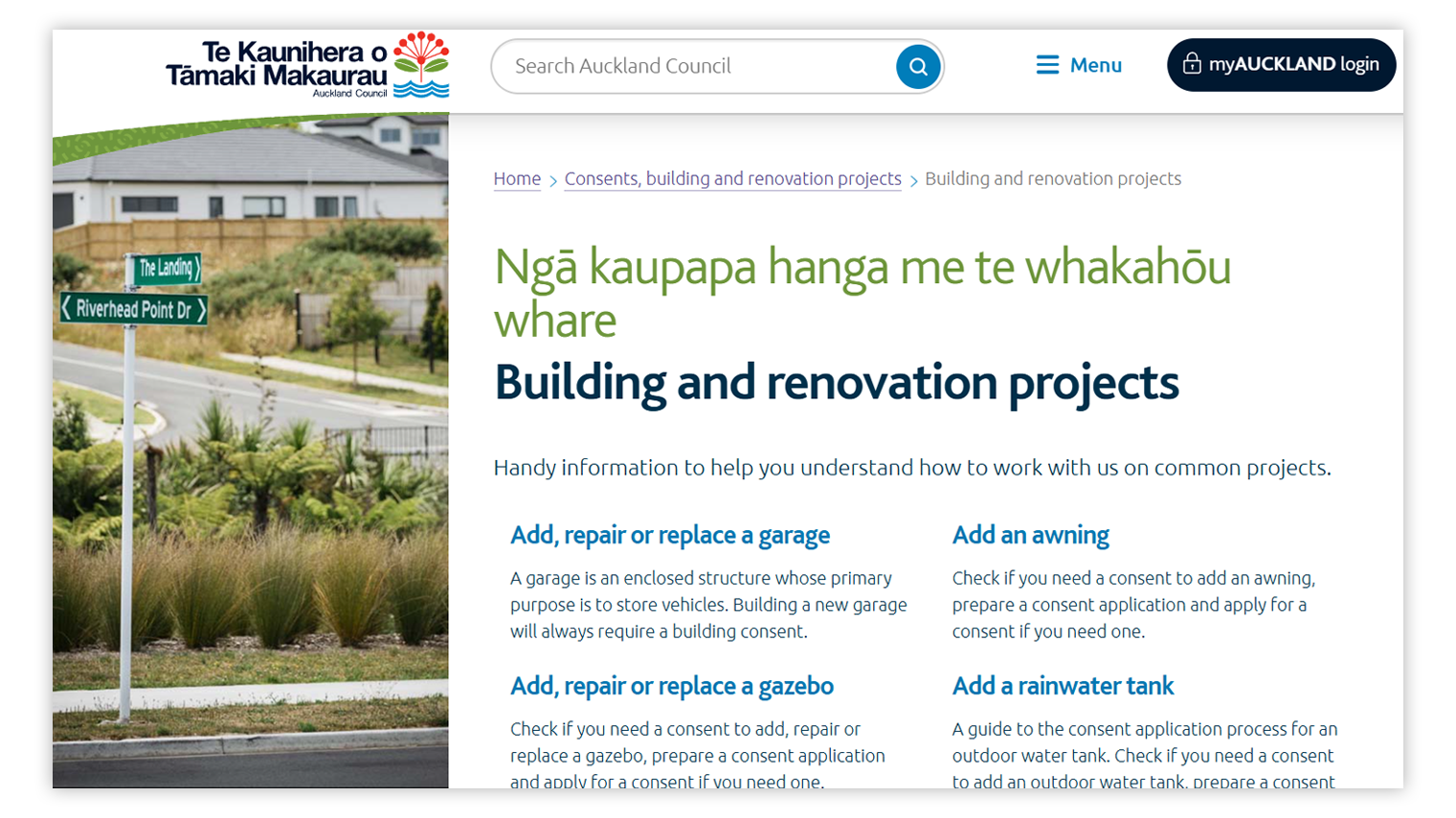
https://www.aucklandcouncil.govt.nz/building-and-consents/building-renovation-projects/Pages/default.aspx
We’ve covered when you need an architectural designer and what it costs. Now let’s talk about what actually happens when people skip this step on a project that needed it. This section isn’t designed to frighten you away from renovating — it’s designed to help you make a fully informed decision. A well-designed, properly consented renovation is one of the best investments an Auckland homeowner can make. But the risks of getting the process wrong are significant, and they’re worth understanding clearly.
Risk 1: Unconsented Work — The Landmine That Appears at Sale Time
This is the most common and most costly risk — and it affects more Auckland homes than most people realise. Building work that requires a consent, done without one, is unconsented building work. It doesn’t matter how well it was built. It doesn’t matter if your builder assured you “this sort of thing gets done all the time.” Without a consent, the work is in breach of the Building Act 2004 — and the consequences are layered.
- Fines up to $200,000. Building Performance NZ confirms that carrying out building work requiring a consent without obtaining one can result in fines of up to $200,000, with an additional $10,000 per day if work continues after a stop-work notice is issued.
- Stop-work notices. Auckland Council has powers to halt construction, restrict access to buildings, and attach warning notices to properties — all of which are exercised in practice.
- Disclosure requirements at sale. When you sell, you must disclose unconsented building work as a material fact. It will appear on the LIM report. Buyers and their lawyers will find it. The impact on your sale price is real: buyers typically negotiate hard or walk away entirely.
- Insurance complications. Insurers may decline claims arising from unconsented work — particularly weathertightness and structural claims, where the unconsented work represents a known, unpriced risk the insurer didn’t account for when they wrote your policy.
- Retrospective approvals are expensive and not always possible. Auckland Council can issue a Certificate of Acceptance for some unconsented work — but it requires inspection (often meaning walls and linings have to be opened), it isn’t always granted, and it can cost $25,000–$50,000+ before any required remediation work.
Risk 2: Structural Problems From Getting Load-Bearing Walls Wrong
One of the most common shortcuts we see — particularly in Auckland’s abundant stock of older homes — is homeowners or their builders removing walls without proper engineering assessment. In bungalows, villas, and 1960s-70s homes, it can be genuinely difficult to identify which walls are load-bearing and which are partition walls.
Partition walls carry no structural load — they just divide space and are typically around 90mm thick. Load-bearing walls carry the weight of the structure above them: floors, roofs, and sometimes the entire building. Remove the wrong one without replacing it with a properly engineered beam and you risk, at the severe end, partial structural collapse. More commonly, the result is sagging ceilings, progressive cracking through linings, door frames that rack out of square, and a structural repair bill that dwarfs what proper design would have cost.
As our Beginner’s Guide to an Architect’s Role in NZ Home Renovations explains, removing a load-bearing wall requires a building consent, qualified architectural drawings, and a structural engineer’s input. There is no shortcut here — and the consequences of getting it wrong can be permanent and dangerous.
Risk 3: Weathertightness — Auckland’s Most Expensive Home Failure
If you’ve spent any time in Auckland property, you know about the leaky building era — the period from roughly the mid-1980s to early 2000s when poor weathertightness design, inadequate detailing, and insufficient oversight resulted in thousands of Auckland homes systematically rotting from the inside. The national remediation cost ran into billions of dollars; individual homeowners faced bills of $100,000–$500,000+ to reclad properties that had been silently failing for years.
The lessons of that era drove significant changes to the Building Code, the consent process, and the LBP licensing system. Today, weathertightness design is explicitly designated as Restricted Building Work — requiring LBP Design Class qualification. And Auckland’s warm, humid climate means water intrusion is still a genuine and persistent risk. Window-to-wall junctions, cladding transitions, deck-to-wall connections, roof penetrations — all represent potential failure points if not designed and documented correctly.
By the time you see visible signs — mould, soft linings, stained ceilings, swelling floors — the damage behind the scenes is typically far more severe. Our guide to New Zealand insulation rules and energy efficiency standards also touches on the related issue of moisture management — which is tightly linked to weathertightness design and something a qualified architectural designer will build into your project from the outset.
Risk 4: Design Regret — Technically Works, But Doesn’t Feel Right
This one is less dramatic than structural failure, but arguably more common — and in its own way, just as frustrating. Poor design at the concept stage produces renovations that technically function but feel wrong to live in. A kitchen that’s beautifully fitted but never gets morning sun. A new bathroom that feels cramped because of how the door opens. An extension that adds floor area but kills afternoon light in the main living room. A bedroom that’s the right size on paper but feels airless because the window faces a fence.
These aren’t exotic problems. They’re exactly what happens when there’s no proper spatial design process before construction starts — when the builder’s framing goes up based on a rough sketch rather than a considered design. And they’re not easy to fix once the work is done. You’re living with the consequence of that missing design step for years, sometimes decades.
“Many clients come to us after having already done a renovation that ‘worked’ technically but never felt right. Often, fixing the design problem properly means essentially starting again — spending more to redo work than a proper design process would have cost in the first place.”
— John Mao, Director, Sonder Architecture
Risk 5: Energy Performance and Building Code Compliance Gaps
New Zealand’s Building Code includes requirements for energy efficiency under Clause H1 — covering insulation R-values, glazing performance, moisture control, and ventilation. For consented renovations, compliance with H1 must be demonstrated in the consent documentation. A designer current on the Code will ensure your project meets these standards from the design stage. Someone who isn’t current may produce drawings that fail Council review on energy grounds, causing delays — or, worse, produce work that passes consent review but underperforms in real-world use.
In Auckland’s damp, mild winters, good insulation and moisture management genuinely matter to comfort and building health. Our guide to NZ insulation rules covers the 2023 H1 changes — the most significant overhaul of insulation standards in decades — in detail.
A Realistic Auckland Case Study
Here’s a pattern that plays out regularly across Auckland. A homeowner in Henderson adds a bedroom and ensuite to the back of their 1970s brick-and-tile home. A builder they know says he can “handle the paperwork.” Work starts without proper architectural drawings being lodged with Auckland Council. The work looks fine. Everyone’s happy — until, four years later, the family lists the property for sale.
The buyer’s solicitor orders a LIM report. The unconsented bedroom and ensuite are flagged. The real estate agent recommends reducing the listing price by $60,000 to reflect the risk. A quote for retrospective approval — requiring wall linings to be opened for inspection — comes back at $30,000–$45,000. The “savings” made by skipping the architect: roughly $9,000–$12,000 in design fees. The cost at sale: $60,000 off the price.
This isn’t hypothetical — it’s a version of a story we hear from clients who come to us after the fact, hoping there’s a way to fix it cheaply. Usually there isn’t.
📌 Key takeaway for skimmers: Skipping an architectural designer on consented work risks fines up to $200,000, structural failures, weathertightness damage, insurance voidance, significant property value reduction at sale, and design regret you live with for years. For consent-required renovations, proper design isn’t a luxury — it’s the foundation that everything else is built on.
How to Work With an Architectural Designer Effectively — Getting the Best Outcome From the Process

You’ve decided to engage an architectural designer. Good call. Now — how do you make the most of that relationship? How do you ensure the process is efficient, the outcome matches your vision, and your budget is respected throughout?
The quality of your renovation design isn’t determined by the designer alone. It’s a collaboration. The clients who get the best outcomes are the ones who come prepared, communicate clearly, and treat the design process as a genuine conversation rather than something that happens to them.
Here’s how to be that client.
Before Your First Meeting: The Preparation That Accelerates Everything
Know what problem you’re actually trying to solve. “I want to extend the house” is a starting point, but “we work from home, we have two young kids, we need a quiet study that’s separate from the main living area, and we want the backyard connection we don’t currently have” is a design brief a designer can work from. The more context you give about how your family actually lives, the more precisely your design will address the real need.
Have an honest budget conversation. Designers can only design to your budget if they know what it is. Vague answers like “something reasonable” lead to concept designs that then need significant value-engineering when the cost estimate arrives — which is inefficient and often demoralising. Give a total project budget — including design fees, construction, consent fees, and contingency — at your first meeting. The design can then be calibrated to that reality from the start rather than adjusted toward it later.
Bring reference images. Pinterest boards, magazine clippings, screenshots of renovations you’ve responded to — these communicate design direction far faster than words. “Modern but warm, with lots of natural timber” means something different to everyone. A photo of a kitchen you fell in love with in a café in Titirangi is unambiguous. Come with images.
Know your non-negotiables. Every project involves tradeoffs. Being clear upfront about what must happen versus what would be nice to happen means budget tradeoffs can be made confidently and deliberately, rather than frantically when the construction quote comes in higher than expected.
Start With a Feasibility Study — It’s the Smartest First Step
If you’re uncertain about whether your idea is actually achievable — on your section, within your budget, under Auckland’s planning rules — a feasibility study is the most valuable thing you can spend money on before committing to anything else. It’s also the step most homeowners skip, and most often wish they hadn’t.
A good feasibility study covers: site visit and assessment, review of Auckland Unitary Plan rules specific to your property, assessment of consent implications, and a rough cost range to calibrate your expectations before you invest in concept drawings. Our free feasibility report from Sonder Architecture is a no-commitment starting point for exactly this — giving you an honest read on what’s possible before any money is spent on design.
For a full walkthrough of how the design and consent process unfolds from there, our Architectural Design Process in NZ guide lays out every stage clearly.
How to Give Good Feedback During the Design Process
Be specific, not just evaluative. “I don’t like the kitchen” is hard to act on. “The kitchen bench feels like it’ll be too far from the fridge — can we bring the fridge closer to the prep area?” is something a designer can work with directly. Describe what isn’t working and, if you can, why — not just that it isn’t working.
Separate must-haves from nice-to-haves explicitly. Every design involves tradeoffs. Being clear about what’s non-negotiable versus what’s aspirational means the design can flex in the right places when budget reality demands it — rather than inadvertently cutting something you actually needed.
Ask questions when you don’t understand design decisions. If something seems odd or counterintuitive, ask why. Good designers love explaining their reasoning. Sometimes the answer reveals a constraint you hadn’t considered — and the decision makes complete sense. And sometimes, the question prompts a rethink that genuinely improves the design. Either outcome is valuable.
Finish your design before construction starts. This is the single most important discipline in a renovation project. Changes made once construction is underway are multiple times more expensive than changes made at the drawing stage. Be thorough and decisive during design so you can be confident during construction. Don’t give your builder a problem to solve that your designer should have resolved.
Understanding the Auckland Council Consent Process — What to Expect
Auckland Council processes building consent applications within 20 working days — but this clock stops when they issue a Request for Further Information (RFI), and restarts only when you or your designer respond adequately. A well-prepared application moves through cleanly. A poorly prepared one generates multiple RFIs and can drag on for months.
Once consent is granted, construction must commence within 12 months. During construction, Council inspections occur at specified milestones — foundation, framing, pre-lining, and final. These must be booked in advance and passed before work progresses.
At the end of the project, you need to apply for a Code Compliance Certificate (CCC). This is not optional. The CCC formally closes your building consent, confirming work was built as approved and meets the Building Code. Without it, your consent remains technically open and appears on the LIM report as incomplete — a complication that will surface when you sell. Your designer will prompt you through this process; if they’re not doing so, ask directly.
The Process at Sonder Architecture: From First Conversation to Construction-Ready
At Sonder Architecture, our process is structured to give you clarity at every step — about costs, design direction, consent implications, and timeline — so you’re never surprised. From the initial site visit and feasibility report, through concept drawings, developed design, subconsultant coordination, and through to consent lodgement and approval, we manage the process so you can focus on the decisions that actually need you.
You can see how this unfolds in our Architectural Design Process guide. And if you’re ready to take the first step, our free feasibility report is the natural starting point — no commitment, just a clear picture of what your project looks like before you decide anything.
📌 Key takeaway for skimmers: Come to your first design meeting with a clear brief, an honest budget, and reference images. Be specific in your feedback during the design process. Finalise design before construction starts — changes after breaking ground are expensive. Book your Council inspections at each milestone. And don’t skip requesting your Code Compliance Certificate at the end — it’s the document that proves your renovation was done correctly, and it matters every time you sell.
So — Is It Worth Getting an Architect for Your Renovation?
After five sections and a lot of real detail, here’s the straightforward answer:
For any Auckland renovation that requires a building consent — yes. Not optional. Legally required. And worth every dollar, done well.
For renovations that don’t require a consent — cosmetic updates, like-for-like replacements, non-structural interior work — it’s not a legal requirement, but professional design input still improves outcomes significantly, particularly for kitchens and bathrooms where the spatial quality and product selection matter a great deal to how the space actually feels to use.
The architectural designer — specifically, an LBP Design Class qualified professional — isn’t just a regulatory step you have to pay to pass through. They’re the person who takes your rough idea and turns it into something buildable, compliant, well-resolved spatially, and built to perform for decades. They prevent expensive mistakes before construction starts. They navigate Auckland Council’s requirements efficiently. They produce the documentation your builder needs to work with precision. And the good ones make your finished renovation genuinely better to live in — not just technically correct.
At Sonder Architecture, this is what we do. Based at 16 Link Drive, Wairau Valley, Auckland, we work with homeowners across the region — from villa renovations on the North Shore to extensions in East Auckland to full architectural renovations in the city’s character suburbs. Our process is designed to be clear, collaborative, and low-stress, from the first feasibility conversation to the last consent approval.
If you’re ready to take the next step, here’s where to start:
- Get a free feasibility report — understand what’s possible before you commit to anything
- Book a consultation — have a real conversation about your project with our team
- Browse our projects — see the kind of work we do and the outcomes we deliver
- Explore our services — from minor alterations to custom home design and subdivision
Your renovation is closer than you think. And with the right design partner alongside you, it’s also better than you imagined.
Frequently Asked Questions: Is It Worth Getting an Architect for Your Renovation?
These are the questions Auckland homeowners most commonly ask us when they’re trying to figure out whether they need an architect for their renovation — and what the process involves.’
Is it worth getting an architect for a renovation in New Zealand?
For any renovation that requires a building consent — structural changes, extensions, new tiled wet areas, recladding, garage conversions — yes, engaging an architectural designer is both legally required and genuinely worth the investment. For cosmetic work with no consent implications, it's not legally required, but professional design input still adds significant value. Architectural fees for Auckland renovations typically run 8%–15% of total project cost, and the return through better design, faster consent approvals, and prevented construction mistakes almost always exceeds this. For consented work: yes, it's worth it. For purely cosmetic work: it depends on the project's complexity.
Do I legally need an architect for a renovation in Auckland?
For renovations requiring a building consent under the Building Act 2004 — including structural changes, new wet areas, plumbing relocations, extensions, recladding, and garage conversions — you need architectural drawings produced by a qualified design professional holding an LBP Design Class licence. This person must also provide a Record of Work for any Restricted Building Work (RBW). Simple cosmetic renovations with no consent implications don't require architectural drawings, but all building work must still comply with the New Zealand Building Code even when no consent is required.
What does an architect or architectural designer do in a renovation?
In a renovation, an architectural designer conducts a feasibility study, produces concept drawings, develops detailed consent-ready architectural drawings, coordinates structural engineers and other specialists, lodges and manages the building consent application with Auckland Council, and in some agreements provides construction-phase oversight. They ensure the design meets the New Zealand Building Code, complies with the Auckland Unitary Plan, and gives the builder precise documentation to work from. They are responsible for the quality, compliance, and spatial performance of the design — things a builder is not trained or licensed to provide.
How much does an architect cost for a renovation in Auckland?
Architectural fees for Auckland residential renovations typically run 8%–15% of the total renovation cost. In dollar terms, full architectural services (feasibility through to consent approval) generally range from $10,000 to $30,000 depending on scope and complexity. Feasibility studies start from around $1,500–$3,500. Building consent fees paid to Auckland Council are additional and typically range from $2,000 to $12,000+ based on the assessed value of the work. Resource consent fees, where required under the Auckland Unitary Plan, range from $5,000 to $20,000+.
What happens if I renovate without a required building consent in Auckland?
Carrying out building work that requires a consent without obtaining one is illegal under the Building Act 2004. Consequences include: fines up to $200,000, plus $10,000 per day after a stop-work notice; Auckland Council stop-work orders; mandatory disclosure at property sale (appears on LIM report and significantly impacts price); insurance complications; and costly retrospective Certificate of Acceptance processes that aren't always granted. The cost of these consequences almost always exceeds what proper design would have cost at the outset.
Which renovations require a building consent in Auckland?
Building consent is required in Auckland for: structural changes (removing load-bearing walls, adding extensions, re-piling), new tiled wet areas (showers), plumbing relocations (moving or adding toilets, showers, drainage), recladding exterior walls, garage conversions to habitable space, high-level decks, and any work affecting weathertightness or fire separation. Some low-risk work is exempt under Schedule 1 of the Building Act — including like-for-like fixture replacements and, under recent rule changes, minor dwellings up to 70m². Even exempt work must comply with the Building Code. If in doubt, consult Auckland Council (09 301 0101) or request a free feasibility report from Sonder Architecture before starting work.
What is a Code Compliance Certificate (CCC) and do I need one?
A Code Compliance Certificate (CCC) is issued by Auckland Council after a final inspection confirms your consented renovation was built in accordance with the approved plans and meets the New Zealand Building Code. You must apply for a CCC at the completion of any consented renovation. It is essential for insurance, future property sales, and proof that the work was completed correctly. Without it, your building consent remains technically open — a status that will appear on the property's LIM report and must be resolved when you sell.
What's the difference between an architect and an architectural designer in NZ?
How does Sonder Architecture work with Auckland homeowners on renovation projects?
Sonder Architecture is an Auckland-based LBP Design Class architectural firm at 16 Link Drive, Wairau Valley. We work with homeowners across Auckland on renovation and extension projects requiring building consents — from minor alterations through to full architectural renovations, house extensions, garage conversions, and new builds. Our process begins with a free feasibility report that gives you an honest picture of what your project involves before you commit to anything. From there, we guide you through concept design, detailed drawings, subconsultant coordination, consent lodgement, and through to construction-ready documentation. Book a consultation or contact us to discuss your project.