
Last updated:
Quick answer: A 70m² minor dwelling in Auckland in 2026 costs roughly $260,000 to $620,000+ all-in. Prefab and transportable units run about $2,800–$5,000/m² for the build itself, and a custom design-and-build runs $4,500–$7,500+/m². Since 15 January 2026, a new stand-alone dwelling of up to 70m² can be built without a building consent under Schedule 1A of the Building Act, provided it stays inside the Schedule’s design limits and licensed people do the work: a Licensed Building Practitioner (LBP, a builder or designer licensed to carry out or supervise structural and weathertightness work), plus licensed plumbers, drainlayers and electricians. The exemption removes the consent. It does not remove the Building Code, the project information memorandum you must get first, development contributions, site preparation or services, or the fact that small buildings cost more per square metre than big ones.
Below: what the 70m² exemption actually allows, the real cost of building a minor dwelling in 2026, where the $120k advertised prefab becomes a $300k project once site costs land, the four-stage budget homeowners need to plan for, and the order the build runs in, including how to choose a minor dwelling builder.
What a Minor Dwelling Is in 2026 (and Why the Definition Just Changed)
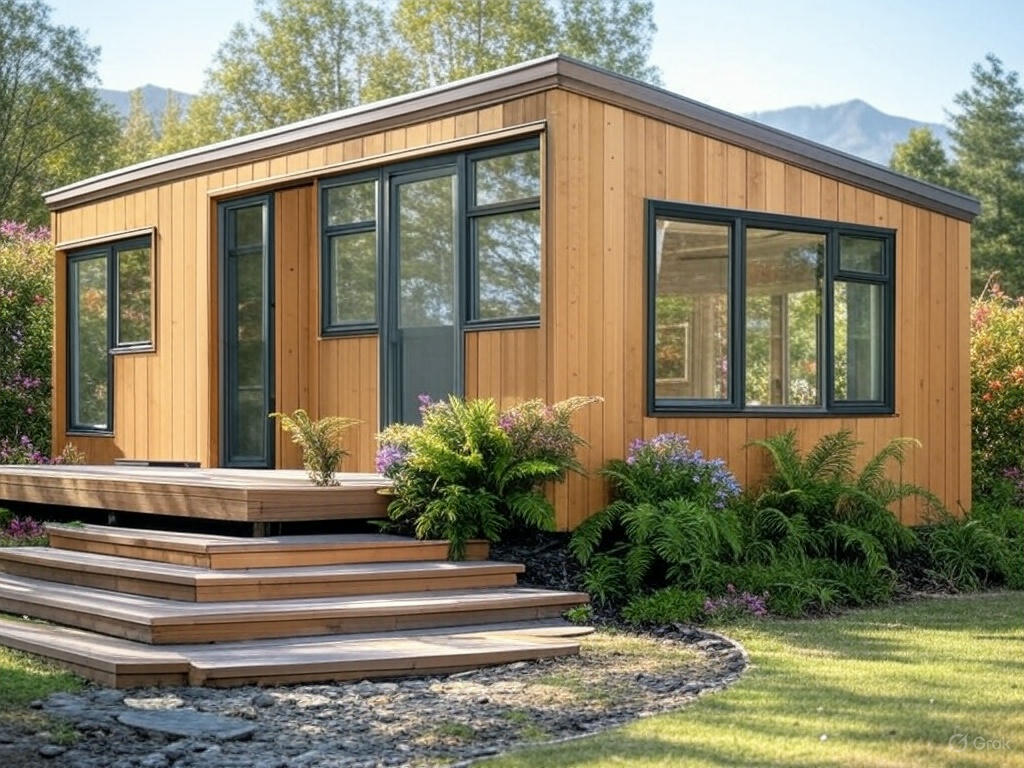
A minor dwelling, also called a granny flat, secondary dwelling, or small standalone dwelling, is a self-contained residential unit with its own kitchen, bathroom, and living space, separate from the main house on a property. They’re used for extended family, rental income, home offices, ageing-in-place arrangements, or supplementary housing on rural sections.
Until 15 January 2026, every new minor dwelling needed a building consent, and in many zones a resource consent as well. Two national changes took effect that day. The Building and Construction (Small Stand-alone Dwellings) Amendment Act 2025 added Schedule 1A to the Building Act, which removes the building consent for a new stand-alone dwelling of up to 70m².
Alongside it, the National Environmental Standards for Detached Minor Residential Units (NES-DMRU, national planning rules that sit above the Auckland Unitary Plan) made one detached unit of up to 70m² per site a permitted activity in residential and rural zones, which means no resource consent if it meets the standards. We’ve covered the full consent picture in our 2026 building consents guide. This article focuses on what it costs to actually build one.
The 70m² Exemption: What It Allows and What It Doesn’t
The exemption is generous, but tightly defined. If you want the full rundown of the conditions and how Auckland Council applies them, we’ve set them out in our guide to the Auckland minor dwelling rules. In short, a minor dwelling can be built without a building consent only if all of the following are met:
- Floor area no more than 70m², measured between the inside faces of the external walls (a garage with internal access counts inside that figure)
- Wholly new and stand-alone: an extension, or a conversion of an existing garage or sleepout, doesn’t qualify
- Single storey with no mezzanine, no more than 4m high above the floor, and a floor level no more than 1m above the ground
- At least 2m from any other residential building and from every legal boundary
- A light timber or steel frame or, since 8 October 2026 under the Building (Exempt Small Stand-alone Dwellings) Order 2026, a certified composite structural building product (a CodeMark-certified product, such as some structural insulated panel or solid timber systems), plus a roof no heavier than 20kg/m² and wall cladding no heavier than 220kg/m²
- Simple plumbing: no more than 30 fixture units (a rating plumbers give each basin, toilet, shower and tub), no pumped systems, and a connection to the public water and wastewater network where one is available
- No level-entry shower that relies on a waterproof membrane, electric or gas heaters only, and its own electricity supply
- Licensed people for every regulated trade: an LBP for the restricted building work, and licensed plumbers, drainlayers, electricians and gasfitters for theirs
- A project information memorandum (PIM) issued before any work starts, and the records of work sent to the council within 20 working days of finishing
What it doesn’t change:
- The Building Code still applies in full. Insulation, weathertightness, structural performance, fire safety, drainage, sanitation. The exemption shifts responsibility from the council inspector to the LBP designer and builder. It doesn’t lower the standard the dwelling has to meet.
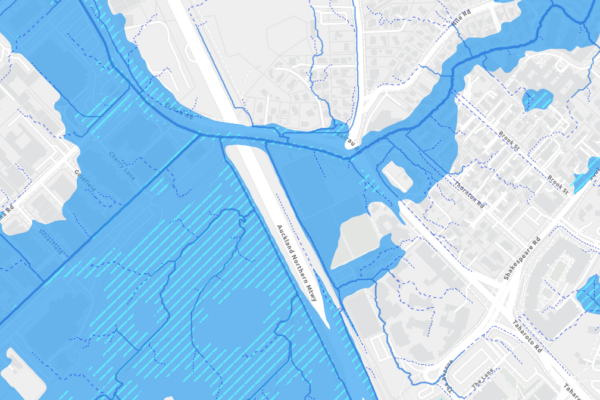
- A Project Information Memorandum (PIM) is mandatory, not optional. The PIM is the council’s report on your site: overlays, natural hazards, services and any bylaws that affect where the unit can go. For an exempt dwelling it must be issued before any building work starts, the council has 10 working days to issue it, and it lapses if the dwelling isn’t finished within two years.
- Development contributions still apply. These are the council’s charge toward the roads, pipes and community facilities a new home draws on. If one is payable, the council issues a development contribution notice with your PIM, and it falls due within 20 working days of the build being completed. For three years from the law change, councils can charge it on an exempt dwelling even where their own policy doesn’t provide for it. The amount depends on where the site is, so take the figure from the notice or Auckland Council’s development contributions policy, not from a brochure.
- Resource consent is gone for most sites, but not every rule goes away. Under the NES-DMRU, one detached unit per site is permitted in a residential zone if it’s no bigger than 70m², keeps the site’s building coverage at 50% or less, and sits at least 2m from the main house and from the front, side and rear boundaries. District plan rules on natural hazards, earthworks and the matters of national importance in the Resource Management Act (RMA, the law that governs how land can be used), such as historic heritage, still apply. Miss a standard and you’re back to a resource consent. Heritage overlays in particular catch homeowners off-guard.
The exemption changes the regulatory path, not the cost of construction. The biggest practical impact is time. A building consent carries 20 working days of statutory processing, and the clock stops every time the council asks for more information. The PIM for an exempt dwelling has to be issued within 10 working days. There’s a fee saving too. MBIE estimates the building consent alone for a 70m² granny flat averaged about $4,431 before the exemption, on top of the design and construction cost.
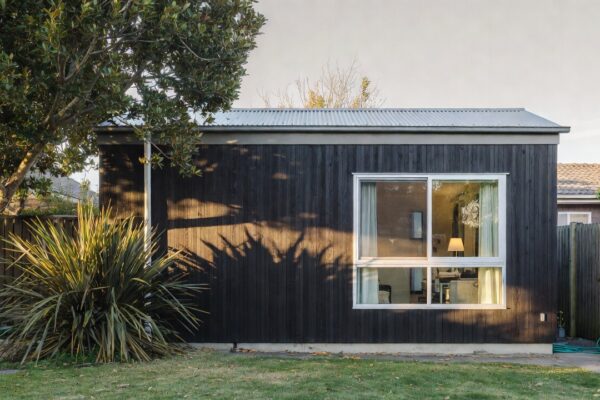
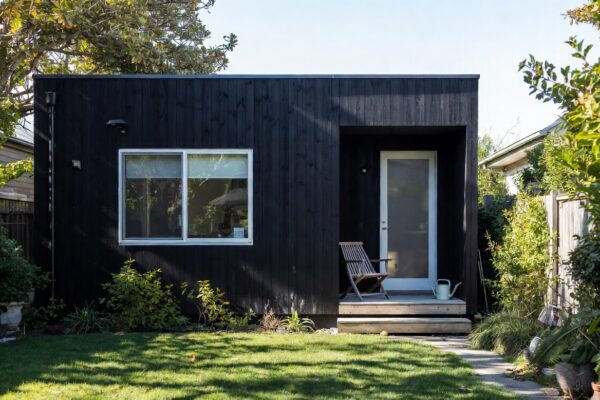
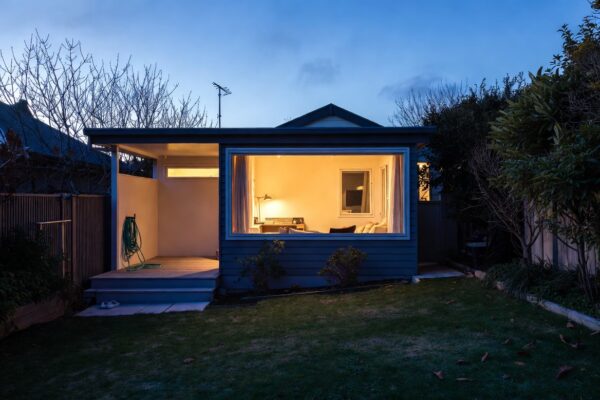
For a real one, see the Minor Dwelling and Sleepout at Coatesville, North Auckland.
What a 70m² Minor Dwelling Actually Costs in 2026
This is where the gap between marketing and reality is biggest. Advertised “starting from $120,000” prefab units exist. The all-in build cost on the same project, once site is included, almost never lands there. Here’s the honest picture for a 70m² minor dwelling on a typical Auckland section in 2026:
| Build type | Cost per m² | Build cost (70m²) | Realistic all-in cost |
|---|---|---|---|
| Basic prefab / transportable | $2,800–$3,800/m² | $196,000–$266,000 | $260,000–$350,000 |
| Mid-range prefab | $3,800–$5,000/m² | $266,000–$350,000 | $330,000–$430,000 |
| Custom build (standard spec) | $4,500–$6,000/m² | $315,000–$420,000 | $380,000–$500,000 |
| Architectural design + build | $6,000–$7,500+/m² | $420,000–$525,000+ | $490,000–$620,000+ |
These are indicative ranges for budgeting, not quotes, and they leave out development contributions because those are set site by site. Two things to call out from the table.
First, the per-m² rate runs higher than for a full-size house. A 200m² family home in Auckland in 2026 currently runs $4,000–$5,500/m² for standard specification. A 70m² minor dwelling on the same specification runs $4,500–$6,000/m². The reason is fixed costs. A minor dwelling still needs a kitchen, a bathroom, a hot water system, electrical board, weathertight envelope, foundations, and services connection. Those fixed costs spread over 70m² instead of 200m², so the per-m² rate climbs.
Second, “all-in” is a different number from “build cost”. Advertised build cost is usually the structure, basic fit-out, and core services. All-in includes site preparation, services connections, foundations on the actual ground (rather than the salesperson’s flat-site assumption), design and LBP supervision fees, decks and landscaping, and contingency. The gap between build cost and all-in is typically $60,000–$90,000 for a flat urban site, and $100,000–$200,000+ for difficult sites.
The Four-Stage Budget: What’s Actually in the Number
To plan accurately, break the budget into four stages.
Stage 1: Pre-build (design, LBP supervision, PIM, surveying)
Even with the consent exemption, design and LBP supervision are required. Costs typically:
- Design fees, $8,000–$25,000 depending on whether it’s a standard plan adapted to your site or fully custom. Architectural plans cost in more detail here.
- LBP supervision and records of work, $2,000–$5,000 for typical projects
- PIM application, Auckland Council’s base fee for a granny flat PIM is $537, non-refundable
- Surveying (boundary + topographical), $1,500–$5,000 depending on site
- Geotechnical report (if required), $3,000–$5,000
Stage 1 total: $15,000–$40,000+ depending on site and design complexity.
Stage 2: Site preparation
The single most variable cost. A flat urban backyard with existing services is at the low end. A sloping rural section with no services is at the very high end.
- Earthworks and platform preparation, $8,000–$50,000+
- Retaining walls (if sloping site), $5,000–$40,000+
- Driveway / access, $3,000–$25,000
- Foundations (concrete slab typical), $15,000–$35,000 for 70m²
- Services connections (water, wastewater, power), $5,000–$25,000 with existing services on site; $20,000–$50,000+ if you need to extend services
- Septic system (rural), $15,000–$30,000 if no wastewater connection
- Water tank (rural), $5,000–$15,000 if no town water
Stage 2 total: $20,000–$120,000+ depending on site condition.
Stage 3: The build itself
Materials, labour, structure, weathertight envelope, kitchen, bathroom, fit-out, electrical, plumbing, insulation. This is the headline number, what gets quoted as “build cost”.
Stage 3 total: $200,000–$525,000 per the table above, depending on specification and whether prefab or custom.
Stage 4: Post-build and finishing
- Decks and outdoor areas, $5,000–$25,000
- Landscaping and fencing, $3,000–$20,000
- Appliances and white-goods, $5,000–$15,000 (often excluded from build contract)
- Development contributions, set by the council for your site and stated on the notice that comes with the PIM
- Contingency at 10%, should always be held back, not “saved” on
Stage 4 total: $13,000–$60,000+, before the contingency and development contributions
Add the four stages together for the realistic all-in cost. On a typical mid-range Auckland project with a flat urban site and existing services, that lands around $380,000–$450,000 all-in for a 70m² unit before development contributions, comfortably more than the $266,000 “build cost” figure you’d see quoted on a prefab brochure.
1-bedroom vs 2-bedroom granny flat prices
Most people budgeting a minor dwelling are really asking about one of two sizes. The per-m² rates above don’t change with bedroom count, but the floor area does, and that’s what moves the all-in number. These are indicative mid-range Auckland figures on a flat, serviced site:
- 1-bedroom granny flat (roughly 45–55m²), around $260,000–$360,000 all-in. A single bedroom, open-plan living and kitchen, one bathroom. The most popular size for rental income or a home office.
- 2-bedroom granny flat (roughly 60–70m²), around $340,000–$470,000 all-in. Two bedrooms or a bedroom plus study, still one bathroom in most layouts. The common choice for family members living long-term or a higher rental yield.
The 70m² exemption ceiling means a two-bedroom unit is about as large as you can go and still skip the building consent. Push past 70m² for a third bedroom and you’re back into full consent territory, which changes both the timeline and the cost.
Prefab vs Custom: The Honest Trade-off
The prefab industry has matured significantly in NZ. Quality, design, energy performance, and customisation options have all improved. The cost gap between prefab and custom has narrowed.
Where prefab wins
- Speed, factory build runs in parallel with site prep; total project timeline 8–16 weeks vs 5–8 months for custom
- Cost predictability, fixed-price contracts are common, fewer mid-build surprises
- Quality control, factory conditions reduce weather damage and standardise workmanship
- Lower fixed-design cost on standard models
Where prefab loses
- Site customisation is limited, what fits on a flat suburban backyard often doesn’t sit well on a sloping or character section
- Transport costs can be significant, particularly for sites with restricted access, narrow streets, or overhead power lines
- The “from $120,000” advertised price almost always excludes foundations, services connections, decks, site prep, design adaptation, council fees, and development contributions
- Quality varies dramatically across operators. The bottom end of the market is genuinely concerning
Where custom wins
- Genuine design fit to the site, orientation, views, indoor-outdoor flow, integration with the main dwelling
- Specification control, you choose materials, finishes, systems, energy performance
- Heritage and character compatibility, important if the main house has architectural significance
- Higher resale and rental value when done well
Where custom loses
- Higher upfront design fees and longer timeline
- More opportunities for mid-build variations (and the costs they bring)
- Cost less predictable without a strong fixed-price contract
The right answer depends on the site, the use case, and the budget. For straight backyard rental income on a flat urban section, a mid-range prefab is often the right call. For a multi-generational living arrangement on a character section where the minor dwelling needs to sit comfortably alongside an existing villa, custom usually wins. If you’re still weighing up layouts and what fits, our guide to granny flat designs in NZ works through the common floor plans. Our design process for custom minor dwellings is covered in the design process guide.
The Hidden Costs People Miss
Beyond the four-stage budget, five costs catch homeowners out:
Development contributions. Most new dwellings attract one, and an exempt dwelling is no exception. For a non-consented small stand-alone dwelling the notice arrives with the PIM and the payment falls due within 20 working days of completion, which is exactly when the build budget is most stretched. Ask for the figure before you sign a build contract.
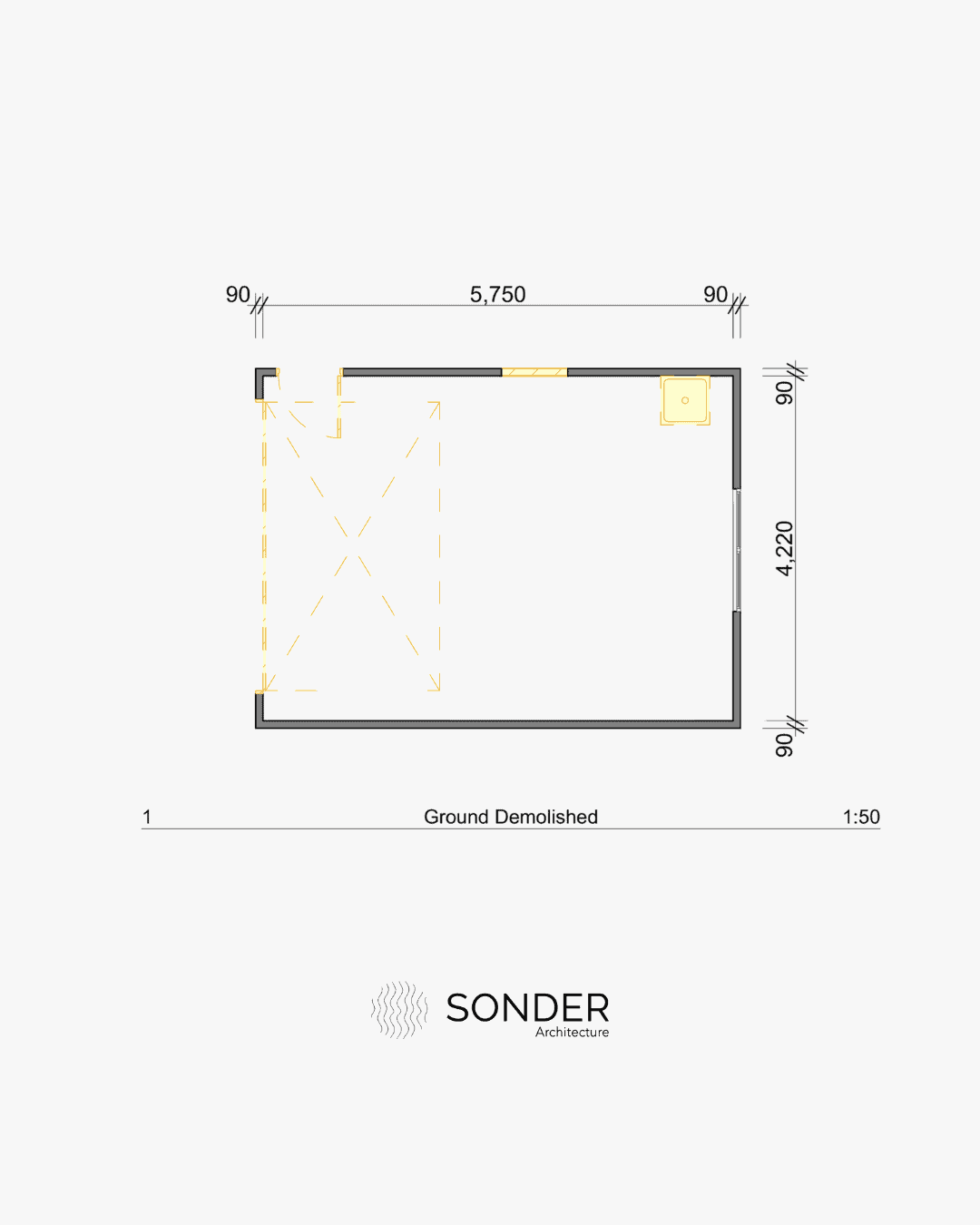 Existing
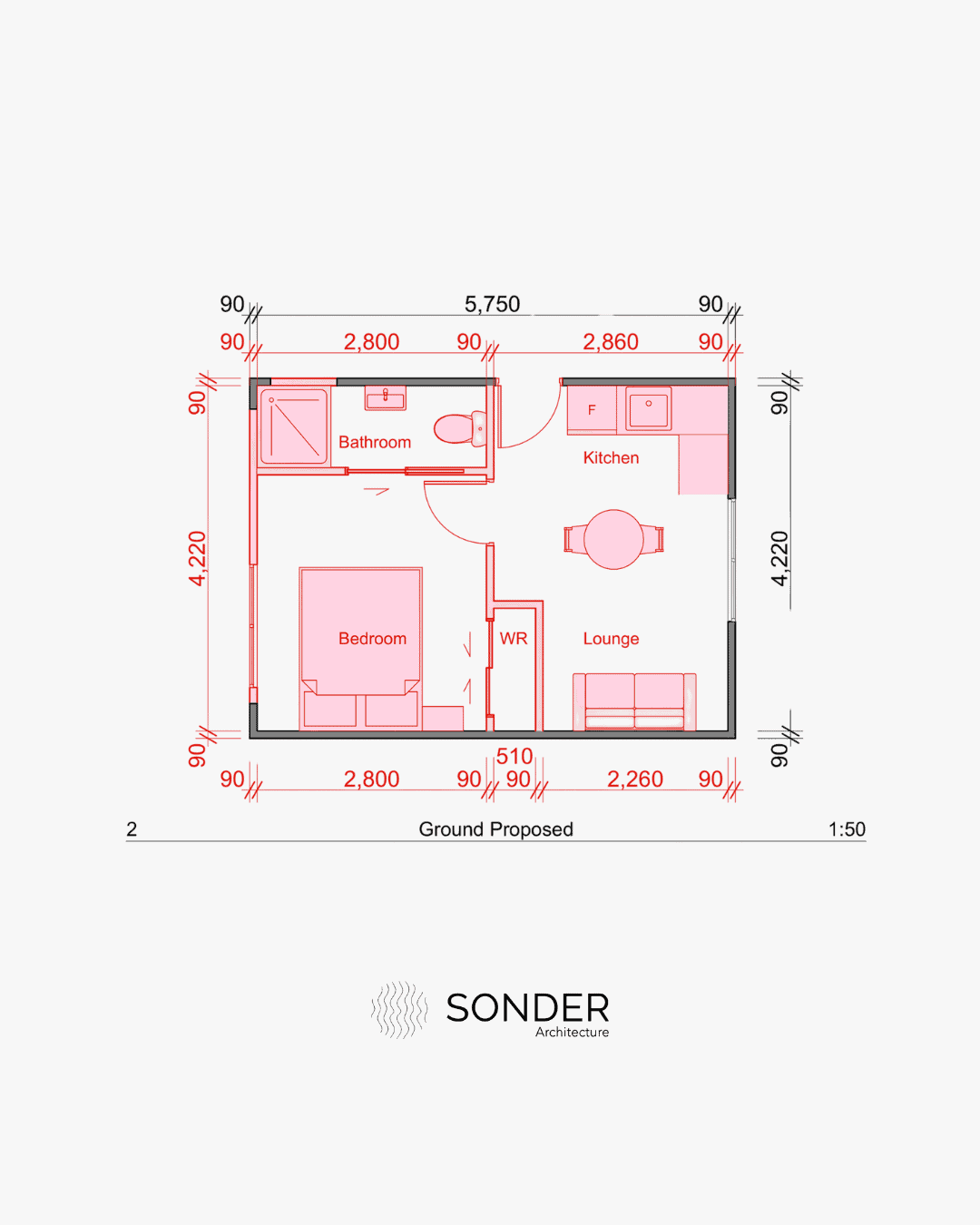 Proposed
Services upgrade. If your existing wastewater connection can’t handle a second dwelling, you may need a Watercare upgrade, and what it costs depends on what the existing line can carry. Watch the thresholds too: Watercare’s reduced infrastructure growth charge stops at 65m² of floor area, five square metres short of the building consent exemption, so a 68m² unit can be consent-exempt and still pay the full charge. Our breakdown of Watercare connection costs in Auckland sets out the charges.
Existing-dwelling impact. Some configurations require changes to the main house, new fencing, repositioning of a driveway, removal of a structure within the 2m boundary clearance, or upgrading a shared services connection. These can add $5,000–$30,000. If the unit will share a wall with the main house instead of standing clear of it, it’s no longer exempt, and the fire and sound rules change the build; we cover those in our guide to fire and sound separation between a granny flat and the main house.
Insurance during construction. Builder’s risk insurance and contract works cover. Often overlooked, typically $1,500–$4,000 for a 70m² project.
The variation effect. Mid-build changes, a different bench top, a window moved, a different shower system, add cost quickly. On a custom build, factor 5–10% of build cost as a realistic variations budget.
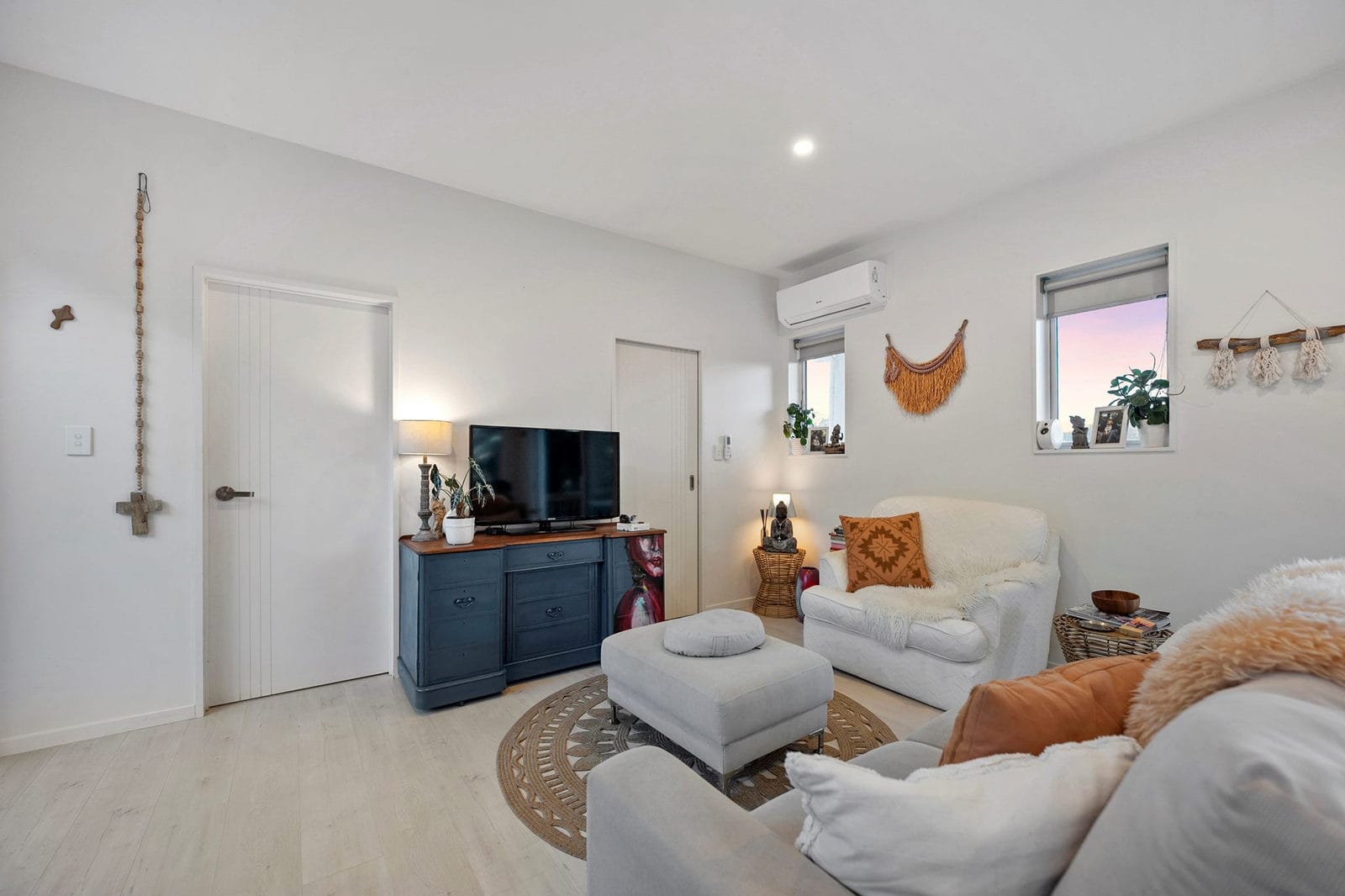
Renting Out a Minor Dwelling: The Income vs Cost Picture
What a minor dwelling rents for depends on suburb, size and finish, so start with real numbers. Tenancy Services’ market rent tool shows what one- and two-bedroom homes have actually let for in your area, drawn from bond lodgements. Then run the sum. As a worked example, a unit that lets at $550 a week earns $28,600 a year gross. Take off rates, insurance, maintenance, vacancy and any management fee, and the net figure is what you set against the build: $20,000 a year net on a $400,000 build is a 5% yield.
Set that against the cost of capital (current bank rates), Healthy Homes compliance (the standards every rental must meet for heating, insulation, ventilation, moisture and draughts), ongoing maintenance, and tenant management. The maths works for some homeowners and not for others. The 70m² exemption removes a chunk of upfront cost and time, which improves it compared with the pre-2026 picture.
If subdivision rather than secondary dwelling is the long-term plan, the calculation changes again. We’ve written about subdividing in Auckland separately, minor dwellings and subdivisions are often confused but they’re different legal and financial pathways.
Building a Minor Dwelling: The Order It Happens In, and Who You Hire
Under Schedule 1A the council no longer inspects the build, so the sequence matters more than it used to. Get a step out of order and you can lose the exemption, or end up with a dwelling nobody can sign off.
- Feasibility. Check the site against the NES-DMRU standards (building coverage, setbacks, one unit per site) and the Schedule 1A limits before anyone draws a floor plan.
- Preliminary design. A site plan, elevations and basic sections. That’s what the law asks for at the next step, so this is where the design fee starts.
- PIM application. You apply with a description of the work and the preliminary plans, and the council has 10 working days. What comes back tells you whether the design looks likely to meet Schedule 1A, whether the land carries a natural hazard, and which bylaws apply, such as rules about building near public pipes. If a development contribution is payable, the notice comes with it. No building work can start before the PIM is issued.
- Final design and contracts. The design becomes working drawings. Design work that counts as restricted building work (in plain terms, the structure and the weathertight envelope) has to be done by an LBP licensed for design.
- The build. An LBP builder carries out or supervises the restricted building work. Plumbing, drainlaying, electrical and gas work each need a person licensed for that trade.
- Completion paperwork. The job counts as complete once you hold every record of work, certificate of compliance and electrical safety certificate from the people who did it. Within 20 working days you must send those, the final plans and the certificate of work to the council. Missing that deadline is an infringement offence with a fine of up to $1,000, and the development contribution falls due in the same window.
The PIM also sets an outer limit: it lapses if the dwelling isn’t finished within two years of being issued, so a stalled build can’t sit there indefinitely.
Choosing a minor dwelling builder
With no council inspector on site, the builder’s licence and paperwork are the quality control. Four checks before you sign:
- Check the licence and its class. Search the builder on the LBP public register. A Carpentry or Site licence covers the building work; design is a separate licence class. Knowingly engaging someone who isn’t licensed for restricted building work is an offence committed by the person doing the hiring, which on a home project is usually you, with a fine of up to $50,000 for an individual.
- Ask who will sign the records of work. You need them to complete an exempt build. A builder who can’t tell you who provides them hasn’t done one before.
- Get the disclosure statement and checklist first. Above the minimum price set in regulations, a building contractor must give you the prescribed disclosure information and checklist before a residential building contract is signed.
- Compare like with like. A prefab price and a design-and-build price rarely cover the same things. Ask each builder to price foundations, services connections, transport, craneage and decks as separate lines.
If you’d like a second opinion on a quote before you commit, that’s part of how we check a minor dwelling budget against the section it has to sit on.
How Sonder Architecture Handles Minor Dwelling Projects
Most minor dwelling conversations we have start with a homeowner who’s seen a “from $120,000” advertisement and wants to know what it would actually cost on their property. The honest answer almost always involves the four-stage budget above, not the advertised number. It’s the core of the way we design and consent secondary dwellings for Auckland families.
Our starting point is the Free Feasibility Report. We check:
- Whether your site qualifies for the 70m² building consent exemption (boundary clearance, height, overlay status)
- Whether resource consent will still be required because of overlays or zoning
- Realistic site prep costs for your specific section
- Services availability and any upgrade requirements
- Development contribution exposure for your zone
- Which build path (prefab adapted, prefab standard, custom design + build) gives the best fit for your use case and budget
The feasibility report is free, takes about a week, and gives you a numbers-based decision rather than a sales pitch. Our team includes LBP Design licence holders, which is the licence the restricted design work on an exempt minor dwelling requires.
If you’re at the early thinking stage on a minor dwelling for your Auckland property, whether for family, rental, or future subdivision, the feasibility report is the right first step.
➡ See recent projects we’ve done across Auckland
A 70m² minor dwelling in Auckland in 2026 costs between $260,000 and $620,000+ all-in, depending on build type. Basic prefab/transportable: $260,000–$350,000. Mid-range prefab: $330,000–$430,000. Custom build (standard spec): $380,000–$500,000. Architectural design and build: $490,000–$620,000+. The build cost itself is typically 75–80% of the all-in figure; site prep, services and design make up most of the rest, with development contributions on top. A 70m² granny flat in NZ in 2026 costs between $260,000 and $620,000+ all-in. The exact number depends on whether it's prefab or custom, how flat and serviced the site is, and the specification level. The advertised 'from $120,000' figures from some prefab operators almost always exclude site prep, foundations, services connections and design, which together add $80,000–$150,000+ to the headline price before council development contributions. From 15 January 2026, no building consent is required for a single-storey standalone dwelling up to 70m², provided an LBP designs or supervises the build and strict conditions are met (boundary clearance, height, materials, services). You need a PIM before work starts. Resource consent is removed for one detached unit per site in residential and rural zones under the NES-DMRU, provided it meets that standard's coverage and setback rules, but district plan rules on natural hazards and historic heritage still apply. The Building Code still applies fully. Basic prefab or transportable units on a flat urban section with existing services are typically the cheapest path, around $260,000–$300,000 all-in for 70m². Cost-savers: keep the design simple and within standard prefab dimensions, build on the flattest part of the section, tie into existing services rather than extending them, and minimise mid-build variations. The single biggest cost variable is site condition, not the build itself. Yes. A minor dwelling can be rented out, but it must meet Healthy Homes Standards, comply with the Residential Tenancies Act, and have any required insurances. Check what similar homes let for in your suburb on Tenancy Services' market rent tool, then take off rates, insurance, maintenance and vacancy to get the net yield against your build cost. The consent exemption doesn't change rental obligations. In NZ in 2026 they're effectively the same thing. Both refer to a self-contained secondary dwelling on a property with an existing main house. The 2026 Building Act amendment uses 'small standalone dwelling' as the formal term, and the 70m² exemption applies regardless of which label you use. Some councils use 'minor residential unit' or 'detached minor residential unit' (DMRU) in planning documents, with slightly different definitions, the 70m² exemption sits across all of them. Advertised prefab prices typically exclude: site preparation and earthworks ($8,000–$50,000+), foundations ($15,000–$35,000), services connections ($5,000–$25,000), design fees and LBP supervision ($10,000–$30,000), transport and crane costs ($5,000–$15,000), decks and landscaping ($8,000–$45,000), and council development contributions, which are set site by site. The gap between advertised price and all-in cost is typically $80,000–$150,000+ for a 70m² unit. A minor dwelling is a self-contained second home on a property that already has a main house, with its own kitchen, bathroom, and living space. It goes by several names: granny flat, secondary dwelling, or, in the 2026 legislation, small standalone dwelling. Some councils call it a minor residential unit. People build them for extended family, rental income, a home office, or ageing in place. From 15 January 2026, one up to 70m² can be built without a building consent if strict conditions are met. From 15 January 2026, a minor dwelling up to 70m² can be built without a building consent under the Building and Construction (Small Stand-alone Dwellings) Amendment Act 2025. The conditions: wholly new, single storey, no more than 4m high above the floor, at least 2m from any boundary or other residential building, light timber or steel frame (or, since 8 October 2026, a certified composite structural building product), simple services, and licensed practitioners do the building, design and plumbing work. You need a PIM from the council before you start and must send it the records of work within 20 working days of finishing, and the Building Code still applies in full. A 2-bedroom granny flat (typically 60 to 70m²) costs roughly $340,000 to $470,000 all-in for a mid-range build on a flat, serviced Auckland site in 2026. That covers design, site preparation, foundations, services and the build itself, before council development contributions. Basic prefab can land lower and a custom architectural build higher. Because 70m² is the exemption ceiling, a two-bedroom unit is about the largest you can build without a building consent. A Licensed Building Practitioner must carry out or supervise the restricted building work, and an LBP licensed for design must do the restricted design work. Plumbing, drainlaying, electrical and gas work each need a tradesperson licensed for it. Knowingly hiring someone who is not licensed for restricted building work is an offence. Check any builder on the LBP public register and ask who will provide the records of work, because you must send them to the council within 20 working days of completion.
How much does a minor dwelling cost in NZ in 2026?
How much does a granny flat cost in NZ?
Do I need consent for a 70m² granny flat in 2026?
What's the cheapest way to build a minor dwelling in NZ?
Can you rent out a minor dwelling in NZ?
What's the difference between a minor dwelling and a granny flat?
What's not included in advertised minor dwelling prices?
What is a minor dwelling in NZ?
What are the minor dwelling rules in 2026?
How much does a 2-bedroom granny flat cost in NZ?
Who can build a minor dwelling in NZ under the 2026 exemption?
References
- MBIE Building Performance, Building consent changes for small standalone dwellings (granny flats)
- MBIE Building Performance, Granny flats exemption guidance and resources
- MBIE Building Performance, Changes to the granny flats building consent exemption from 8 October 2026
- Building (Exempt Small Stand-alone Dwellings) Order 2026 (SL 2026/270), New Zealand Legislation
- Building and Construction (Small Stand-alone Dwellings) Amendment Act 2025 (Schedule 1A and sections 32–36, 42B), New Zealand Legislation
- Resource Management (National Environmental Standards for Detached Minor Residential Units) Regulations 2025, New Zealand Legislation
- Building Act 2004 (sections 85, 86 and 362D), New Zealand Legislation
- Tenancy Services, Market rent