
Quick answer: Under Schedule 1 of the Building Act 2004, you can build certain small structures — sheds under 10m², decks under 1.5m high, fences under 2.5m, retaining walls under 1.5m, and unroofed pergolas of any size — without a building consent in NZ, but all exempt work must still meet the Building Code and your local district plan rules.
You want to put up a garden shed. Or build a deck off the back of the house. Maybe a pergola over the patio for summer. And the first question is always the same: do I actually need a building consent for this?
It’s a fair question. The consent process costs money, takes time, and for something like a basic timber deck, it can feel like overkill. The good news is that New Zealand law does allow a range of building work to go ahead without consent. The less good news? The rules are more specific than most people realise — and getting them wrong can be expensive.
We see it regularly at Sonder Architecture. A homeowner in Grey Lynn builds what they think is an exempt sleepout, only to find out it needed consent because it had a kitchenette. A family in Howick extends a retaining wall without realising their driveway above it counts as a “surcharge” — suddenly they’re looking at a Certificate of Acceptance application and retrospective engineering reports. These aren’t rare edge cases. They’re the most common mistakes Auckland homeowners make with exempt building work.
This guide covers the full list of what you can build without a building consent in NZ under Schedule 1 of the Building Act 2004, the grey areas where homeowners regularly get caught out, the new exemptions that came into effect in late 2025 and early 2026 (including the granny flat rule), and the Auckland-specific catches that can override the national rules. We’ll also explain what happens if you build without consent when you should have got one.
One thing to be clear about upfront: even when building work is exempt from consent, it must still comply with the New Zealand Building Code (NZBC). An exemption from consent is not an exemption from the law. Your work still needs to be safe, durable, and code-compliant — there’s just no council review or inspection process to check it.
The Complete List: What You Can Build Without Building Consent in NZ
Schedule 1 of the Building Act 2004 is the definitive list. It sets out every type of building work that doesn’t need a building consent — provided you meet the specific conditions for each exemption. If your project doesn’t fit neatly into one of these categories, you need consent. No exceptions.
Let’s break down the main exemptions Auckland homeowners actually use.
Small Detached Buildings (Sheds, Workshops, Studios)
This is the one most people know about — but not as well as they think.
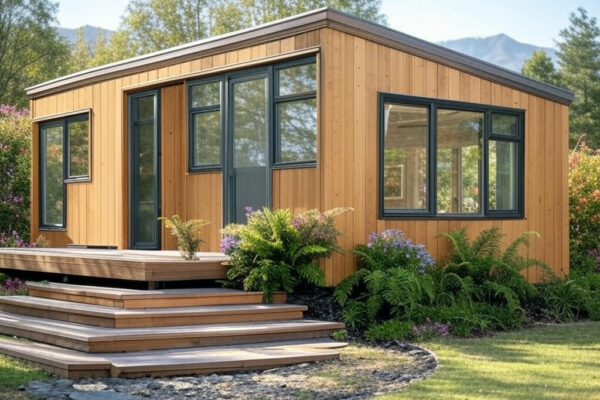
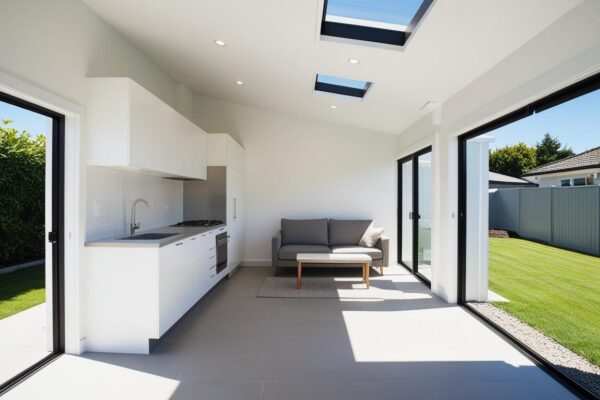
Buildings up to 10m² in floor area don’t need consent if they’re single-storey (floor level up to 1m above ground, height up to 3.5m above floor level), don’t contain sanitary facilities or potable water storage, and don’t include sleeping accommodation — unless they’re connected to a dwelling and don’t have cooking facilities. That last bit trips people up. A 10m² garden shed? Fine. A 10m² “studio” with a sink and a hotplate? That needs consent.
Buildings between 10m² and 30m² also qualify for exemption, but with tighter conditions. They must be built using lightweight materials for walls and roof, following Acceptable Solution B1/AS1 for timber or steel buildings. They can include sleeping accommodation (if connected to a dwelling and no cooking facilities are included), but must have smoke alarms installed if they do. An LBP — that’s a Licensed Building Practitioner (a tradesperson certified by the NZ government to carry out or supervise certain building work) — must carry out or supervise the design and construction.
Important: Since 23 October 2025, the boundary setback rules for detached buildings up to 30m² have changed. Previously, the building had to be set back from any boundary or residential building by at least its own height. The new rules use a fixed distance instead — check the latest MBIE exempt building work guidance for the current setback requirements.
💡 Homeowner tip: Even if your shed or sleepout qualifies as exempt, it’s worth telling Auckland Council about it. You can add a record of exempt building work to your property file — this avoids headaches when you eventually sell and the buyer’s solicitor checks the council records.
Decks, Platforms and Boardwalks
You don’t need a building consent for a deck if it’s not possible to fall more than 1.5 metres from the surface — even if the deck collapses. That “even if it collapses” part is written directly into the legislation. It means you need to consider the worst-case scenario: if the deck failed and dropped to the ground, could someone fall more than 1.5m?
For a ground-level deck in a flat backyard in Meadowbank, that’s straightforward. For a deck built on a sloping site in Titirangi where the ground drops away underneath, the calculation gets more complicated — and the answer might be that you do need consent.
There’s a separate requirement for barriers too. Under the Building Code, a barrier is required where the fall height exceeds 1 metre. So you can have a deck that doesn’t need consent (under 1.5m fall height) but does need a balustrade (over 1m fall height). Many homeowners miss this.
Fences and Hoardings
A fence or hoarding up to 2.5 metres high doesn’t need a building consent. That’s a generous limit — most residential fences are 1.8m.
The catch: pool fencing is never exempt. Fences and barriers around residential swimming pools always need a building consent, regardless of height. The Building (Pools) Amendment Act 2016 has specific requirements for pool barriers.
Also note that even if your fence doesn’t need a building consent, it may still need a resource consent under your local district plan. In Auckland, the Unitary Plan limits fence heights in many residential zones — typically 2m in front yards and on boundaries. Go higher and you’re into resource consent territory.
Retaining Walls
A retaining wall is exempt from building consent if it retains less than 1.5 metres of ground vertically and does not support any surcharge. A surcharge is any additional load sitting on top of the retained ground — a driveway, a building, vehicles, or even a significant slope above the wall.
This is one of the most commonly misunderstood exemptions. A 1.2m retaining wall with a flat garden above it? Likely exempt. The same 1.2m retaining wall with your driveway running along the top of it? That driveway is a surcharge. You need consent.
There’s a separate exemption for retaining walls in rural zones, where walls up to 3m high may be exempt if designed by a Chartered Professional Engineer. But for most Auckland residential properties, the 1.5m-with-no-surcharge rule is the one that applies.
Pergolas, Carports, Awnings, Porches and Verandas
Pergolas are exempt from building consent with no size limit — as long as they’re not roofed. An open-lattice pergola of 50m² over your entire patio? Exempt. The moment you put a solid roof on it, it’s no longer a pergola in the eyes of the Building Act. It becomes a roofed structure, and the carport or veranda exemptions apply instead — with size and height limits.
Carports, awnings, porches and verandas have their own specific exemptions with area and height caps. The common thread: they must not overhang any area accessible by the public, they need low-risk design and fixings that don’t compromise the host building’s bracing, and they must meet the Building Code for structure (B1) and external moisture (E2) where relevant.
Repairs, Maintenance and Like-for-Like Replacement
One of the broadest exemptions — and one of the most useful for homeowners. You can repair, maintain, or replace components of your home without consent as long as the work is like-for-like. That means replacing old materials with comparable materials in the same position. Swapping a broken window for a new window of the same size, in the same opening? Exempt. Replacing your roof with the same type of roofing material? Generally exempt.
Where it gets complicated is when you change something. Replacing a heavy clay tile roof with lightweight longrun roofing changes the structural loads — even though it’s “just a re-roof”. Replacing weatherboards with a different cladding system affects your home’s weathertightness detailing. These can push you out of the exemption.
Quick Reference: Common Exempt Building Work in NZ
| Project Type | Exempt If… | Needs Consent If… |
|---|---|---|
| Garden shed | Under 10m², single storey, no plumbing, no cooking | Over 10m² without LBP involvement, or includes kitchen/bathroom |
| Sleepout / studio | 10–30m², LBP supervised, lightweight materials, no cooking facilities | Includes kitchen or bathroom, or over 30m² |
| Deck | Fall height under 1.5m (including if deck collapses) | Fall height 1.5m or more, or attached to house in a way that affects structure |
| Fence | Under 2.5m high, not a pool fence | Over 2.5m, or fencing around a swimming pool |
| Retaining wall | Under 1.5m, no surcharge (driveway, building, slope) | Over 1.5m, or supporting any additional load |
| Pergola | No roof — open lattice/slats only, any size | Has a solid or translucent roof (becomes a covered structure) |
| Carport | Within Schedule 1 area/height limits, open-sided | Exceeds size caps, enclosed on multiple sides, or affects house bracing |
| Solar panels (roof-mounted) | Array under 40m², wind zone “high” or lower, structural fixings | Over 40m² without CPEng review, or very high wind zone |
| Granny flat (from Jan 2026) | Up to 70m², LBP supervised, lightweight framing, PIM obtained, 2m+ from boundaries | Over 70m², doesn’t meet construction conditions, or no PIM |
| Like-for-like repairs | Replacing with comparable materials in the same position | Changing material type, position, or structural detailing |
This table covers the most common residential scenarios. For the full Schedule 1 list — including dams, network utilities, playground equipment, signage, and more — refer to the Building Act 2004, Schedule 1 or use MBIE’s free online tool at canibuildit.govt.nz.
Grey Areas: 8 Projects Auckland Homeowners Get Wrong
The national exemptions look straightforward on paper. In practice, the borderline cases are where problems start. Here are eight projects we regularly see homeowners get wrong — and in most cases, the homeowner only finds out when they try to sell the property or when a council inspector notices something during a neighbour’s consent inspection.
1. Enclosed Decks and Covered Patios
An open deck under 1.5m fall height? Exempt. But the moment you start enclosing it — adding walls, a solid roof, or even large sliding doors that effectively create a room — it’s no longer a “deck” under the Building Act. It’s an addition to your house. That means it affects weathertightness, potentially alters the building’s bracing, and almost certainly needs consent.
We had a client in Epsom who built a beautiful open deck, then decided to enclose it with glass bifold doors and a polycarbonate roof six months later. The deck itself was exempt. The enclosure was not. They ended up needing a retrospective Certificate of Acceptance (CoA) — which cost more than a consent would have in the first place.
2. Pergolas With Roofing
This catches more people than you’d expect. A pergola — open slats, no solid roof — is exempt regardless of size. Sound good? It is. But many homeowners build a pergola and then add shade cloth, polycarbonate sheeting, or louvre panels to keep the rain off.
Once you add a roof or roof-like covering, it’s no longer a pergola in the Building Act’s definition. It becomes an awning, veranda, or carport — all of which have specific size and height limits for exemption. If your “pergola” has a polycarbonate roof and is 40m², you’ve likely crossed out of exempt territory.
💡 Homeowner tip: If you want shade and rain protection without a consent, keep your pergola truly open — use deciduous vines, retractable shade sails, or removable fabric covers that aren’t permanently fixed. The moment you permanently roof a pergola, the rules change.
3. Retaining Walls With Driveways or Slopes Above
As covered earlier, the 1.5m exemption only applies when there’s no surcharge. What counts as a surcharge? Any load beyond the natural weight of the ground itself. A driveway. A car parked at the top of the wall. A building foundation. A slope that increases lateral earth pressure.
In hilly Auckland suburbs like Titirangi, Mt Eden, or Remuera, almost every retaining wall on a sloping section has some form of surcharge. The flat-garden scenario where the exemption cleanly applies is actually less common than people think.
If you’re not sure whether a slope above your retaining wall counts as surcharge, get a geotechnical or structural engineer to assess it. It’s a few hundred dollars for an opinion — versus potentially thousands for a retrospective CoA if the council disagrees with your interpretation.
4. Building Against or Near the Boundary
Even when a structure is exempt from building consent, it may still be too close to the boundary under your district plan. In Auckland, the Unitary Plan sets specific height-in-relation-to-boundary controls and side yard setback requirements that vary by zone. An exempt shed built 300mm from your boundary fence might not need a building consent but could breach the Unitary Plan — requiring a resource consent instead.
This is a classic case where homeowners think “exempt” means “no rules apply”. It doesn’t. The Building Act exemption is only about building consent. Your district plan (administered under the Resource Management Act 1991) still applies.
5. Sleepouts With Kitchen Facilities
A sleepout up to 30m² can be exempt if it meets all the conditions — including no cooking facilities. The moment you add a kitchenette, a cooktop, or even a designated cooking area, it’s no longer a sleepout under the exemption. It becomes a self-contained dwelling, which has always needed a building consent (and since January 2026, may fall under the new granny flat exemption instead — but with its own set of strict conditions).
We see this regularly in Auckland. A homeowner builds an exempt 25m² sleepout and then adds a small kitchen bench and microwave. Technically, that could take it out of the exemption.
6. Extending Driveways and Hardstand Areas
Extending a driveway or adding a concrete hardstand area doesn’t normally need a building consent — it’s not “building work” in the traditional sense. But here’s where Auckland homeowners get caught: a new or extended driveway may need a vehicle crossing consent from Auckland Transport, and it may trigger stormwater management requirements under the Unitary Plan.
If your driveway extension increases impervious surface area beyond what your zone allows, you may need resource consent. And if you’re creating a new vehicle crossing onto a road, that’s a separate approval process through Auckland Transport, not the council’s building team.
7. Internal Wall Removal
Taking out a wall to open up your kitchen and living area is one of the most popular renovation projects in Auckland. If it’s a non-loadbearing wall — just a partition — and the work doesn’t affect plumbing, electrical, or fire safety systems, it may not need consent. But if the wall is loadbearing, removing it is structural work that requires a building consent, full stop.
The problem? Many homeowners can’t tell the difference between a loadbearing and non-loadbearing wall. Getting this wrong can cause sagging floors, cracked ceilings, and in the worst case, structural failure. Always get a professional assessment before removing any internal wall in an older Auckland home — particularly in pre-war villas and 1950s–60s brick-and-tile bungalows where the framing layout may not be obvious.
8. Plumbing Work That Adds New Fixtures
Replacing a toilet, swapping a tap, or fixing a leaking pipe generally falls under the repair and maintenance exemption. But adding a new toilet, a new bathroom, or a new kitchen sink — anything that increases the number of sanitary fixtures — typically needs a building consent. This includes the popular project of converting a laundry cupboard into a second toilet.
The plumbing exemptions also require that the work be carried out by an “authorised person” — which in practice means a registered plumber or drainlayer for restricted work.
Important: If you’re unsure whether your project is exempt, Auckland Council offers a discretionary exemption process where they can assess your specific project and decide whether a consent is required. This is available for work that falls just outside the automatic exemptions.
“The biggest mistake we see isn’t people ignoring the rules — it’s people assuming they understand the rules when the detail says something different. Schedule 1 exemptions have specific conditions. Miss one condition and the entire exemption doesn’t apply.”
— Sonder Architecture Team
New Consent Exemptions: What Changed in 2025 and 2026
The government has been expanding Schedule 1 over the past few years, making more low-risk building work exempt from consent. Two major changes landed in late 2025 and early 2026 — both directly relevant to Auckland homeowners.
October 2025: Solar Panels and Updated Boundary Setbacks
From 23 October 2025, two significant changes came into effect:
Roof-mounted solar panel arrays up to 40m² can now be installed without a building consent. This applies to both residential and non-residential buildings. The panels must be mounted on a frame or structure attached to the roof with structural fixings, and the wind zone must be “high” or lower (as defined in Acceptable Solution B1/AS1). If the array exceeds 40m² or is in a wind zone above “high”, the design must be reviewed by a Chartered Professional Engineer — but it may still be exempt from consent.
This is a big deal for Auckland homeowners. Previously, installing rooftop solar was a consent headache that added weeks and cost to the process. Now, for most standard residential installations, it’s exempt.
💡 Homeowner tip: Even though building consent isn’t needed for most residential solar installations, you still need to comply with the Building Code (structural integrity and weathertightness) and may need electrical work certificates from a registered electrician. Your solar installer should handle the electrical compliance — ask them to confirm.
The October 2025 changes also updated the boundary setback conditions for single-storey detached buildings up to 30m². The old “own height” setback rule was replaced with fixed distance requirements. This makes it easier to build a shed or sleepout on a smaller Auckland section where the “own height” rule was previously a constraint.
January 2026: The Granny Flat Exemption
This is the one everyone’s been talking about. From 15 January 2026, you can build a small standalone dwelling (commonly called a granny flat) of up to 70m² without a building consent — provided you meet a long list of specific conditions.
The key conditions for the granny flat exemption include:
The dwelling must be built using lightweight steel or timber framing and lightweight roof cladding. It cannot include a level-entry shower that needs a waterproof membrane. Licensed building professionals must carry out or supervise the work. It must be at least 2 metres from other buildings and boundaries. The design cannot include waivers or modifications of the Building Code. And — this is the step many people miss — the homeowner must apply to Auckland Council for a Project Information Memorandum (PIM) before construction begins, and the council must assess whether the proposal complies with the exemption rules.
So while it’s technically “consent-free”, it’s not paperwork-free. The PIM process is compulsory. And the granny flat must also comply with the Resource Management Act requirements, which in Auckland means district plan rules around site coverage, height, and servicing.
Important: The granny flat exemption has very specific construction requirements. If your design doesn’t meet every condition — for example, if it includes a level-entry shower with a waterproof membrane, or if the building is closer than 2m to a boundary — the exemption doesn’t apply and you need a full building consent. There’s no partial compliance. For Auckland applications, email GrannyFlatsBCExemption@aucklandcouncil.govt.nz with a completed Form 2AA.
“The granny flat exemption is a great step forward — but it’s not a shortcut. You still need an LBP, you still need a PIM, and you still need to meet every construction condition. The difference is that council doesn’t review and inspect the work during construction. That puts more responsibility on the homeowner and their LBP to get it right.”
— Sonder Architecture Team
Auckland-Specific Catches That Override the National Rules
Here’s what catches Auckland homeowners more than anything else: a project can be exempt from building consent under the Building Act but still need approval under the Auckland Unitary Plan. The Building Act and the Resource Management Act 1991 (RMA) are separate pieces of legislation. The exemptions in Schedule 1 only relate to building consent. They don’t override your district plan obligations.
This section is Auckland-specific because Auckland’s planning rules are some of the most layered in New Zealand.
Auckland Unitary Plan Overlays
The Auckland Unitary Plan divides the city into zones — Single House, Mixed Housing Suburban, Mixed Housing Urban, Terrace Housing and Apartment Buildings, and others. Each zone has its own rules for site coverage, building height, height in relation to boundary, and setbacks.
An exempt shed that complies with the Building Act might still breach your zone’s site coverage limit or side yard setback. In Single House zones, for example, the maximum building coverage is typically 35% of the net site area. If you’re already close to that limit, adding a 30m² shed could push you over — requiring resource consent even though the shed itself doesn’t need building consent.
Similarly, height in relation to boundary (HIRB) controls limit how tall structures can be near boundaries. Your exempt 3.5m-high shed might comply with the Building Act but exceed the HIRB envelope on a tight North Shore section.
Heritage and Special Character Overlays
If your property is in a Historic Heritage overlay or Special Character Area (common in Ponsonby, Grey Lynn, Herne Bay, Devonport, and parts of Parnell), even minor building work can trigger resource consent requirements — regardless of whether it needs building consent.
Building a new fence in a heritage zone? The Unitary Plan may have specific rules about materials, height, and style. Adding a shed that’s visible from the street in a Special Character Area? You may need resource consent to ensure it doesn’t detract from the character of the area.
💡 Homeowner tip: Check whether your property has any overlays using Auckland Council’s GeoMaps tool. Search your address and look for heritage, character, flood plain, volcanic viewshaft, and other overlay layers. If any apply, speak to a professional before assuming your work is fully exempt.
Flood Plains and Overland Flow Paths
Parts of Auckland are subject to flood plain controls. If your property sits in a flood-prone area — common in low-lying areas of Henderson, parts of the North Shore, and along stream corridors across the city — building any structure (even one exempt from building consent) may require resource consent to ensure it doesn’t obstruct overland flow paths or worsen flood risk.
The 2023 Auckland Anniversary floods brought this issue into sharp focus. Council has tightened its approach to development in flood-affected areas, and even small exempt structures can be flagged if they’re in an overland flow path.
Volcanic Viewshafts and Height-Sensitive Areas
Auckland’s volcanic cones have protected viewshaft corridors that limit building heights in certain areas. Properties in these zones — parts of Mt Eden, One Tree Hill, Maungawhau surrounds — face additional height restrictions that apply to all structures, not just consented ones.
Stormwater and Impervious Surfaces
Adding any structure — even an exempt one — increases your site’s impervious surface area. In Auckland, many zones cap impervious surfaces at a percentage of your site area. A new shed, extended driveway, or additional deck all contribute to this calculation. Exceed the limit and you’re into resource consent territory for stormwater management.
This is particularly relevant for subdivided sections and compact sites in Mixed Housing Urban zones where there’s already high site coverage.
Important: Auckland Council processes building consent and resource consent through separate teams. Even if your building work is exempt from building consent, you may still need to apply for resource consent through Auckland Council’s planning team. The two processes are independent.
What Happens If You Build Without Consent When You Should Have Got One
This is the section nobody wants to need. But if you’ve already done work without consent — or you’re worried about a grey-area project — here’s what you’re dealing with.
It’s an Offence Under the Building Act
Section 40 of the Building Act 2004 makes it an offence to carry out building work without a building consent, unless the work is exempt under Schedule 1. The maximum penalty for an individual is a fine of up to $300,000. For a body corporate, it’s up to $600,000. Auckland Council can also issue an infringement notice with a fine of $1,000.
In practice, councils don’t usually go straight to prosecution for a garden shed that should have been consented. The typical enforcement path starts with a notice to fix — a formal requirement to either get a Certificate of Acceptance or remove the unconsented work.
Certificate of Acceptance (CoA) — The Retrospective Option
If you’ve done building work that should have had consent, you can apply for a Certificate of Acceptance (CoA) under Section 96 of the Building Act. Think of it as a retrospective acknowledgement from the council that the work is there and that — as far as they can reasonably determine — it meets the Building Code.
A CoA is not the same as a building consent. Here’s the difference:
A building consent means council reviewed the plans before construction and inspected during construction. They have high confidence the work is compliant. A CoA means council is doing their best to assess work that’s already been completed, often without having seen the foundations, framing, or hidden elements. They can only verify what’s visible or what supporting evidence you provide.
The practical consequences: a CoA provides limited assurance of compliance. Banks may view it differently from a full consent when assessing mortgage applications. Insurers may ask questions. And buyers’ solicitors will note it during due diligence.
💡 Homeowner tip: If you’ve discovered unconsented work on a property you’ve purchased — or if you’ve done work yourself and now realise it needed consent — address it sooner rather than later. The longer you wait, the harder it is to provide evidence of Building Code compliance. Talk to your architect or an LBP about what documentation you’ll need before approaching the council.
The Selling Problem
Here’s where unconsented work hits hardest. When you sell a property in New Zealand, the buyer’s solicitor requests the property file from the council. That file shows every building consent issued for the property — and if there’s a visible addition (a sleepout, a converted garage, an extension) that doesn’t have a corresponding consent or CoA on file, it raises a red flag that can delay or derail a sale.
Buyers’ banks may refuse to lend against the unconsented portion. Insurance policies may have exclusions. And a buyer who discovers the issue after settlement may have grounds for a claim under the vendor disclosure obligations.
We’ve worked with homeowners in Remuera and Parnell who needed to obtain retrospective CoAs before their property could settle. The process took weeks, cost thousands in engineering reports and council fees, and in one case nearly collapsed the sale.
What About the “Exemption Creep” Problem?
As the government has expanded Schedule 1 over the years, some work that previously needed consent no longer does. If you did building work that was exempt at the time it was carried out, you don’t need retrospective consent. The exemption is assessed at the time of construction, not today’s rules.
The reverse is also true — if the work needed consent when it was built (even if it’s now exempt under the current Schedule 1), you may still need a CoA.
This creates a nuance that’s worth understanding when buying an older Auckland property. A 10-year-old shed that would be exempt under today’s rules may not have been exempt under the rules in force when it was built. Check the council property file and compare against the version of Schedule 1 that was current at the time.
How Much Does a Certificate of Acceptance Cost in Auckland?
| Cost Component | Typical Range |
|---|---|
| Auckland Council CoA application fee | $1,500–$3,000+ (deposit-based, actual costs may exceed) |
| Structural engineer’s report | $1,500–$5,000+ |
| Architectural drawings (as-built) | $2,000–$6,000+ |
| Building inspection / invasive testing | $500–$3,000+ |
| Remedial work (if required for compliance) | Varies widely — $500 to $50,000+ |
| Total typical cost for a simple CoA | $5,000–$15,000+ |
Compare that to the cost of getting a building consent in the first place — typically $2,000–$5,000 in council fees for a standard residential project. The maths is simple: getting it right the first time is always cheaper than fixing it afterwards.
When to Get Professional Help — Even for Exempt Work
The whole point of consent exemptions is to make low-risk building work simpler. And for genuinely straightforward projects — a flat deck on level ground, a basic garden shed, a standard fence — the exemptions work exactly as intended.
But for anything that sits near the boundary of what’s exempt, professional advice costs a fraction of what it costs to fix a problem later. Here are the situations where we’d always recommend talking to an architect or LBP before you start:
Your section has slopes, unusual boundaries, or is on a flood plain. Auckland’s terrain creates complications that flat-section rules don’t account for. A retaining wall on a hillside site in Henderson may look like a simple 1.2m wall from the front but could be retaining significantly more ground when you account for the slope.
Your property has any Unitary Plan overlay. Heritage, character, viewshaft, flood plain, coastal — any of these overlays mean exempt building work may still need resource consent. Check before you build.
You’re planning to sell within the next few years. Even if the work is genuinely exempt, having it recorded on your property file makes selling smoother. An architect or LBP can help you document the work properly.
The project involves anything structural. Removing walls, building close to the house, retaining significant ground — any structural element increases risk. The $500–$1,000 cost of a professional assessment is insurance against a $10,000+ problem.
At Sonder Architecture, our free feasibility report is specifically designed for this. You tell us what you’re planning, we assess whether it’s exempt, whether any Auckland-specific catches apply, and what your options are. No obligation, no jargon — just a clear answer.
Where Sonder Architecture Fits In
We’re an Auckland-based architectural studio with an LBP Design Class licence held by our director John Mao. We specialise in consent-driven renovation and extension projects — the ones that definitely need professional architectural input. But we also help homeowners with the decision that comes before the design: does this project actually need consent, and if so, what’s the smartest path through the process?
If your project is genuinely exempt, we’ll tell you. If it’s borderline, we’ll help you understand the risk. And if it needs consent, we’ll handle the whole process — from feasibility through to architectural drawings, consent lodgement with Auckland Council, and monitoring through to your Code of Compliance Certificate (CCC).
As the architectural arm of Superior Renovations, we also connect you with a trusted build partner if your project moves beyond the design stage — so you’re not starting from scratch when it’s time to find a builder.
➡ Book a free consultation with Sonder Architecture
➡ Request your free feasibility report
➡ Read our full guide to building consents in NZ
What can I build without building consent in NZ?
Under Schedule 1 of the Building Act 2004, you can build small detached buildings under 10m², decks with a fall height under 1.5m, fences under 2.5m, retaining walls under 1.5m with no surcharge, unroofed pergolas of any size, and like-for-like repairs and maintenance — all without a building consent. Larger buildings up to 30m² may also be exempt with LBP involvement. All exempt work must still comply with the New Zealand Building Code.
Do I need building consent for a deck in NZ?
You don't need a building consent for a deck if it's not possible to fall more than 1.5 metres from the surface — even if the deck were to collapse. For a ground-level deck on a flat site, this is straightforward. On sloping Auckland sites, you need to calculate the worst-case fall height carefully. A barrier is still required under the Building Code where the fall height exceeds 1 metre.
Do I need consent for a pergola in NZ?
No — an unroofed pergola is exempt from building consent regardless of size. The key word is unroofed. Open lattice or slat structures count as pergolas. The moment you add a solid roof, polycarbonate sheeting, or permanent weatherproof covering, it becomes a different structure type — an awning, veranda, or carport — with specific size and height limits for exemption.
How big can a shed be without consent in NZ?
A detached shed up to 10m² in floor area doesn't need consent if it's single storey (up to 3.5m high), has no plumbing or cooking facilities, and meets boundary setback requirements. Sheds between 10m² and 30m² can also be exempt but must be built with lightweight materials, supervised by an LBP, and meet additional construction conditions.
Do I need building consent for a retaining wall in Auckland?
A retaining wall is exempt if it retains less than 1.5 metres of ground vertically and supports no surcharge — meaning no driveway, building, vehicles, or significant slope above the wall. In hilly Auckland suburbs like Titirangi, Mt Eden, or Remuera, most retaining walls on sloping sites have some form of surcharge, which means consent is required.
Can I build a granny flat without consent in NZ?
Since 15 January 2026, you can build a standalone dwelling up to 70m² without a building consent under the granny flat exemption — but only if you meet strict conditions. These include lightweight framing, LBP supervision, a 2m setback from boundaries, no level-entry shower requiring a waterproof membrane, and a compulsory PIM application to your council before construction starts.
Do I need consent to install solar panels on my roof in NZ?
Since October 2025, roof-mounted solar panel arrays up to 40m² are exempt from building consent if the wind zone is high or lower and the panels are attached with structural fixings. Arrays over 40m² or in very high wind zones need a Chartered Professional Engineer's review but may still be exempt. All installations must comply with the Building Code for structural integrity and weathertightness.
What happens if I build without consent in NZ?
Building without a consent when one is required is an offence under Section 40 of the Building Act 2004. Penalties include fines up to $300,000 for individuals. In practice, Auckland Council typically issues a notice to fix requiring you to either obtain a retrospective Certificate of Acceptance or remove the unconsented work. A CoA typically costs $5,000 to $15,000 or more — significantly more than a building consent.
Does exempt building work still need to comply with the Building Code?
Yes — absolutely. An exemption from building consent is not an exemption from the Building Code. All building work in New Zealand, whether consented or exempt, must comply with the NZBC. This covers structural safety, fire safety, weathertightness, durability, and other performance standards. If your exempt work doesn't meet the code, you can still face enforcement action from the council.
Can I build near the boundary without consent in Auckland?
The Building Act exemptions allow some structures near boundaries, but the Auckland Unitary Plan has separate setback and height-in-relation-to-boundary rules that still apply. An exempt shed built 300mm from your boundary might not need building consent but could breach the Unitary Plan — requiring resource consent instead. Always check both sets of rules before building near a boundary in Auckland.
Do I need consent to remove an internal wall in NZ?
If the wall is non-loadbearing and the work doesn't affect plumbing, electrical, or fire safety systems, it may not need consent. But if the wall is loadbearing, removing it is structural work that requires a building consent. Many homeowners can't tell the difference — particularly in older Auckland villas and bungalows where framing layouts aren't obvious. Always get a professional assessment first.
Do I need consent to extend my driveway in Auckland?
Extending a driveway doesn't typically need a building consent. But it may need a vehicle crossing consent from Auckland Transport if you're creating a new crossing onto a road, and it may trigger resource consent requirements if the additional impervious surface area exceeds your zone's limit under the Auckland Unitary Plan. Check both before you pour the concrete.