
Last updated:
Adding a Second Toilet or Bathroom in NZ: Where It Can Actually Go
Quick answer: Adding a second toilet or bathroom in NZ almost always needs a building consent, but the bigger question is where it can physically go. Your existing drainage and the fall available to it — not your floor plan — usually decide that.
Most guides to adding a second toilet or bathroom open with a price. That’s the wrong place to start. Before cost comes a more basic question, and it’s the one renovation quotes tend to skip: can a toilet actually go where you want it?
We’re an architectural design studio, not a building company. That changes what we look at first. We draw the consent set — the plans Auckland Council signs off before any work begins — and to do that we have to make the drainage work on paper before anyone lifts a floorboard. So the first thing we check isn’t the tiles or the tapware. It’s the pipes already under your house, and whether a new fixture can drain into them by gravity.
This matters because the answer changes everything downstream. A new toilet a metre from your existing soil stack — the main vertical pipe that carries waste down to the drain — is a straightforward job. The same toilet at the far corner of the house, on the wrong side of the fall, can mean lifting the floor, re-grading drains, or fitting a pump. Same fixture. Very different project.
So this guide is about position before price. Where a bathroom or extra toilet can go on a real Auckland home, what the drainage rules allow, what the consent involves, and only then what it costs. If you want the consent-trigger detail in full, our guide to building consent for renovations covers it — here we’re focused on the design and drainage reality that decides the job.
Why the First Question Is “Where”, Not “How Much”
Search “adding a toilet NZ” and almost every result is a cost page or a yes-or-no on consent. Useful, as far as it goes. But none of them answer the thing that actually decides your project: whether a new fixture can drain to where your pipes already are.
That’s the gap between a guide written by a building company and one written by the people who design the plans. A builder prices the job in front of them. As designers, our job is to work out what job is even possible on your section first — and that starts underground.
Your soil stack decides your floor plan
Every house has a soil stack — the main vertical waste pipe, usually running down an external wall or inside a service void, that everything drains into. Toilets, showers, basins and the kitchen sink all feed it, and it carries the lot down to the drain and out to the council sewer.
Here’s the part homeowners rarely hear: a toilet can’t pump waste uphill on its own. It relies on gravity. The closer your new toilet sits to the existing stack, and the more fall you’ve got between the two, the simpler and cheaper the job. Push it to the far side of the house and you’re asking the drain to travel further while still dropping at the right angle — and that’s where costs and complications start to stack up.
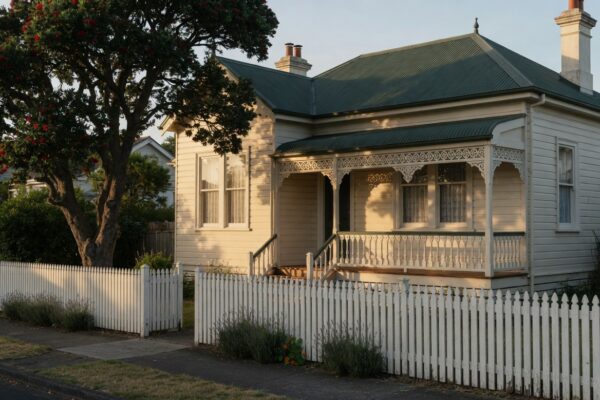
Picture a 1910 villa in Grey Lynn. You want a powder room — a small toilet and basin for guests — tucked under the stairs near the front door. Lovely idea. But the bathroom and laundry are at the back of the house, which is where all the drainage runs. Getting a new waste pipe from the front of a villa to the back, under a suspended timber floor, at a constant fall, while clearing the foundation piles — that’s a real design problem. Sometimes it’s solvable. Sometimes the honest answer is “not where you’re picturing it, but here instead.”
That’s the conversation you want to have before you’ve fallen in love with a layout — not after.
💡 Homeowner tip: Before you plan a new toilet’s position, find out where your soil stack is. It’s usually the fat pipe (around 100mm) running down an outside wall near your existing bathroom. The nearer your new fixture is to it, the cheaper the job.
Like-for-like is exempt. A new fixture isn’t.
There’s a clean line worth knowing early. Swapping a toilet, basin or shower for a new one in the same position is almost always exempt from building consent — it falls under the repair-and-maintenance rules in Schedule 1 of the Building Act (the part of the law that lists low-risk work you can do without a consent). But the moment you add a new fixture, or move one to a new spot, you’re into consented territory.
Adding a second toilet anywhere in the house increases the number of sanitary fixtures and changes the drainage, so it needs a building consent — the council’s formal approval that your work meets the New Zealand Building Code. A new bathroom or ensuite is the same. If you want the full list of what sits inside and outside the line, we keep a running breakdown in our guide to what you can build without a building consent.
Important: Replacing a toilet in the same position is exempt, but adding one — anywhere — is consented work. Even exempt work must still meet the Building Code. MBIE’s guidance on building work that doesn’t need a consent sets out every Schedule 1 category and its limits.
So before anyone talks money, two things have to be settled: where the fixture can physically drain to, and whether the work needs consent. For a new toilet or bathroom, the answer to the second is nearly always yes. The first is where the design work earns its keep — and it comes down to a set of drainage rules most homeowners have never had explained to them. That’s next.
The Drainage Rules That Decide If a Toilet Can Go There
This is the section the cost guides skip and the plumbing standards make unreadable. We’ll keep it in plain English. The rules below come from G13 — the part of the New Zealand Building Code that covers foul water, meaning everything that drains from your toilets, showers and sinks. G13 is what quietly decides whether your dream layout is buildable.
Fall: the slope that makes gravity work
Waste drains by gravity, so every pipe has to slope downhill at a steady angle — called the fall, or gradient. It’s written as a ratio. A 1:60 fall drops one unit for every sixty it travels along; a 1:100 fall is gentler, dropping one in a hundred. Too steep and the water races ahead of the solids and leaves them behind. Too flat and nothing moves. There’s a narrow band that works, and the right fall depends on the pipe size and how many fixtures feed it.
Why does this constrain your layout? Because fall eats into ceiling and floor space. The further a drain has to run horizontally, the more it has to drop along the way — and under a low-clearance villa floor or above a downstairs ceiling, there’s only so much room to drop into. Run out of fall before you reach the stack and the layout doesn’t work, however good it looks on paper.
The 1.2 metre rule and venting
There’s a specific limit worth knowing. Under G13, the developed length of a fixture’s discharge pipe — the run between the fixture’s trap and where it connects — generally can’t exceed 1.2 metres before the system needs proper venting. Venting is what stops your drains from gurgling, smelling, or siphoning the water out of the traps that seal sewer gas out of your house.
Traditionally that means a vent pipe running up through the roof. There’s a tidier option: an air admittance valve (AAV) — a one-way valve that lets air into the pipe when needed and seals shut otherwise, so you don’t always need a new pipe poking through your roofline. It’s allowed in defined situations, which matters a lot on a character home where you don’t want a vent stack spoiling a heritage roof. A WC pan — the toilet itself — discharging to a stack has to be vented one way or another.
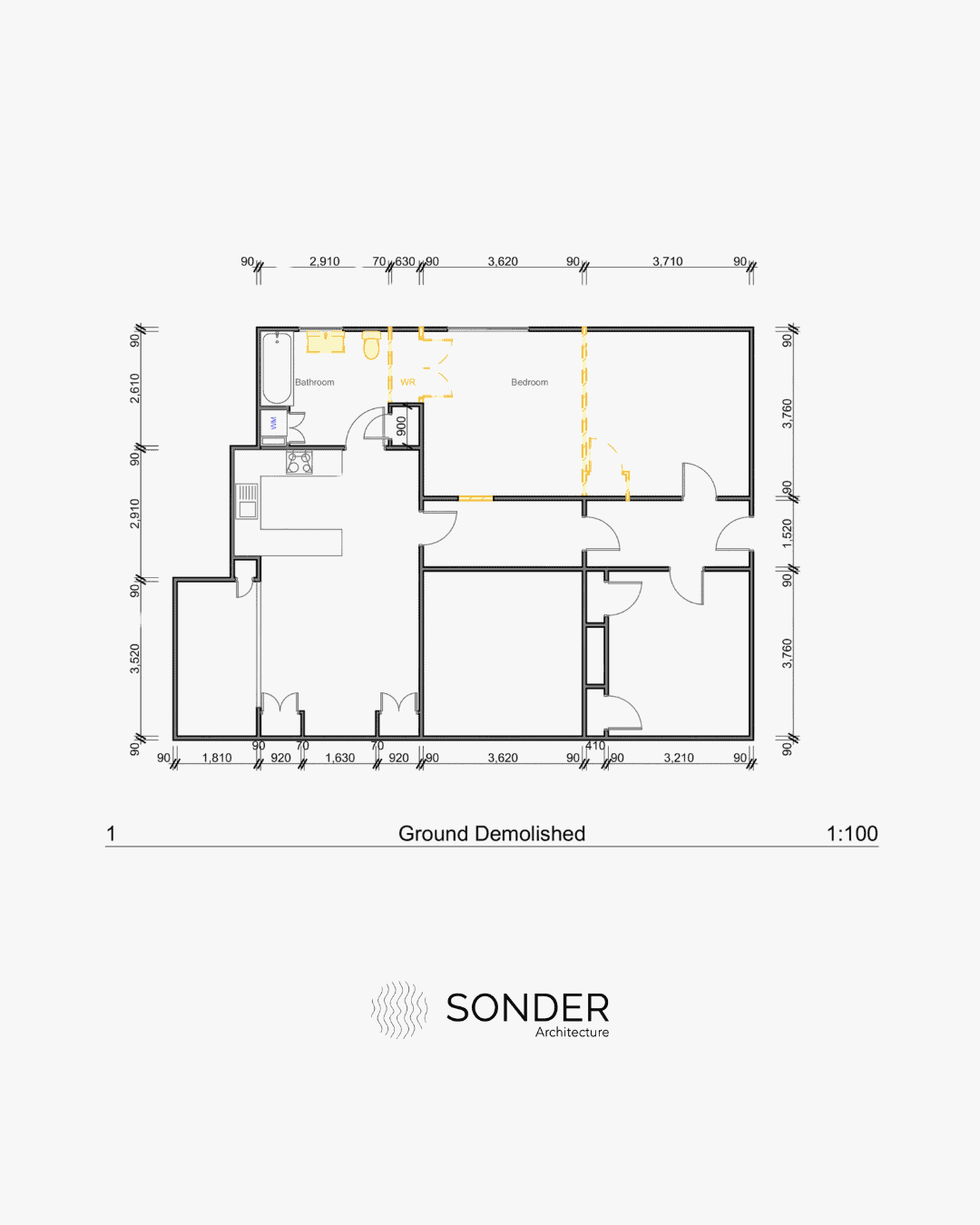 Existing
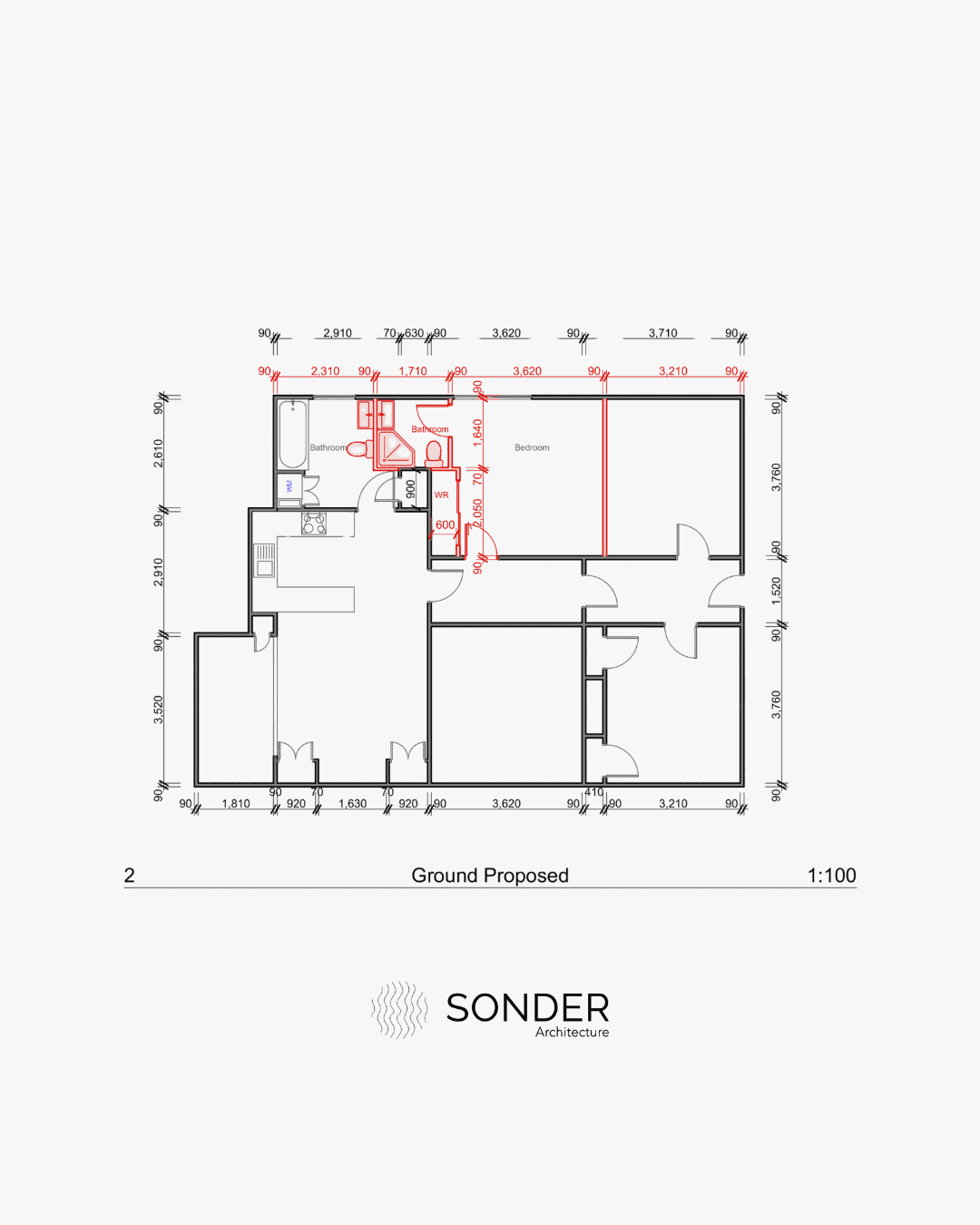 Proposed
One more rule that catches people: a drain can’t get smaller in the direction of flow, and a toilet drain is usually 100mm. So you can’t neck a 100mm toilet line down to fit a tight space. The pipe has to physically fit the route — through joists, around piles, past existing services — at the right size and the right fall, the whole way.
“When a client asks ‘can I put a toilet here’, we’re really answering three questions at once: is there fall to the stack, is there room for a 100mm pipe to get there, and can we vent it without wrecking the roof. Get all three and it’s easy. Miss one and we’re problem-solving — which is exactly what you want sorted before the drawings, not during the build.”
— The Sonder Architecture team
When gravity won’t reach: the macerator option
Sometimes the fall just isn’t there — a basement, a top-floor ensuite a long way from the stack, a concrete slab you can’t cut into easily. In those cases a macerator (sometimes known by the brand name Saniflo) can rescue the layout. It’s a pump-and-grinder unit behind the toilet that breaks waste down and pumps it through a small-bore pipe to the main drain, so it doesn’t depend on gravity fall the way a standard toilet does.
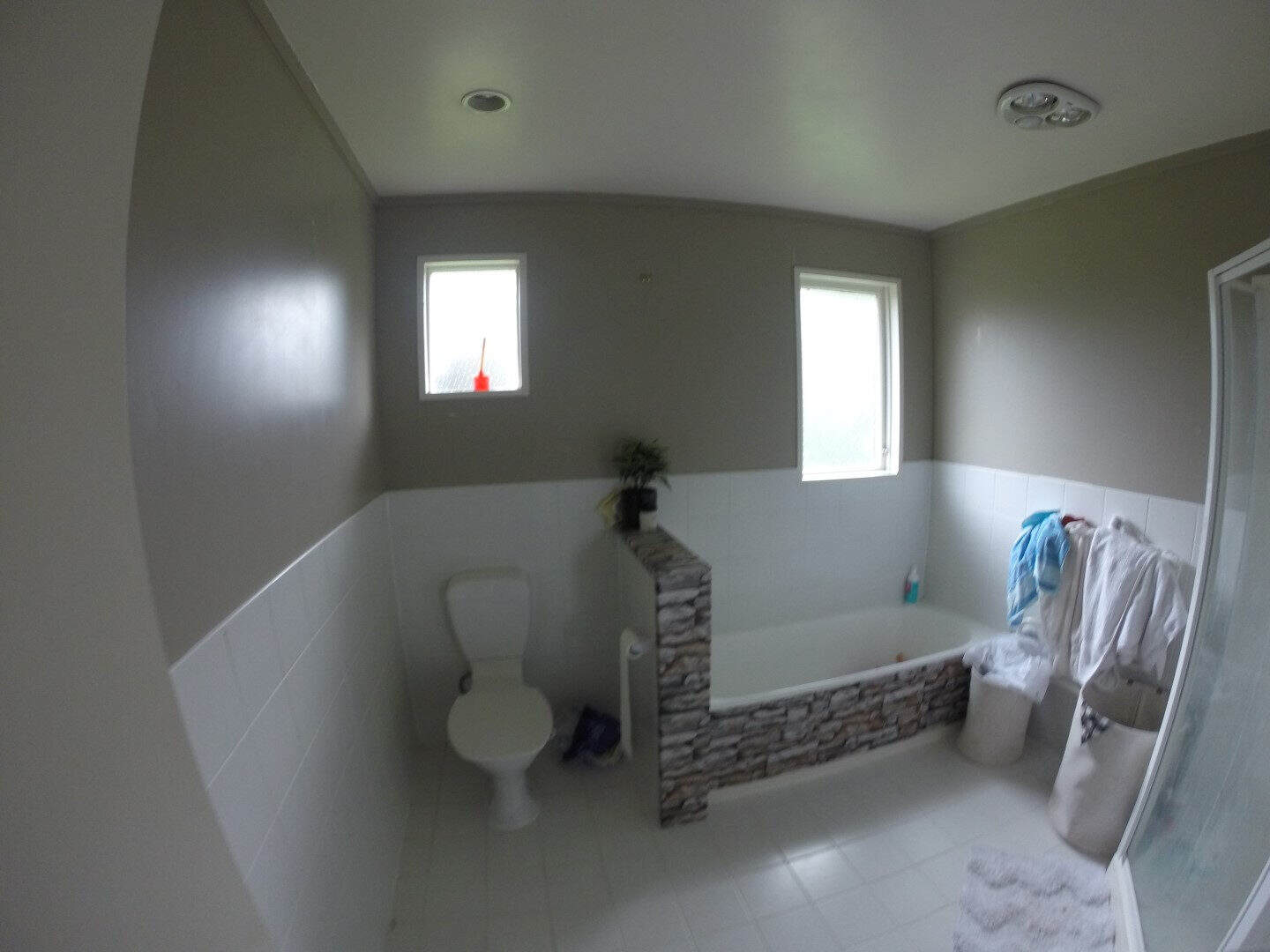 Before
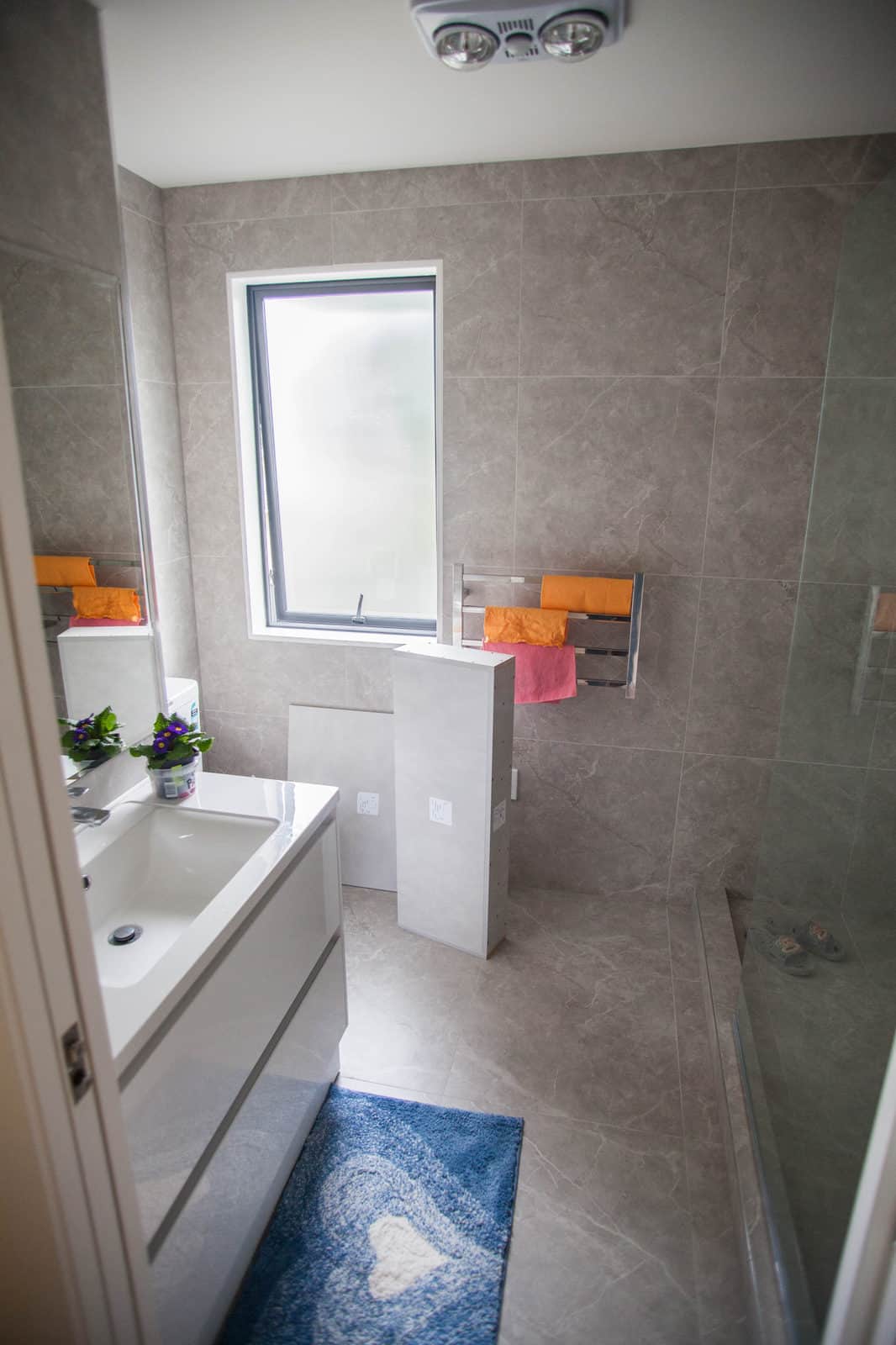 After
AfterSee the full project
It opens up positions gravity can’t reach. But it’s a trade-off: a macerator is a mechanical unit that can fail, needs power, and asks more of you in maintenance than a plain gravity toilet that has no moving parts. We treat it as a considered solution for a specific constraint, not a default. If a layout only works with a macerator, that’s worth knowing up front — it tells you something about the position you’ve chosen.
The structural catch on a timber floor
There’s a hidden one here too. To run a new drain under a suspended timber floor — common in villas, bungalows and most pre-1990s Auckland homes — the pipe often has to pass through or under the floor joists. You can’t just cut joists wherever the pipe wants to go. NZS 3604, the New Zealand standard for timber-framed buildings, sets limits on how much you can notch or drill a joist before you weaken it. Sometimes the drainage route and the structure disagree, and the design has to reconcile them. That’s a designer’s job, not a plumber’s — and it’s another reason “where” is a bigger question than it looks.
💡 Homeowner tip: If your house sits on piles with a timber floor and a crawl space underneath, your options are usually better — there’s room to run new drainage. If it’s on a concrete slab, a new toilet far from the existing plumbing is harder and more expensive. Check which you’ve got before you plan.
Important: Drainage and plumbing that connects to the council sewer must be carried out by a licensed drainlayer and registered plumber — it’s not legal DIY work. The technical rules above sit in G13 of the Building Code; the official detail is on building.govt.nz and explained for non-specialists by BRANZ at Level.org.nz.
Once the drainage answer is clear, the project shifts from “is this possible” to “what does the council need to approve it”. That’s where the consent set comes in — and where having a designer rather than just a builder changes what lands on the council’s desk.
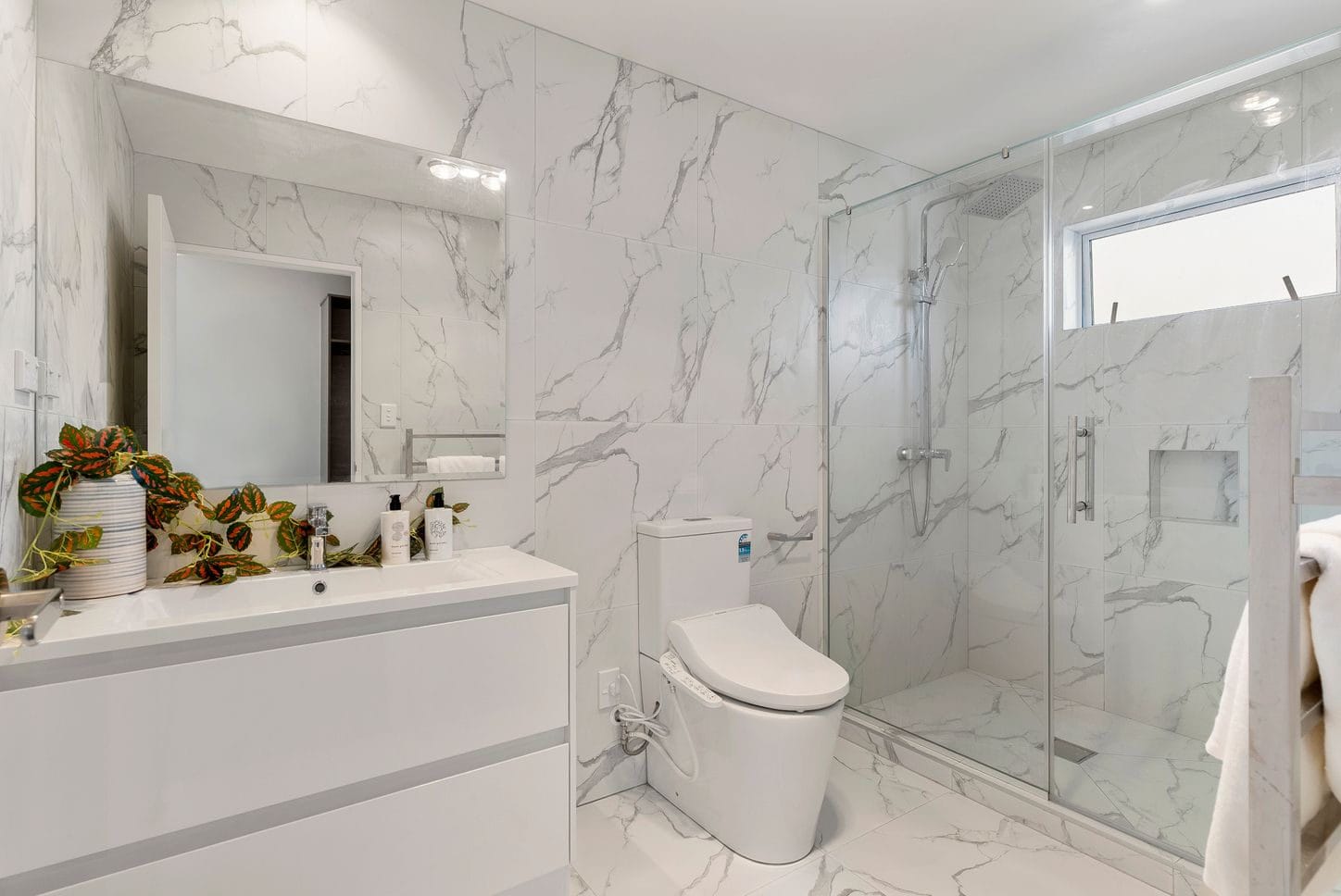
Consent, Ventilation and Waterproofing: What an LBP Designer Produces
Adding a bathroom or toilet isn’t only a drainage job. It pulls in several parts of the Building Code at once, and the consent set has to show the council you’ve handled all of them. This is the layer where a renovation company quotes the build and an architectural designer documents the compliance — two different deliverables.
What “Licensed Building Practitioner (Design Class)” actually means for you
Sonder Architecture works as a Licensed Building Practitioner (Design Class) — an LBP, a designer licensed under the Building Practitioners Board to design and supervise Restricted Building Work (RBW), which is the structural and weathertightness work the law says must be done by a licensed professional. In plain terms: we’re allowed to produce the consent drawings and the Record of Work the council requires, and we carry the responsibility for getting them right.
For adding a bathroom, that means the consent application shows the new fixtures, the drainage layout and falls, the venting, the waterproofing, the ventilation, and how any structural change is handled — all coordinated into one set the council can approve without a string of follow-up questions. A clean set moves faster. A vague one collects what the council calls a Request for Information, which stops the clock.
Ventilation and waterproofing: G4 and E3
Two Building Code clauses come into play that homeowners rarely think about. G4 covers ventilation — a new bathroom needs either an openable window or mechanical extraction (an extractor fan ducted to outside) to clear moisture, or you’ll grow mould. E3 covers internal moisture — the waterproofing that keeps water inside the wet area instead of rotting the framing behind it. A fully tiled shower needs a waterproof membrane behind the tiles, and that membrane is consented work in its own right.
These aren’t optional extras. They’re the difference between a bathroom that lasts and one that quietly causes the kind of damage Auckland’s leaky-building era taught everyone to fear. Get the detailing right on paper and the build follows it.
💡 Homeowner tip: If your new bathroom won’t have a window, you’ll need a properly ducted extractor fan that vents outside — not just into the ceiling space. Venting into the roof cavity is a common shortcut that dumps moisture where it does the most harm.
Timeframes, and the heritage catch
On timing: a building consent has a statutory processing target of 20 working days from acceptance. In practice, Auckland Council has been running closer to 30 working days for residential work, and every Request for Information pauses the clock. We go deeper on the full process in our guide to building consents in NZ.
There’s a catch for older homes. If you’re in a character suburb — Ponsonby, Grey Lynn, Mt Eden, Devonport — your property may sit in a heritage overlay or special character area, where the Auckland Unitary Plan (the single rulebook covering zoning and development across Auckland) adds a second layer of rules. A new external vent pipe or gully trap that’s visible from the street can need resource consent — the council’s separate permission about land use and appearance — even when the building work itself is straightforward. If that’s you, our piece on the consent side of renovations and a quick property check are worth doing before you design anything.
Important: Building consent and resource consent are different approvals under different laws — building consent is about how you build (Building Act), resource consent is about land use and effects (Resource Management Act). A heritage or special character property can need both. Check your property on the Auckland Unitary Plan viewer at Auckland Council before committing to a design.
With the drainage settled and the compliance mapped, there’s one question left — the one you came in with. What does it actually cost?
What It Costs: Design, Consent and Build
Adding a bathroom or toilet has three separate cost layers, and lumping them together is how people end up shocked. There’s the design and consent documentation, the council’s consent fees, and the actual build. We handle the first two; the build is a separate piece of work, and we’ll be straight about who does what.
Design and consent documentation (our part)
For a narrow, single-fixture job — one new toilet, a small powder room — the design and consent set sits at the lower end of architectural fees, because the scope is tight. As project complexity climbs (a full new bathroom, a tricky drainage run, a heritage property), so does the documentation. Across renovation work generally, architectural fees in New Zealand run roughly 8–15% of build cost, lower for simple consent-required jobs and higher where structure, recladding or heritage are involved.
Council consent fees
The council charges to process the consent, and these are separate from design and build. For adding a toilet to an existing room, the consent cost typically runs around $1,980–$2,500 (a lodgement deposit plus the Code Compliance Certificate fee — the CCC being the document the council issues once it confirms the finished work meets the Building Code). We break the full fee picture down in our guide to what a building consent costs in Auckland.
The build (a renovation partner’s part)
The physical work — plumbing, drainlaying, lining, waterproofing, fit-out — is the build, and it’s the biggest variable. A like-for-like toilet swap is a few hundred dollars to around $1,500. A brand-new toilet with new pipework and drainage runs into the $10,000–$15,000-plus range once labour, fixtures and connection are in. Distance to your existing drainage is the single biggest swing factor — which is exactly why “where” decides “how much”.
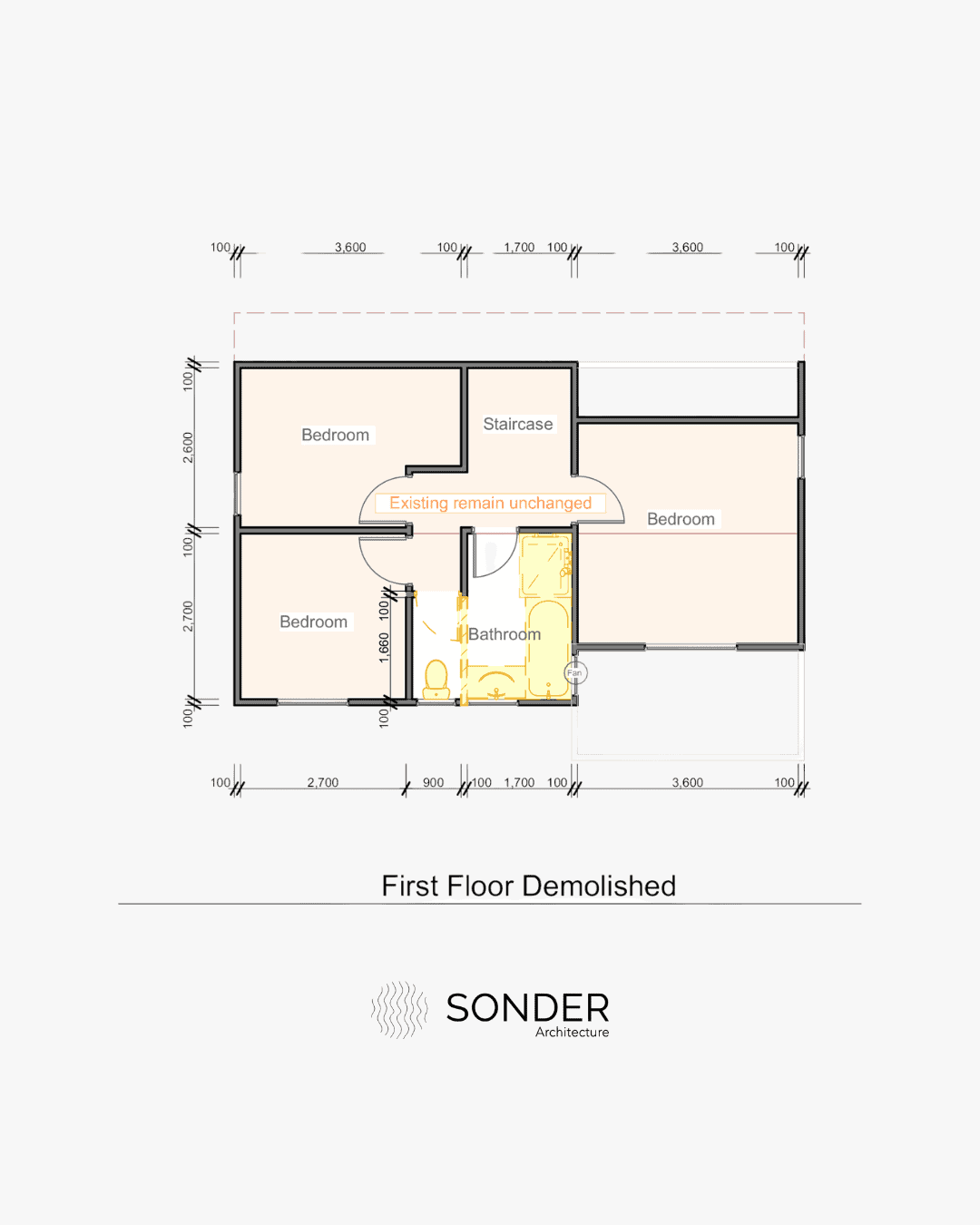 Existing
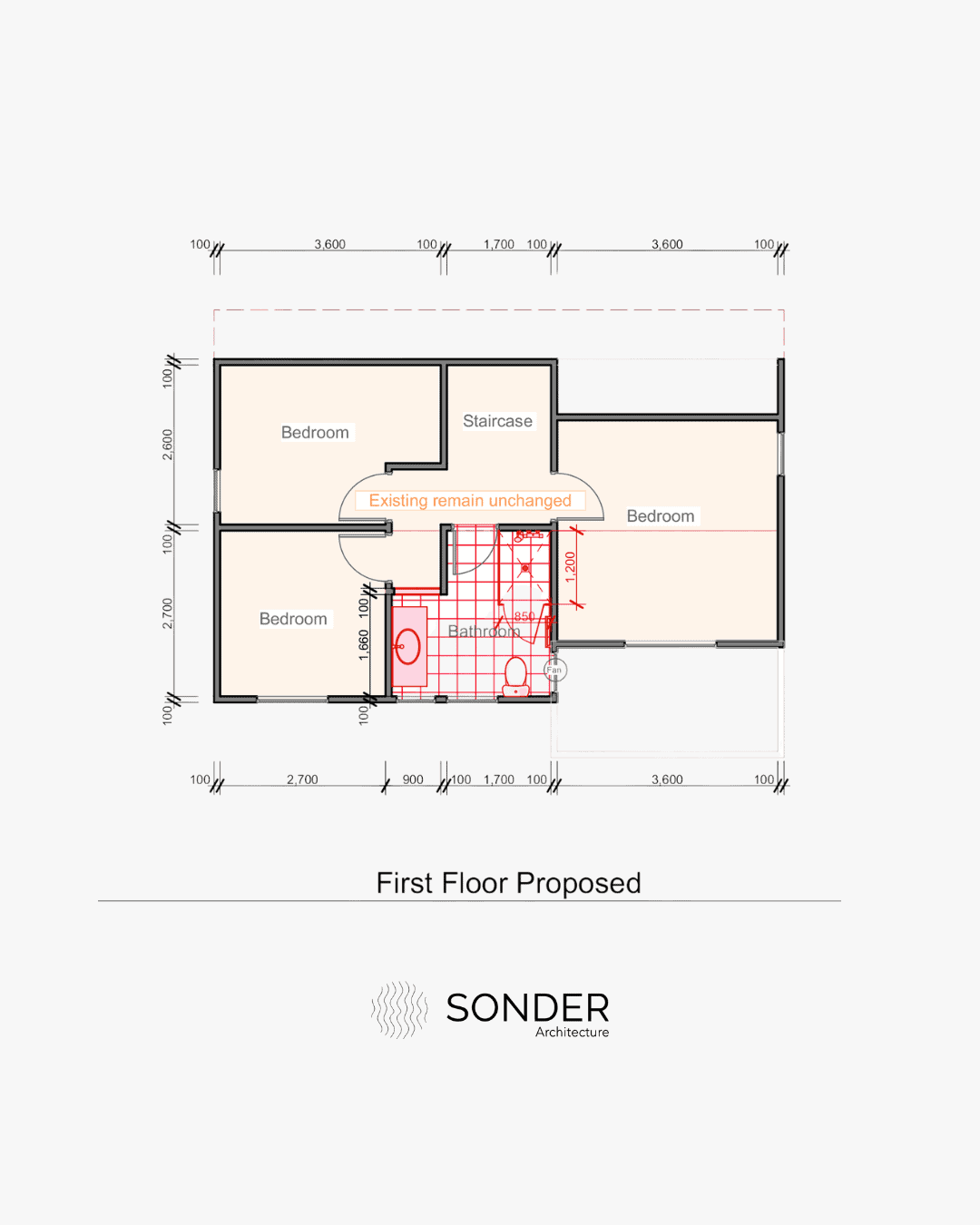 Proposed
We design and consent the work; the build itself is delivered by our renovation partner. Superior Renovations handles the construction on projects like these, which means you get the design and the build coordinated under one roof rather than chasing two separate firms. For new builds and subdivision work, Superior Homes is the build partner.
| Scenario | Consent needed? | Drainage difficulty | Rough build cost |
|---|---|---|---|
| Replace toilet, same position | No (exempt) | None | $400–$1,500 |
| New toilet near existing stack | Yes | Low | ~$10,000+ |
| New powder room, far from drainage | Yes | High (long run, re-grading) | $12,000–$15,000+ |
| New ensuite above existing bathroom | Yes | Low–medium (stacks align) | $15,000+ |
| Toilet where gravity won’t reach (macerator) | Yes | Solved by pump, ongoing upkeep | Varies — get a feasibility check |
💡 Homeowner tip: Build cost figures above are indicative Auckland ranges, not quotes. The number that matters for your home depends entirely on where the fixture goes relative to your drainage — which is the whole point of getting a feasibility check before you commit to a layout.
Imagine a 1990s two-storey in Albany. An ensuite directly above the existing downstairs bathroom is one of the cheapest bathrooms you can add, because the new drainage drops straight down beside the stack that’s already there. The same ensuite over the lounge, on the opposite side of the house, is a much bigger job. Identical room, very different cost — decided entirely by drainage. That’s the principle this whole guide turns on.
The Short Version
A second toilet or a new bathroom is rarely about whether you’re allowed — for a new fixture, you’ll almost always need a building consent. It’s about where the fixture can drain to, and what that does to your design and your budget. Get the position right against your existing drainage and it’s a clean job. Fight your pipework and it gets expensive. The cheapest bathroom is the one you put where the drainage already wants it.
That’s the call worth making before you commit to a layout — and it’s exactly what a feasibility check is for. We’re based at 16 Link Drive, Wairau Valley, and we look at this on Auckland homes every week. Tell us where you’re picturing it, and we’ll tell you whether it’ll work there, where it works better, and what it’ll take.
➡ Book a free consultation with Sonder Architecture
➡ Request your free feasibility report
➡ Read our guide to building consent for renovations
➡ See recent projects we’ve done across Auckland
Do I need building consent to add a second toilet in NZ?
Almost always, yes. Replacing a toilet in the same position is exempt under Schedule 1 of the Building Act, but adding a new toilet anywhere increases the sanitary fixtures and changes the drainage, which needs a building consent. The consent is the council's confirmation that the work meets the New Zealand Building Code. An LBP (Licensed Building Practitioner) should confirm your specific scope before work starts.
Can I add a toilet anywhere in my house?
Not anywhere — drainage decides. A toilet drains by gravity to your soil stack (the main waste pipe), so it needs the right fall and a clear pipe route at 100mm. Close to the existing stack is easy; far away, or on a concrete slab, is harder and may need re-grading or a pump. The honest answer is sometimes 'not where you pictured it, but here instead', which is why a feasibility check before you design pays off.
How far can a new toilet be from the soil stack?
There's no single distance — it depends on the fall available and the pipe size. Under G13 of the Building Code, the run between a fixture's trap and its connection generally can't exceed 1.2 metres before the system needs proper venting, and the drain has to keep a steady downhill grade the whole way. The further the toilet is from the stack, the more vertical drop you need to find, which is where layouts run into trouble.
What is the minimum fall for toilet drainage in NZ?
Drainage fall is set out in G13 of the Building Code and is written as a ratio, like 1:60 or 1:100, with the right figure depending on pipe size and the number of fixtures. Too steep and water outruns the solids; too flat and nothing moves. A licensed drainlayer and your designer work this out for your specific run — it's not a one-size-fits-all number, and it directly affects whether your layout is buildable.
Do I need a macerator toilet or can I use gravity?
Gravity is always the first choice — it has no moving parts and nothing to maintain. A macerator (such as a Saniflo) is a pump-and-grinder unit that lets a toilet go where gravity drainage can't reach, like a basement or a far corner away from the stack. It opens up positions, but it needs power, can fail, and asks more in upkeep. We treat it as a solution to a specific constraint, not a default — if a position only works with a macerator, that tells you something about the position.
How much does it cost to add a bathroom or extra toilet in Auckland?
A like-for-like toilet swap is a few hundred dollars to around $1,500. A brand-new toilet with new pipework runs into the $10,000–$15,000-plus range for the build once labour, fixtures and connection are in. On top of the build sit council consent fees (around $1,980–$2,500 for adding a toilet) and design and consent documentation. Distance to your existing drainage is the biggest swing factor in the build cost.
Can I add a downstairs toilet under the stairs?
Often, but it depends on drainage. Under-stair powder rooms are popular, but in older homes the drainage usually runs at the back of the house while the stairs are at the front. Getting a new waste pipe across the house at a constant fall, under a timber floor and clear of the piles, is the design challenge. It's frequently solvable on a piled home with a crawl space, and harder on a concrete slab. A feasibility check tells you before you commit.
Do I need an architectural designer to add a toilet, or just a plumber?
A plumber and drainlayer do the physical work, but for a consented job someone has to produce the consent drawings and coordinate the drainage, venting, waterproofing, ventilation and any structural change into one set the council will approve. That's design work. As a Licensed Building Practitioner (Design Class), Sonder Architecture produces that set and the Record of Work the council requires — the part that decides whether the application sails through or stalls on requests for more information.
How long does building consent take for adding a bathroom?
The statutory target is 20 working days from acceptance, but Auckland Council has been running closer to 30 working days for residential work. Every Request for Information — where the council asks for missing detail — pauses the clock. A complete, well-coordinated application is the single biggest thing you can do to keep the timeline short, which is where having the drawings done properly the first time matters.
Does adding a toilet in a character or heritage home change anything?
Yes. If your home is in a heritage overlay or special character area — common in Ponsonby, Grey Lynn, Mt Eden and Devonport — the Auckland Unitary Plan adds rules about external appearance. A new vent pipe or gully trap visible from the street can need resource consent (separate from building consent) even when the building work is simple. Check your property on the Auckland Unitary Plan viewer before you design, and plan venting to avoid visible additions where you can.
References
- Ministry of Business, Innovation and Employment — G13 Foul Water (New Zealand Building Code)
- Ministry of Business, Innovation and Employment — Building work that doesn’t need a building consent (Schedule 1)
- BRANZ Level — Sanitary plumbing systems: discharges and vents
- BRANZ Level — Drainage systems: gradients and pipe sizing
- Auckland Council — Auckland Unitary Plan map viewer